Last Updated: October 21, 2026
Last Updated: October 21, 2026





Abhishek Vij
The Union Cabinet has approved the proposal to conduct a census in the country. In a meeting chaired by Prime Minister Narendra Modi, it was named Census 2027. Rs. 11,718 crore has been sanctioned from the government treasury for the census. The last census was conducted in 2011, at which time the population was 121.2 crore, comprising 62.37 crore men and 58.65 crore women. This time, the census will begin in April 2026. The census, conducted every 10 years, was due in 2021 but was postponed due to the COVID-19 pandemic. The census will now begin in April 2026.
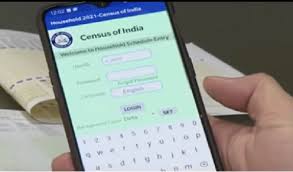
For the first time, it will be conducted digitally, using a mobile app. Despite this, more than 30 lakh employees will be deployed to collect all the information. This will be India’s 16th census since independence. The problem faced by everyone, from the cabinet to the general administrators, was that the lack of accurate census data was hindering proper development planning. For example, we now say that the country’s population has exceeded 140 crore, and that we have surpassed China to become the world’s most populous country. But only the census will provide proof of this. It is also being said that the number of women has increased in recent years and is now almost equal to that of men. In a democratic system, no such percentage can be ignored. Therefore, women should be given equal participation and progress in our new development initiatives.
Incidentally, in recent years, women have achieved considerable success in various fields of life through their own efforts. They are becoming highly educated, and they are topping the competitive examinations for high-ranking jobs in the country. However, there are still some areas where women are considered weak and are therefore excluded. This attitude will have to change in the coming years, and women will have to be given equal status with men in every field. Another point that is emerging is that, in the pursuit of modernity, the country’s fertility rate has fallen below expectations. Therefore, in the coming years, due to the increase in the average age of the elderly, we will have to formulate some nation-building plans for senior citizens as well. This cannot be done without a proper census.
That is why a comprehensive census program has now been created. From April to September 2026, a house listing and housing census will be conducted, and the actual census will take place in February 2027, which will also include electronic data on castes. The census in the snow-bound areas of Ladakh and Jammu and Kashmir will be conducted in September 2026. As always, this task will be entrusted to teachers.
A mobile app and a central portal will also be used. Every household will be visited, and separate questionnaires have been prepared for house listing, housing census, and the population census. A Census Management and Monitoring Portal is being created to oversee this census process. Citizens have also been given the option to self-enumerate in the census. Robust security features have been incorporated into this massive exercise to prevent data manipulation. Efforts will be made to complete the census work in the shortest possible time, and the census data will be shared at all levels, including village and ward levels. 18,600 technical professionals are being deployed for this task, who will complete their work in approximately 550 days. The census will include data on household conditions, amenities, assets, religion, Scheduled Castes/Scheduled Tribes, language, literacy, education, economic activities, and migration.
Good Evening Viewers! Get the latest updates from India and around the world with The Savera Times Evening...

Bharatiya Janata Party (BJP) National General Secretary Smriti Zubin Irani launched a scathing attack on Congress MP and...
New Delhi: Cockroach Janata Party (CJP) leaders Saurav Das and Ashutosh Ranka will be released from judicial custody...
According to police, three suspicious young men are seen in CCTV footage. Efforts are underway to identify them....
A video has surfaced of an alleged attempted assault on Jan Suraj Party's Bihar president Manoj Bharti. The...
Two accused have been convicted and sentenced to 10 years of rigorous imprisonment in a 2017 drug trafficking...
Aries: The day will be auspicious...