Last Updated: November 7, 2026
Last Updated: November 7, 2026





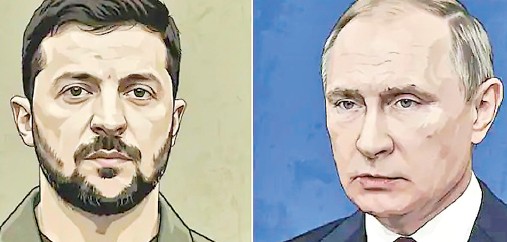
Russian President Vladimir Putin has delivered one of his sharpest warnings yet in the Ukraine conflict, saying that if efforts to resolve the war through diplomacy fail, Moscow will not hesitate to pursue its objectives by military force. The remarks came amid renewed large-scale Russian attacks on Ukrainian cities and just before a high-stakes meeting between Ukrainian President Volodymyr Zelenskyy and former U.S. President Donald Trump in Florida, where peace negotiations are expected to take center stage.
Putin’s statement, carried by the state news agency TASS, was delivered during a visit to a Russian military command post on December 27, 2025, where he was briefed on operations currently underway along the front. He said that Russian forces were prepared to “accomplish all the tasks” of what Moscow calls its “special military operation” if Kyiv continued to delay or refuse meaningful peace talks. According to the quote attributed to him, if the Ukrainian leadership “does not want to resolve the matter peacefully,” Russia would simply achieve its goals by force.
The timing of the message is notable. Zelenskyy was en route to a meeting with Trump scheduled for December 28 in Florida, where they plan to discuss a U.S.-backed peace plan. That plan reportedly includes a 20-point framework aimed at ending the more than three-year war, with a focus on halting hostilities and exploring security guarantees for Kyiv. But Russia’s recent warning threatens to overshadow those negotiations.
The Russian leader framed his remarks by accusing Kyiv of lacking urgency in pursuing peace, suggesting that Ukrainian authorities were dragging their feet and avoiding productive dialogue. He echoed themes he has used repeatedly throughout the conflict: that Russia would prefer a negotiated settlement but would not be constrained if diplomacy failed. Moscow’s position, as articulated by Putin, reflects a mix of carrot-and-stick diplomacy. On one hand, he insists Russia remains open to negotiations; on the other, he stresses that military force remains a viable option if Kyiv and its Western backers do not engage substantively. The Kremlin claims such resolve is necessary to secure Russia’s perceived territorial and security interests—a justification that has drawn widespread international criticism given the human toll of the conflict.
Ukrainian officials reacted sharply to both the statement and the ongoing large-scale military actions that accompanied it. Over the weekend, Russian forces launched an intense barrage of drones and missiles on Kyiv and nearby regions, killing civilians and injuring dozens, according to Ukrainian reports. Kyiv condemned the attacks as proof that Moscow is not serious about peace, saying the bombardments were designed to undermine diplomatic efforts rather than support them. Zelenskyy has repeatedly stressed that Ukraine wants peace and is committed to a diplomatic solution, but has also insisted that any agreement must respect Ukraine’s sovereignty and territorial integrity. That stance sets up a central tension with Russia’s demands, which often include territorial concessions and conditions that Kyiv finds unacceptable. Analysts say this gap is one of the core reasons peace efforts have repeatedly stalled.
International reaction has been mixed but broadly aligns with this understanding: Western nations and NATO members have condemned Russia’s continued aggression and reiterated support for Ukraine’s right to self-defense. European leaders have warned that any Russian military escalation could have broader security implications, while the U.S. role—especially under Trump’s involvement in negotiations—has drawn both optimism and concern depending on the angle from which observers view Washington’s approach. Some analysts note that Putin’s warning serves multiple purposes. It sends a clear signal to Kyiv that Russia’s patience for diplomacy has limits in Moscow’s view. It also appears designed to influence international discussions by portraying Ukraine as unwilling to compromise—a narrative that Moscow has pushed repeatedly to justify its wartime strategy. At the same time, the threat of military escalation can be seen as a bargaining chip intended to extract concessions in future talks. Yet despite Moscow’s hardened language, there are signs that global diplomatic pressure remains intense. The upcoming Zelenskyy–Trump meeting, along with ongoing discussions among European leaders about economic and military aid to Ukraine, underscores the high stakes involved. Ukraine, backed by international partners, continues to seek a resolution that stops the bloodshed without ceding core principles. Putin’s warning thus sits at the intersection of diplomacy and military reality: it underscores the fragility of the current peace efforts and the deep divisions over how—or whether—the war can be brought to a negotiated end. Whether his message will push parties closer to compromise or further entrench opposing positions remains one of the key questions as negotiations proceed and the war grinds on into its fourth year.
A mural of Rabindranath Tagore at Bangladesh's Khulna Railway Station was defaced with black ink. Police have launched...

US President Donald Trump has described the confrontation with Iran as “not a war”, claiming Washington has made...

American governors and federal leaders celebrated Diwali while recognising the contributions of Indian Americans. President Donald Trump received...

Washington: A 30-year-old Venezuelan national was arrested near the White House after US Secret Service agents discovered three...

Washington: US President Donald Trump outlined plans for a sprawling aerospace exhibition venue at Florida’s former space shuttle...
Eight months after the US-Iran war, Iran has allowed Indian cargo ships to pass through the Strait of...
Aries: The day will be auspicious...