Last Updated: November 21, 2026
Last Updated: November 21, 2026





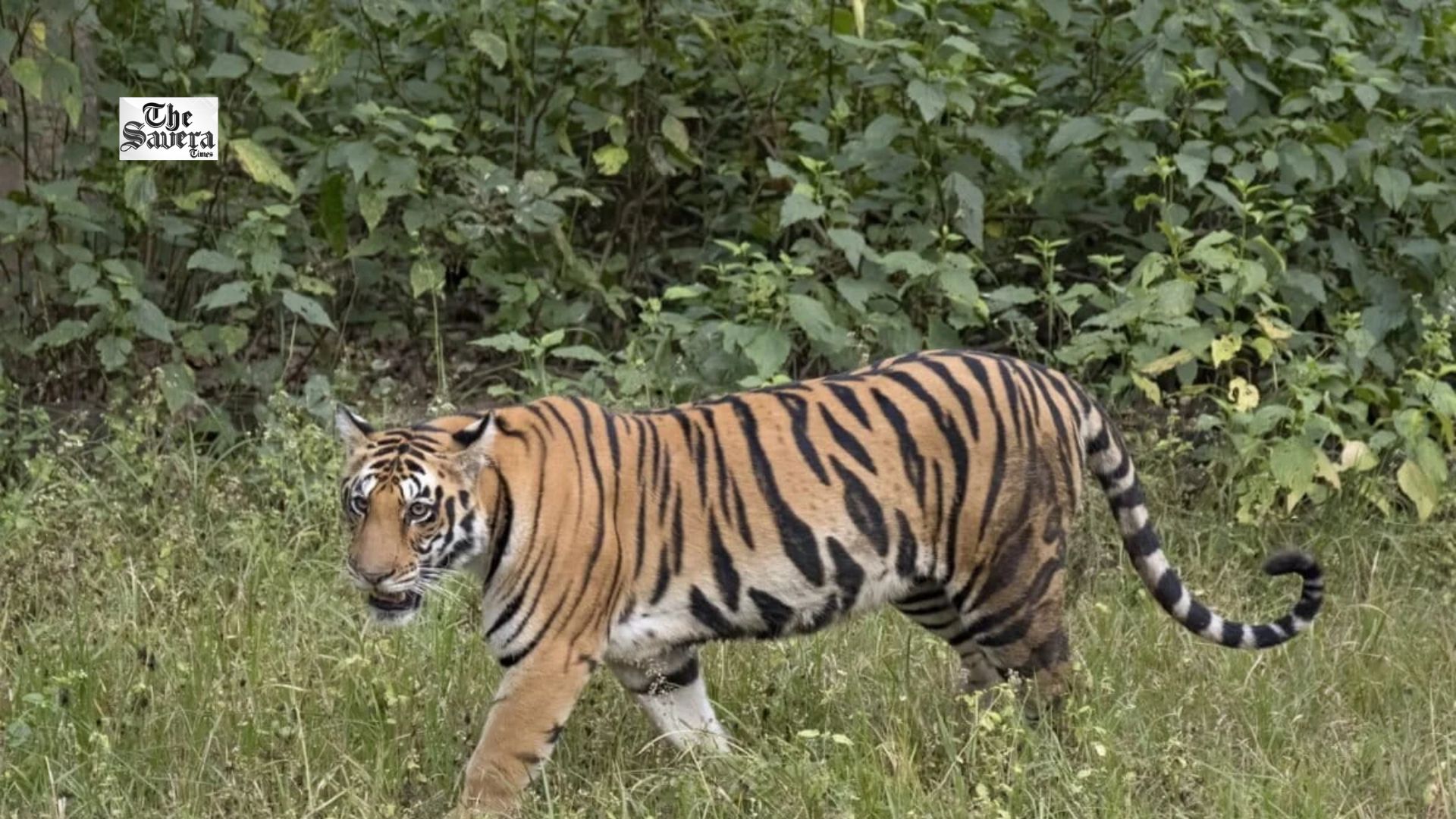
Buxa Tiger Reserve’s tiger reintroduction programme began with the translocation of T138 from Bihar’s Valmiki Tiger Reserve. Forest villagers protested restrictions on tourism activities imposed to minimise disturbance and allow the tigress to acclimatise. The tiger recovery programme, planned over a decade ago, involved habitat restoration and preybase improvement. A three year old tigress, T138 was released in Buxa Tiger Reserve in West Bengal on October 2. While the translocation has been lauded as an important step in wildlife conservation, people living in forest villages have protested restrictions on tourism activities imposed to minimise disturbance and allow the tigress to acclimatise. The translocation was the result of a joint initiative of the West Bengal Forest Department and National Tiger Conservation Authority (NTCA). The tigress which was brought from the Valmiki Tiger Reserve in Bihar was soft released into an enclosure on the occasion of Gandhi Jayanti. Two days later, it reportedly stepped out of the enclosure and walked into the wild. Bhupender Yadav, Union Cabinet Minister for Forest, Environment and Climate Change celebrated the tiger reintroduction to Buxa on his social media. Why Buxa, declared a tiger reserve in 1983 under Project Tiger, needed a translocated tiger to repopulate it, points to decades of poaching, habitat degradation, poor prey base and biotic pressures, among others that wiped out the apex predators from the landscape. All India tiger estimation in 2018 recorded no tigers in Buxa which continued until late 2021 when camera traps showed one male tiger. Chief Wildlife Warden of West Bengal, Pradeep Vyas shared that the gradual disappearance of tigers in Buxa Tiger Reserve (BTR) started from 1970 onwards. “I think tigers mainly disappeared due to biotic interference in the park and poaching of their prey base. This led to their habitat getting disturbed. Unlike leopards, tigers won’t stay in disturbed forests.” Forest villagers protest While the big cat release has been touted as a milestone in tiger conservation in West Bengal, the decision sparked tension among residents of 18 forest villages. They took out a sit-in dharna at Rajabhatkhawa range, the entry point to the park, alleging loss of livelihood due to the restrictions imposed on tourism by the forest department. Initially the restrictions were to be from September 30 to October 3 but later, it was extended. Villagers raise demands One of the protesters, Kurbaan Khan claimed that the villagers have several demands and that the protest was not only for lifting restrictions on tourism. “We want the removal of Rajabhatkhawa toll gate where we have to pay ₹480 per vehicle plus ₹150 per person on a PWD road. This is harassment as we have to go to the nearest town, Alipurduar, 30 km away, for everything.
Conventional monitoring may not capture the changing intensity and duration of exposure as DJ vehicles move through neighbourhoods...

In India, the tourism sector is considered a lucrative business. Religious tourism is unmatched. In this country of...
Read The Savera Times Evening Wrap for November 12, 2026, featuring the top news from India and around...

Mumbai: In a major crackdown on illegal immigration, Mumbai Police’s Anti-Terrorism Cell (ATC), in coordination with Ghatkopar Police,...

Sagar: Two men died in Madhya Pradesh’s Sagar district after allegedly consuming liquor, prompting the police and Excise...

Imphal: At least eight people, mostly young and middle-aged, have died over three days, allegedly after consuming spurious...

Aries: The day will be auspicious...