Last Updated: October 12, 2026
Last Updated: October 12, 2026





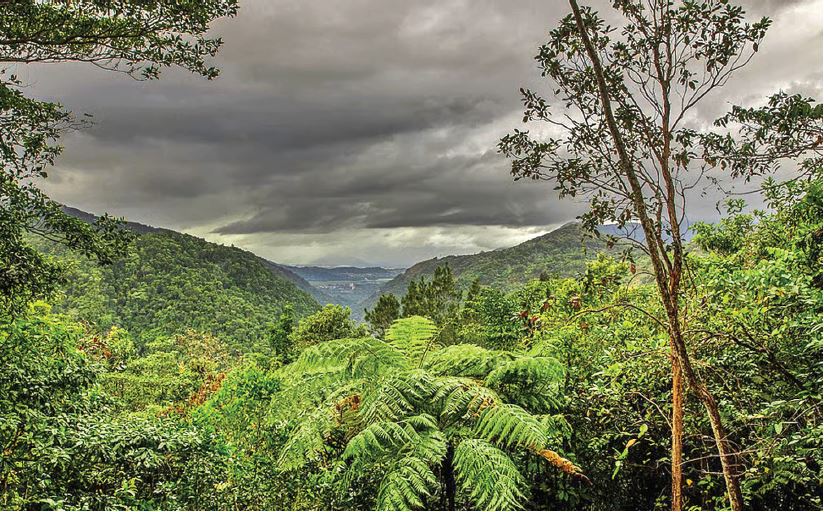
Forests play a critical but often unseen role in supporting global agriculture by supplying atmospheric moisture that eventually falls as rain. A new study published in Nature Water highlights how interconnected the world’s food production systems are and shows that many countries are far more dependent on forests, both within and beyond their borders, than previously understood.
Researchers found that agricultural regions in 155 countries receive up to 40 per cent of their annual rainfall from atmospheric moisture that originates in forests located in other nations. This process, known as moisture recycling, occurs when trees release water vapor into the atmosphere through transpiration.
This vapor then travels across borders through wind systems and eventually contributes to rainfall elsewhere. The study also revealed that about 18 per cent of annual rainfall in 105 countries is recycled from their own national forests. In addition, moisture from forests globally supports 18 per cent of international crop production and 30 per cent of global crop exports.
These findings demonstrate that forest conservation is not only an environmental priority but also a food security issue. The analysis mapped the flow of moisture between forested regions and agricultural zones and showed how countries that produce, export or import food rely on upwind forest regions. In other words, a country may depend on rainfall influenced by forests located thousands of kilometres away. The authors noted that this atmospheric flow links nations through a complex network of shared climate dependence. One of the strongest examples of this relationship is seen in South America.
Brazil’s forests supply moisture to agricultural lands in countries such as Paraguay, Uruguay, Argentina, Peru, Ecuador and Bolivia. These downwind nations collectively account for around 10 per cent of global crop exports. At the same time, Brazil itself depends heavily on crop imports to meet domestic food demand, with more than 77 per cent of its crop supply coming from other countries.
This exchange illustrates a mutually beneficial dynamic. Forest conservation in Brazil helps maintain stable rainfall patterns for its neighbours, which helps support their agricultural output. In return, stable global trade flows allow Brazil to import the food it needs. Disruption in forests on one side of this system could lead to instability in agriculture on the other.The study pointed to another example in Eastern Europe, where crop production in Ukraine depends on moisture generated in Russian forests.
Any major reduction in Russia’s forest cover could affect rainfall patterns, crop yields and export capacities in both Russia and Ukraine. The global consequences of such disruption became clearer during the 2022 war in Ukraine, when interruptions in grain exports affected food supplies across the Middle East, Asia and Africa. C o u n t r i e s s u c h a s B ra z i l , Argentina, Canada, Russia, China and Ukraine stand out as both major crop producers and regions highly dependent on forest-based precipitation.
In Brazil, forests recycle around 9 per cent of national annual rainfall over agricultural lands. This supports 6 per cent of global crop production and 9 per cent of crop exports. Argentina, meanwhile, receives about 14 per cent of its rainfall from forests located in other countries, primarily Brazil. It contributes 3 per cent of global crop production and 6 per cent of crop exports.
Tropical forests have the most significant influence on atmospheric moisture flows. Forests in Brazil, Indonesia and the Democratic Republic of Congo supply substantial rainfall to agricultural areas that together support 10 per cent of global crop production. The Democratic Republic of Congo, Bolivia, Peru, Canada and Russia are also key as both moisture suppliers and crop producers, responsible for 13 per cent of global crop production and 20 per cent of exports.
The authors of the study emphasized that conserving upwind forests is vital to safeguarding global food security. By maintaining forest cover, countries can help stabilize rainfall for distant agricultural regions, reduce vulnerability to climate shocks and support the functioning of the international food supply chain.
A shooting occurred at a school in the French city of Aubagne on Monday.

A Pakistani Army training aircraft crashed near Quetta, the capital of Pakistan's Balochistan province, on Monday.
The Royal Swedish Academy of Sciences on Monday announced the 2026 Nobel Prize in Economics to American economists...

A Sudanese rights group says at least 72 gold miners were killed in an air strike near the...

US President Donald Trump is scheduled to attend the ASEAN summit in Manila on November 16 before travelling...

An Indian national injured in the October 10 attack on Riyadh’s King Khalid International Airport has died, taking...

Aries: The day will be auspicious...