Last Updated: October 15, 2026
Last Updated: October 15, 2026





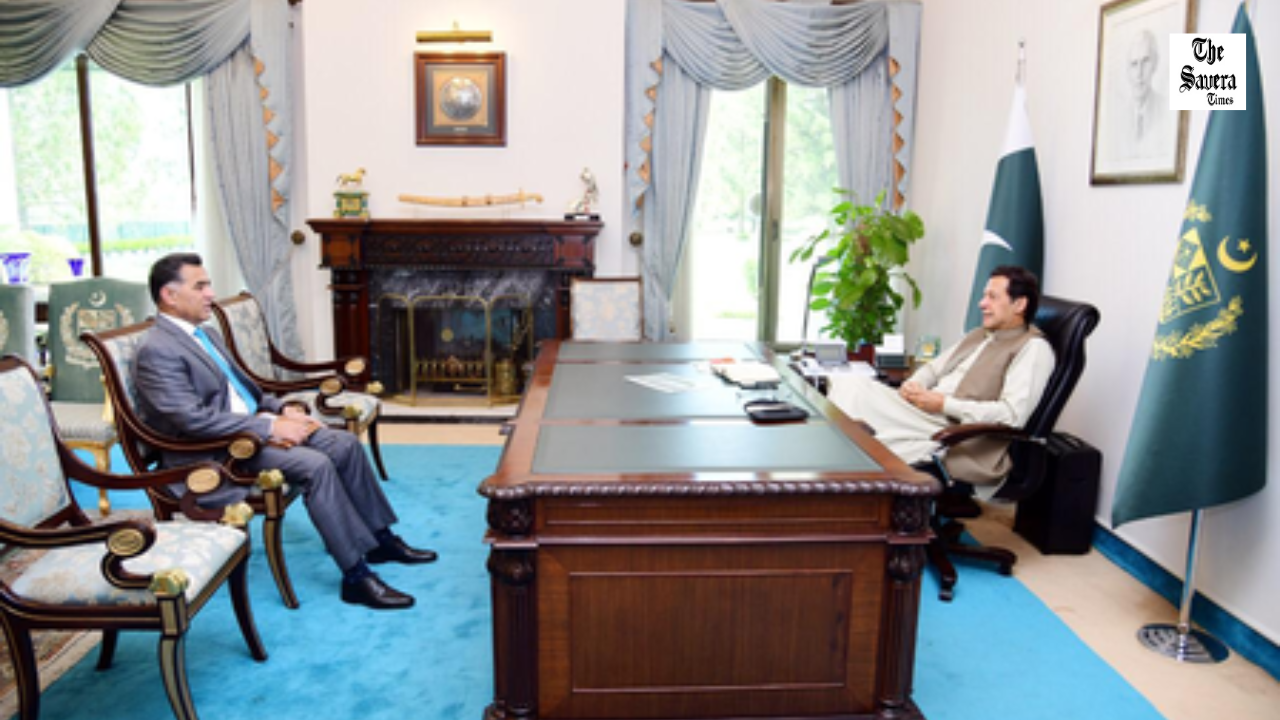
In a significant development in Pakistan’s military and legal landscape, a military court on Thursday, December 11, 2025, sentenced retired Lieutenant General Faiz Hameed, former head of the Inter-Services Intelligence (ISI), to 14 years of rigorous imprisonment. The verdict was delivered following a Field General Court Martial (FGCM) that spanned around 15 months of proceedings under the Pakistan Army Act, the military’s media wing, Inter-Services Public Relations (ISPR), announced.
Pakistan’s former DG ISI Lt Gen Faiz Hameed has been sentenced to 14 years in a military prison. In 2021 he mocked India while drinking tea in Kabul after the Taliban takeover. Now he’s finished in the eyes of his own army. What does this mean for Asim Munir’s future? pic.twitter.com/09uCn8IdwQ
— Sniper (@Snpier143) December 11, 2025
According to the official statement, Hameed was tried and found guilty on four charges:
Engaging in political activities deemed detrimental to the state’s interests.
Violating the Official Secrets Act to the harm of national security.
Misuse of authority and government resources.
Causing wrongful loss to individuals.
The proceedings, which began on August 12, 2024, involved what the ISPR described as lengthy and laborious legal processes, after which the court concluded that the evidence substantiated all charges before sentencing was handed down on December 11, 2025.
The ISPR emphasized that all legal provisions were observed during the trial and that Hameed was afforded full legal rights, including the opportunity to choose his legal defense team. The military also noted that he has the right to appeal the conviction in the appropriate forum.
Faiz Hameed served as the Director General of the ISI Pakistan’s premier intelligence agency from 2019 to 2021. In August 2024, he was taken into military custody after a court of inquiry was ordered, in part, by the Supreme Court to investigate complaints against him, including allegations of misconduct in connection with a land development case and other matters.
The conviction marks a rare and high-profile sentencing of a former senior military and intelligence leader in Pakistan, where the army traditionally holds substantial institutional influence. It also comes amid ongoing political tensions and efforts to enforce accountability mechanisms within the country’s powerful security establishment.
Pakistan’s Information Minister described the sentence as a “historic moment” for justice and the rule of law, suggesting that it reinforces accountability even at the highest levels of the military. Meanwhile, analysts view the case as reflecting broader dynamics within Pakistan’s political and military framework, with implications for civil-military relations and internal power structures.
India has expressed concern over the alleged plot to carry out a mass shooting at a Hindu temple...

Islamabad: At least 31 children and two female teachers were killed, and more than 50 other people were...

A roof collapse at Al-Khair School in Peshawar, Pakistan, killed at least 28 children and a female teacher...

Kabul: The series of road accidents in Afghanistan continues unabated. A truck and a passenger bus collided head-on...

Texas Attorney General Ken Paxton has filed a lawsuit against baby food manufacturer Gerber and its parent company,...

US President Donald Trump has urged voters to treat the November 3 midterm elections as though he were...

Aries: The day will be auspicious...