Last Updated: October 17, 2026
Last Updated: October 17, 2026





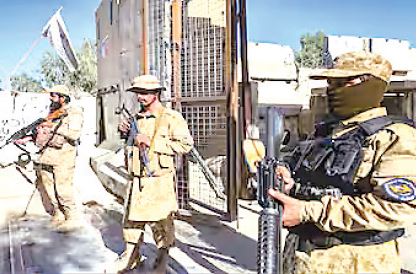
Just as the fighting between Israel and Hamas appeared to ease, a new conflict flared up over the weekend — this time along the Pakistan-Afghanistan border. In one of the most serious confrontations in recent years, troops from both sides exchanged deadly fire at several locations along the 2,600-kilometre Durand Line, each claiming to have inflicted heavy losses and destroyed border posts.
The clashes began late Saturday night when Taliban forces in Afghanistan launched attacks on Pakistani troops along the frontier. Kabul described the assault as “retaliation” for air strikes allegedly carried out by the Pakistani military two days earlier. While Islamabad has not directly claimed responsibility for the strikes, it has repeatedly asserted its right to target militants operating from Afghan soil.
According to Pakistani officials and state media, the latest exchange of fire occurred across several locations, including Angoor Adda, Bajaur, Kurram, Dir, Chitral, and Bahram Chah in Balochistan. Both nations released conflicting casualty figures. Afghanistan’s Taliban government spokesperson Zabihullah Mujahid said 58 Pakistani soldiers were killed and 30 injured, while nine Taliban fighters lost their lives. Pakistan’s military, however, stated that 23 of its soldiers were killed and claimed to have neutralised more than 200 Taliban fighters. It also said multiple Taliban positions were destroyed and 21 posts were briefly captured along the Afghan side of the border.
Pakistan’s military media wing, the Inter-Services Public Relations (ISPR), said the episode “vindicates Pakistan’s long-standing position that the Taliban government is actively facilitating terrorists operating from Afghan territory.”
Prime Minister Shehbaz Sharif commended the army for its response, saying, “Under the bold leadership of Field Marshal Syed Asim Munir, our troops gave a firm and fitting response to Afghanistan’s aggression and destroyed several of their posts. There will be no compromise on Pakistan’s defence.”
Afghan Foreign Minister Amir Khan Muttaqi, who is currently in India, maintained that the situation was “under control.” Speaking on Sunday, he said the Taliban’s “operation achieved its objectives” and noted that “friends like Qatar and Saudi Arabia appealed that the war must stop, and now the situation has calmed.”
Officials in both countries confirmed that a tense calm has returned to the border, though major crossings, including the crucial Torkham gate, remain closed. Additional troops have been deployed to prevent further escalation.
What Triggered the Border Clashes
The immediate trigger for the latest confrontation lies in air strikes reportedly conducted by Pakistan on Afghan soil on Thursday. According to the Taliban Defence Ministry, two explosions were heard in Kabul and another in the border province of Paktika. Afghanistan accused Pakistan of violating its sovereignty. Pakistani officials, however, claimed the air raids targeted leaders of the Tehrik-e Taliban Pakistan (TTP), a militant group responsible for a series of deadly attacks on Pakistani territory.
The TTP, ideologically aligned with the Afghan Taliban but operationally distinct, has been behind some of the worst terror attacks in Pakistan. Among them was the 2014 Peshawar Army Public School massacre, in which 132 children and nine staff members were killed. Pakistan maintains that the TTP operates freely from Afghan sanctuaries, a claim that Kabul has denied. Over the past year, Islamabad has carried out multiple cross-border strikes on what it calls TTP “launch pads.”
The latest clashes also stem from longstanding tensions over the Durand Line, the colonial-era boundary that Afghanistan has never formally recognised. Border skirmishes, disputes over fencing, and mutual accusations of harbouring insurgents have repeatedly strained relations between the two neighbours. The recent mass deportation of Afghan refugees from Pakistan has further deepened mistrust, with Kabul criticising Islamabad’s actions as inhumane.
Regional Reactions and Calls for Restraint
The violence has prompted concern across the region. Saudi Arabia, Qatar, and Iran have urged both sides to exercise restraint and seek dialogue. Riyadh’s Ministry of Foreign Affairs said, “The kingdom calls for restraint, avoiding escalation, and embracing dialogue and wisdom to reduce tensions and maintain regional stability.” Saudi Arabia recently signed a security pact with Pakistan similar to NATO’s mutual defence clause, but there has been no indication that it will come into play in this conflict.
The United States has also taken note. President Donald Trump, en route to Israel, remarked that he was aware of “a war now going on between Pakistan and Afghanistan” and would “look into it” upon his return, adding that he was “good at solving wars.” His comments, while casual, reflected Washington’s renewed attention to South Asia amid simultaneous crises in the Middle East.
Implications for India
The timing of the Pakistan-Afghanistan clashes is particularly sensitive for India, which is currently hosting Afghanistan’s Foreign Minister Amir Khan Muttaqi. Analysts believe his visit and India’s warming ties with Kabul may have influenced Pakistan’s recent posture.
Ibraheem Bahiss, a Kabul-based senior analyst with the International Crisis Group, observed that Muttaqi’s red-carpet reception in India “was probably a factor in the Pakistan army’s decision to escalate.” New Delhi recently announced plans to reopen its embassy in Kabul, which it had closed in 2021 after the Taliban’s return to power. India has also pledged humanitarian and development assistance to Afghanistan while maintaining a cautious approach toward formal recognition of the Taliban regime.
During their meeting in New Delhi, External Affairs Minister S. Jaishankar and Muttaqi discussed regional security and cooperation. “We share a common commitment towards growth and prosperity, which are endangered by the shared threat of cross-border terrorism,” Jaishankar said. He thanked Kabul for its “sensitivity towards India’s security concerns,” referring to Afghanistan’s condemnation of the recent terrorist attack in Pahalgam.
In a joint statement, India and Afghanistan “unequivocally condemned all acts of terrorism emanating from regional countries” and stressed “the importance of promoting peace, stability and mutual trust in the region.”
Pakistan reacted sharply, summoning the Afghan ambassador to convey “strong reservations” about the India-Afghanistan joint statement. Islamabad also rejected Muttaqi’s assertion that terrorism in Pakistan was an “internal matter.”
What Lies Ahead
Analysts suggest that while the latest flare-up underscores the volatility of the Pakistan-Afghanistan relationship, a wider war remains unlikely. Both countries are dealing with domestic challenges — Pakistan with political instability and economic strain, and Afghanistan with international isolation and internal resistance.
For now, the border remains tense but quiet, reflecting an uneasy truce between two nations divided by history, suspicion, and the shifting dynamics of regional power.
Air India and Air India Express have suspended flights to Riyadh, Jeddah and Dammam until October 20. IndiGo...

Manjit Singh Bedi, 64, has been returned to the United States after being arrested in India. He faces...

A Houthi attack on the al-Maashiq Presidential Palace in Aden killed five people and injured 16, amid intensifying...
A shooting at Silver Rail Elementary School in Bend, Oregon, left three children and a teacher dead. The...

Prime Minister Narendra Modi will visit Canada on December 11-12, 2026, with both countries aiming to strengthen strategic...
US Vice President JD Vance has warned that anyone found selling access to the White House should face...

Aries: The day will be auspicious...