Last Updated: October 15, 2026
Last Updated: October 15, 2026





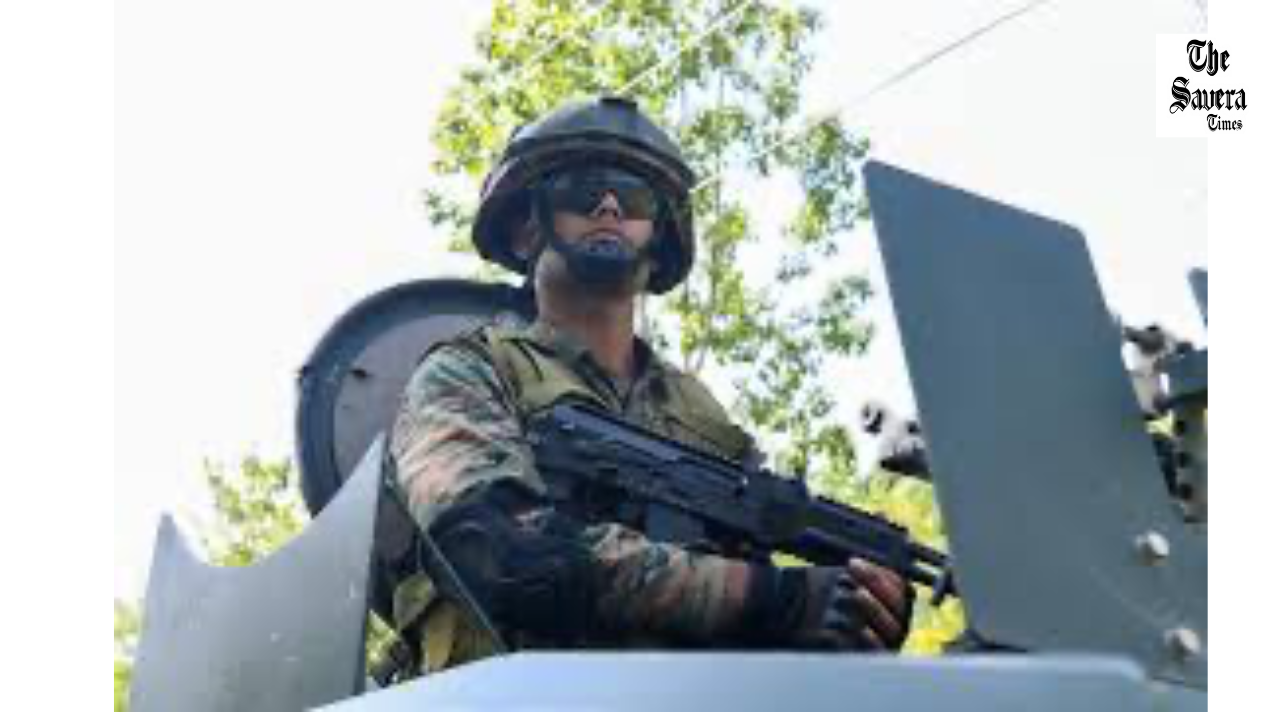
Operation Mahadev,
elimination of three
Lashkar-e-Tayiba
terrorists from
Pakistan, did not just serve
justice to the victims of the
Pahalgam attack but also to
those who lost their lives in
the October 20, 2024, Gagangir
terror attack. While probing the
Pahalgam attack, the National
Investigation Agency (NIA) was
able to establish a link to the
Gagangir attack in which seven
lives were lost.
The ballistic analysis revealed
that the cartridges, which were
recovered from Gangangir and
Pahalgam, were fired from
the same M-4 carbine. This
weapon was recovered by the
security forces who carried out
Operation Mahadev.
On October 20, 2024, Pakistani
terrorists attacked an APCO
Infratech worker’s camp at
the strategic Z-Morh tunnel in
Gagangir, Jammu and Kashmir.
The terrorists opened fire inside
the dining mess, killing seven
workers, including a doctor.
Investigations revealed that the
same module carried out both
attacks. It was the same set
of planners and handlers who
guided both attacks, the NIA
learnt during the investigation.
The Lashkar-e-Tayiba’s proxy,
The Resistance Front, first
claimed responsibility for
the Pahalgam attack and
then decided to deny it. This
was done as the outfit feared
a strong Indian response.
Despite withdrawing the claim,
From Gagangir to Pahalgam: How
Operation Mahadev Ended
India carried out Operation
Sindoor, which resulted in
the devastation of the terror
infrastructure.
An official explained that the
direct Pakistani hand was
already established by them,
and this time around, the
punishment was severe. The
NIA also learnt that Faisal Jutt
The NIA also learnt
that Faisal Jutt alias
Suleman, an accused
in the Gagangir attack,
had also taken part in
the Pahalgam attack.
part in the Pahalgam attack. He,
along with two of his associates,
Habeeb Tahir alias Chottu and
Hamza Afghani, were killed on
July 28, 2025, when the security
agencies executed Operation
Mahadev.
Following the operation, the
security forces recovered
two AK-47 rifles and one M-4
carbine from the terrorists.
The NIA probe was able to
pinpoint Pakistan’s direct role
in both these attacks based
on digital forensic evidence,
CCTV footage, ballistic reports,
IP tracking and social media
records.
The NIA probe also revealed
a pattern that was witnessed
in Jammu and Kashmir since
2023. This was the same module
of The Resistance Front which
had also carried out other
attacks in the Valley. The three
Pakistani terrorists killed
during Operation Mahadev had
been active in the Valley since
2023. They would strike and
then go hide in the dense forests
before getting instructions to
strike again.
The same module was
responsible for the December 21,
2023, attack on an Army convoy
in Poonch district. Five soldiers
were killed in the attack. On May
4, 2024, an Air Force convoy
was attacked at the Shahsitar-
Sanai area of Poonch, in which
one personnel lost his life. On
June 9, 2024, terrorists opened
fire on a bus carrying pilgrims
returning from Shiv Khori in
Reasi district. All these attacks
were claimed by the Lashkar-e-
Tayiba’s The Resistance Front.
The three terrorists had
infiltrated and had been on the
run in the Valley. They were
attacking at regular intervals
and used the dense forest
cover to hide from the security
forces. As they had become so
accustomed to the Valley, they
were used to the Gagangir and
Pahalgam attacks.
The mobile data that was
recovered during Operation
Mahadev revealed a pattern
behind all these attacks and how
they were interlinked. These
terrorists of The Resistance
Front were being directed by
a Lashkar-e-Tayiba operative,
Sajid Jatt alias Ali Bhai, through
encrypted communication
channels. Jatt also goes by
the alias ‘Langda’ and was
listed among the most wanted
terrorists. He was given charge
of reviving terror activities in
Jammu and Kashmir.
He was largely responsible for
setting up operations for The
Resistance Front, and he also
managed to execute several
successful operations in the
Valley.
Several high-altitude areas in Jammu and Kashmir have received the season's first snowfall in the past 24 hours....
Jammu: Joint security forces recovered a cache of arms and ammunition during a search operation in Jammu and...
Kashmir’s handicraft industry is on a path to revival after the turbulent years of militancy and the Covid-19...

Srinagar: INDIA Bloc leaders belonging to different political parties in Jammu and Kashmir on Saturday carried out a...
Srinagar: Jammu and Kashmir Chief Minister Omar Abdullah on Wednesday inaugurated a Rs 30.35-crore package of sports infrastructure...
Srinagar: The Jammu and Kashmir government has approved the provision of land for the installation of mobile towers...
Aries: The day will be auspicious...