Last Updated: October 17, 2026
Last Updated: October 17, 2026





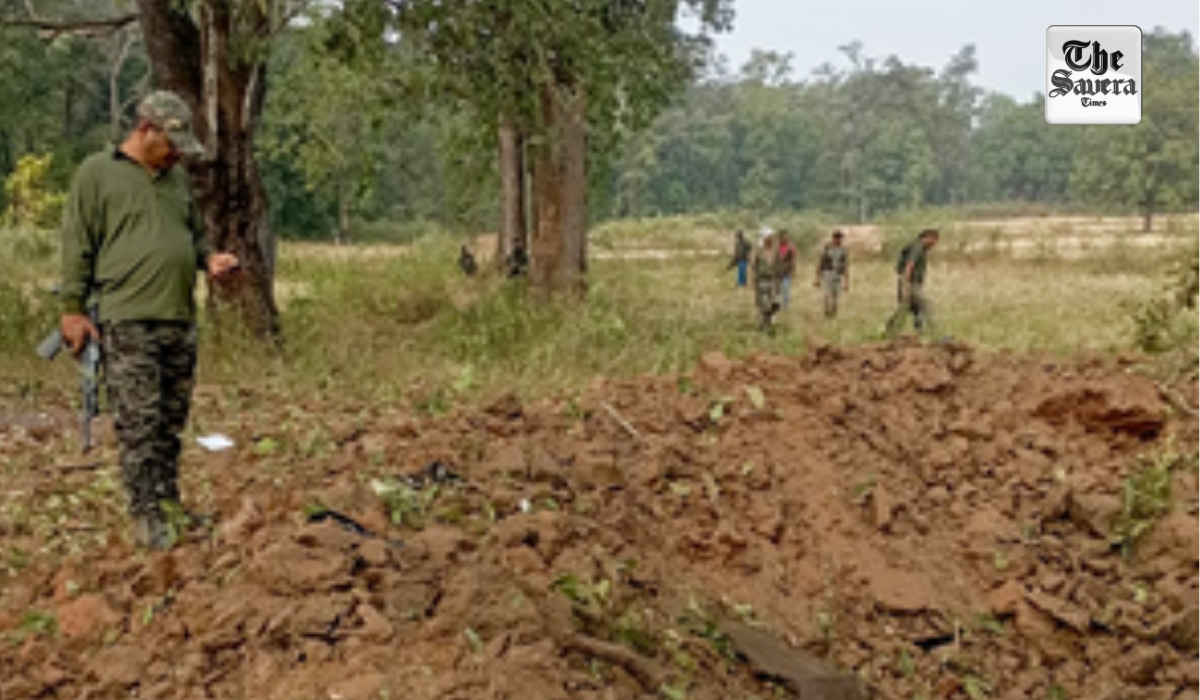
In 1967, a peasant uprising in West Bengal’s Naxalbari village gave rise to a farleft movement in India. What began as a movement claiming to protect the land rights of rural communities, resist tribal exploitation, and address governance gaps gradually evolved into a violent movement sustained by extortion and intimidation. For years, it was projected as a people’s movement, drawing support from sections of the local population and sympathisers who viewed it as a struggle against social and economic injustice. Later, the Naxalite movement spread across parts of West Bengal, Odisha, Jharkhand and Andhra Pradesh. Alongside its expansion, reports of violence, coercion and attacks on civilians and security personnel became common.
An official said that while the red rebels maintained their presence in remote villages, they also benefited from support networks in urban areas, where certain sympathisers and activists allegedly sought to justify or promote the movement through propaganda. When the National Democratic Alliance government led by Prime Minister Narendra Modi came to power at the Centre in 2014, it resolved to tackle the Left-Wing Extremism (LWE). An official said that national security planners believed it was necessary not only to address the threat on the ground but also to counter the narratives and ideological messaging targeting youths. According to the official, concerns grew over attempts by some groups to mobilise support through campuses and public platforms, with certain protests resulting in clashes with security forces. The violence that erupted around the Bhima Koregaon commemoration in 2018 near Pune in Maharashtra, followed by unrest in its aftermath, led to an investigation by the Pune Police.
The police alleged that the clashes had been covertly funded and organised through front organisations linked to the banned Communist Party of India (Maoist). (Two major Naxalite outfits, the People’s War Group (PWG) and the Maoist Communist Centre (MCC), merged on September 21, 2004, to form the Communist Party of India (Maoist), officially adopting the Maoist name for their unified organisation.) Several individuals were arrested, and investigators alleged that funds had been channelled to certain accused with the intention of fomenting unrest and provoking confrontation with the State. The Centre intensified its focus on Maoist-affected regions.
A twopronged strategy was adopted, combining security operations with accelerated development initiatives. Significant investments were made to improve connectivity in remote areas and lay the groundwork for a sustained campaign against the Maoist issue. In August 2024, Union Home Minister Amit Shah announced that the Modi government had set March 31, 2026, as the deadline to eliminate the Maoist threat under the “Naxal Mukt Bharat” mission. An official said that while much attention is often given to the successes achieved by security forces in neutralising Maoists and dismantling their networks, an equally important factor behind their decline has been the development works in affected regions. Development initiatives received widespread acceptance among local communities in Maoist-affected regions.
As governance and public services improved, many residents who had earlier remained silent or were perceived to be sympathetic to the Maoists began cooperating with the authorities. This shift in public sentiment proved to be a major turning point in the anti-Maoist campaigns, with locals providing valuable information that aided security operations, officials said, adding improved road and mobile connectivity helped security forces reach remote areas faster, while enhancing communication, intelligencesharing and operational coordination.
The Modi government adopted a clear policy, urging the Maoists to either surrender and rejoin mainstream society or face action. As security forces gained ground in Maoist strongholds, several top leaders and cadres chose to surrender. Others who remained active were killed during anti-Maoist operations. Those who surrendered were enrolled in rehabilitation programmes that provided psychological counselling, literacy and educational support, vocational training and livelihood assistance, helping them reintegrate into normal life. Security forces intensified their operations through major campaigns such as Operation Green Hunt and Operation Black Forest in 2025.
This resulted in the seizure of huge arms stockpiles, while several top Maoist leaders and commanders were either arrested or eliminated. On May 18 this year, Amit Shah said that the government had largely succeeded in making India free from Maoist violence. Officials note that while 126 districts were affected by the LWE between 2005 and 2010, the number declined over the years. After March 2026, only two districts continue to witness Maoist activity, and none are any longer the critically affected pockets. The government’s focus has now shifted towards preventing Maoist influence in urban areas. Intelligence Bureau officials say that attempts are being made by some pro-Maoist elements to infiltrate into protests and then instigate violence. They will try to keep the pot boiling, but would find it very hard as the eyes and ears of the agencies are very much to the ground
Read The Savera Times Evening Bulletin for the top India and world news, latest breaking headlines, major developments...

New Delhi: India and Vietnam on Friday reviewed their cooperation across key areas, including economic security, maritime engagements,...
New Delhi: The Union Ministry of Home Affairs (MHA) has sought detailed reports from the Punjab government on...
New Delhi: All India Students’ Association (AISA) National President Neha Bora was detained by the Delhi Police on...
New Delhi: The Directorate of Enforcement (ED) has provisionally attached assets and proceeds of crime worth Rs 136.44...

Mumbai: Jindal Saw on Friday reported a steep decline in its earnings for the second quarter of FY27,...

Aries: The day will be auspicious...