Last Updated: October 12, 2026
Last Updated: October 12, 2026





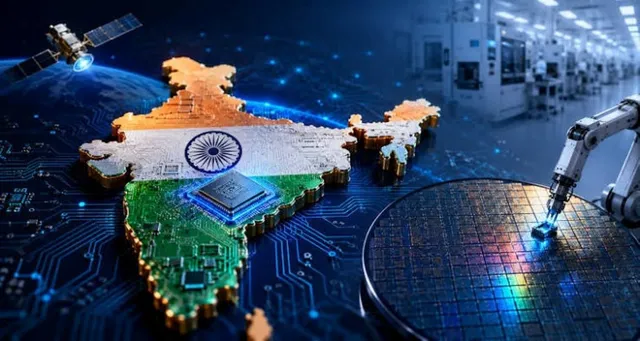
India has established formidable depth in semiconductor design and engineering, with its talent contributing to some of the world’s most sophisticated chip programmes. The strategic imperative now is to convert that engineering prowess into enterprise value—building Indian & India-based global semiconductor companies that invest in R& D in India, conceive and commercialise differentiated products, own the intellectual property at their core, and compete at or near the technological frontier in global markets. This is an important distinction. Participation in the semiconductor economy and ownership within it are not the same. India has long supplied high-quality engineering talent to the global technology industry; the greater economic prize lies in converting that intellectual capital into proprietary architectures, products and platforms; and those product decisions are made in India. In an industry where a disproportionate share of value accrues to those who own differentiated technology and IP, the emergence of Indian product companies could fundamentally alter the country’s position in the global semiconductor value chain. Semicon 2.0 can provide an important impetus to this transition. Approved with an outlay of Rs 1,27,500 crore, the programme places greater emphasis on chip design, R& D, talent development and the wider semiconductor ecosystem. It builds on the Union Budget 2026–27 announcement of ISM 2.0 with a focus on industry-led research, technology development and skilled workforce creation. The foundations are becoming increasingly substantial. India’s first semiconductor mission, backed by an outlay of Rs 76,000 crore, helped catalyse investment in fabrication, packaging and chip design. Under the programme, 12 semiconductor manufacturing projects representing committed investments exceeding Rs 1.64 lakh crore have now been approved, with three having commenced commercial production. Semicon 2.0 widens the aperture further—across design, fabrication, advanced packaging, equipment and materials, talent development, and along with ANRF & RDI fund, drives the next phase of R&D in India. For Indian startups, the opportunity is to move up the value chain—from providing semiconductor design and engineering services to building products and creating indigenous IP. Bringing together design support, industry-led R& D, specialised talent and patient venture capital can help promising deep-tech startups make this transition. Capital will be particularly consequential to this transition. Semiconductor ventures operate on timelines and risk profiles fundamentally different from those of conventional software startups, often requiring years of sustained engineering before meaningful revenues begin to materialise. Fabrication, validation and successive design iterations add further layers of cost and complexity, making access to patient, risk-tolerant capital essential. Building enduring semiconductor companies will therefore depend not simply on expanding the pool of available funding, but on cultivating an investment ecosystem with the technical understanding and long-term horizon required to underwrite innovation from early research through commercial scale. Yet capital alone cannot create globally competitive semiconductor companies. It must be complemented by a deeper continuum connecting universities, research institutions, startups and industry, allowing scientific and engineering advances to move more seamlessly from the laboratory into the marketplace. The most consequential semiconductor companies are typically built at this intersection—where specialised research meets entrepreneurial ambition, experienced engineering talent and a clear pathway to commercialisation. Strengthening industry-academia collaboration, expanding access to shared research and prototyping infrastructure, and creating more effective mechanisms for commercialising indigenous research can help turn promising technologies into defensible intellectual property, viable products and, ultimately, globally competitive enterprises. There is already an encouraging base from which to build. More than 100 startups are developing chips under India’s emerging design ecosystem. The challenge ahead is to ensure that the strongest of these ventures can progress from designing a chip to owning a product roadmap, building defensible IP, securing global customers and ultimately scaling into enduring technology enterprises. The ultimate measure of India’s semiconductor ambition will not be how much of the global value chain it can attract, but how much of the future it can create. The real breakthrough will come when chips conceived in India, powered by Indian R&D leading to intellectual property, built into globally competitive products become not the exception, but the signature of India’s technological ascent.
India’s total pulse production rose to 274.09 lakh tonnes in 2025-26 from 256.83 lakh tonnes in 2024-25, driven...

With literally thousands of different supplements on the market, many of them claiming to help with memory, it...

“She i s defined and differentiated with reference to man and not he with reference to her; she...

The second visit to India this year by a senior US naval officer has raised hopes that growing...

Once, Sookshma was pondering where to hide the wisdom that, when found, leaves nothing to be found. His...

When we evaluate the world’s educational institutions and university studies, our country’s IITs are at the forefront. Hyderabad’s...

Aries: The day will be auspicious...