


The Supreme Court of India, while conducting a special hearing on the petitions presented before it on Sunday, has said the same thing which is written in the Constitution that every citizen of the country has the freedom of vocal expression and he cannot be stopped from peaceful, non-violent protest. This clear decision of the Supreme Court is worth considering after what happened in Delhi recently. While considering the petitions presented before it, which included petitions regarding disruption of metro services, shutting down of internet and detention of people during the protests, the special bench said that neither metro services should be stopped, nor internet should be shut down nor the movement of people should be affected. A bench of Justices Joymalya Bagchi and V. Mohana conducted this special hearing. Article 90 of our Constitution guarantees every citizen the fundamental right to free expression and the right to protest in a nonviolent manner. To maintain peace, the government has Section 163A, formerly known as Section 144. The question now was whether, in order to maintain order and prevent violence, excessive measures were being taken, thereby infringing citizens’ fundamental rights. In its decision, the Supreme Court stated that if such a thing occurred, a petition for contempt proceedings should be filed against the relevant officials by Tuesday. From Mahatma Gandhi’s non-violent movement to the movement of Jayaprakash Narayan and his comrades during the Emergency under Indira Gandhi, evidence has demonstrated that the public is unwilling to surrender its fundamental rights. The country’s governments fully respect the Supreme Court, which is why, following this Supreme Court decision, the central government has taken several new steps. First, Jantar Mantar will no longer be a protest venue. The site, where protests were legally permitted and where thousands of protests have taken place, is no longer a venue for demonstrations. Furthermore, recognizing the right to expression and protest, the government has designated three locations in Delhi for protests: Ramlila Maidan, Burari Maidan, and CDB Maidan. When protests against the Chief Election Commissioner were taking place in Delhi recently and demonstrations at Jantar Mantar were banned, the suggestion was that the government should designate an alternative venue. Ramlila Maidan was being prominently mentioned. The same ground where Anna Hazare once organized a massive movement for the Lokpal Bill. The current situation is that the country’s opposition parties and the Cockroach Janata Party have decided to continue their opposition to the Chief Election Commissioner and the Commission’s SIR process. Opposition leaders have already met with the President. On Monday, the opposition held a protest march, in which lawyers wearing black coats also participated. It seems that politics is now being run in the name of protest. In response to the opposition’s protests, BJP Mahila Morcha leaders also protested at the Congress headquarters. We want to emphasize that such protests do not facilitate normal mobility and the daily lives of ordinary people. The hardship caused to commuters whenever protesters block traffic is no secret. The economic damage caused by traffic jams, demonstrations, and shutdowns is a significant disruption for a developing nation like India, which aims to achieve full development by 2047
Fundamental Rights and Freedom of Expression and Protest
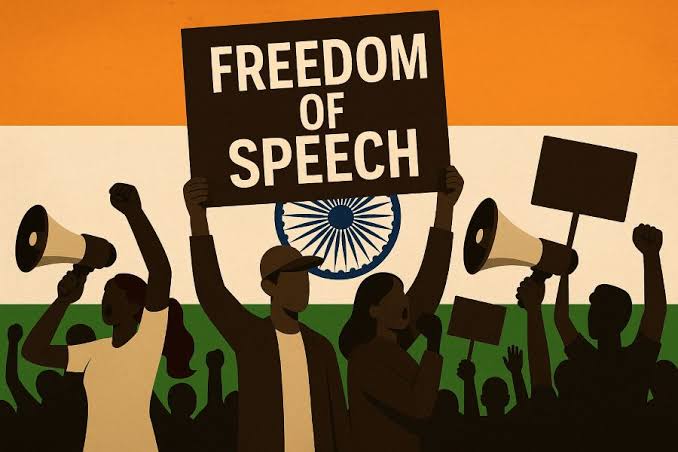
Fundamental Rights and Freedom of Expression and Protest