Last Updated: October 21, 2026
Last Updated: October 21, 2026





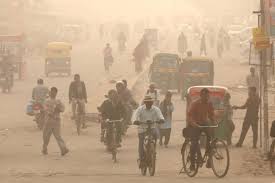
Due to environmental pollution, predicting future weather patterns in the country is becoming increasingly uncertain. The weather is undergoing a shift. Despite the onset of April, the heat has not yet reached the intensity typically observed during this time of year.
Current weather forecasts suggest that while the recent past witnessed a dry spell, the coming period—with the exception of Northeast India—will see the rest of the country receiving rainfall. The IMD’s monthly outlook indicates that the rains expected in April may not be favorable for farmers. Currently, the wheat crop stands ready in the fields. As of yesterday, April 1st, the official procurement of wheat has commenced in the *mandis* (grain markets) of Punjab.
However, given the sudden turn the weather has taken in Punjab—particularly the hailstorms witnessed in the Malwa region—the standing wheat crop appears to be getting flattened across the fields. This erratic behavior of the weather is becoming a source of significant distress for farmers. The general consensus remains that, much like every other year, the summer heat will be relentless this time around as well. Blistering heatwaves are expected to wreak havoc on daily life for the general public.
In parts of Eastern, Central, and North-Western India, as well as the South-Eastern peninsula, the number of days experiencing severe heat between April and June is projected to exceed normal levels. With the exception of certain pockets in Maharashtra and Telangana, minimum temperatures across most parts of the country are expected to remain higher than average.
This reality, however, may not be immediately apparent in April. The adverse impact of environmental pollution is evident in the deterioration of weather patterns. The blanket of snow on the mountains no longer persists for extended periods. Glaciers fail to remain solid and begin to melt rapidly due to rising temperatures. Incidents of cloudbursts have become more frequent.
Unprecedented rainfall triggers floods, resulting in massive loss of life and property. This alarming situation is becoming a recurring phenomenon, arising almost every year.
Good Evening Viewers! Catch up on the day's biggest stories with The Savera Times Evening Bulletin. Get the...

Congress leaders continued their protest outside the Jaipur Police Commissionerate on Tuesday, demanding the registration of a zero...
On the auspicious occasion of Vijayadashami, Prime Minister Narendra Modi on Tuesday called on the countrymen to unite...
A historic milestone was achieved on Tuesday in the expansion of Chhattisgarh's rail networkA historic milestone was achieved...

Model Shraddha Dubey, one of the main accused in the death of Lucknow businessman Shiv Sharma, has been...

Rashtriya Swayamsevak Sangh (RSS) chief Mohan Bhagwat on Tuesday called for strengthening national unity, social harmony, indigenous practices...
Aries: The day will be auspicious...