Last Updated: November 8, 2026
Last Updated: November 8, 2026





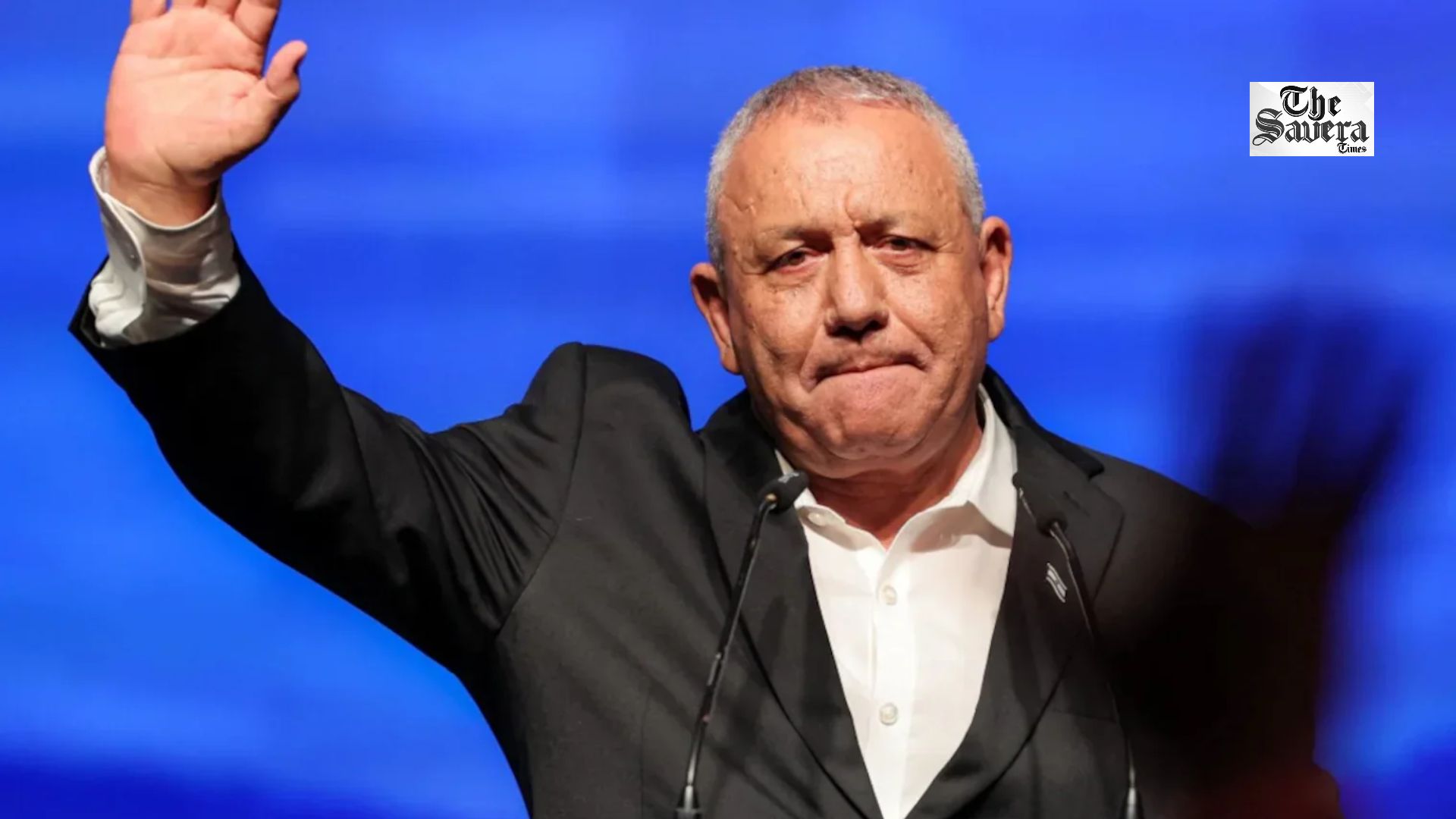
Jerusalem: Israeli President Isaac Herzog has tasked opposition leader and ex-military chief Gadi Eisenkot with forming the next government in Israel, delivering a significant blow to Prime Minister Benjamin Netanyahu’s efforts to stay in power after the October 27 elections.
During the meetings with different factions in parliament, Eisenkot was recommended to serve as prime minister by 67 lawmakers. Only 46 lawmakers backed Netanyahu, while seven did not recommend either candidate.
Herzog made the announcement after meeting with different political leaders, including Netanyahu and Eisenkot, on Saturday, November 7. The official handover of the mandate will happen at 5pm on Sunday, November 8 at the President’s Residence in Jerusalem.
Eisenkot will have 28 days to form a coalition government, which could be extended for a further 14 days. This marks the first opportunity for someone to step in and replace the longest serving prime minister in Israel’s history.
Eisenkot Gets 67 Lawmakers’ Recommendation
The recommendations come as Israel experiences a shift in political power in the 120 member Knesset. With just 61 seats needed to win a majority in parliament:
Eisenkot was recommended by 48 members of the Change Bloc, seven members of the Arab party Ra’am, and 12 members of the Joint List. Netanyahu was recommended by his right wing and religious allies with 46 recommendations. The seven members of United Torah Judaism (UTJ) did not recommend either candidate.
However, Eisenkot still does not have a clear majority to govern as there could be some issues when it comes to forming a coalition due to differences between the different parties.
While Arab-led factions have said they would be willing to back an outsider to replace Netanyahu, it is seen as a political minefield and some parties in Eisenkot’s camp are wary of relying on Arab support.
Who is Gadi Eisenkot?
Eisenkot, who joined politics in 2022, was previously chief of staff to the Israel Defense Forces (IDF). His party Yashar won 21 seats in the October 27 election but the Change Bloc as a whole won 48 seats.
He has become Netanyahu’s main rival after uniting a range of parties from centre-left to right leaning.
Eisenkot briefly served in Netanyahu’s war cabinet after the Hamas attack on October 7, 2023 but has since returned to the opposition. He has been highly critical of how the government has handled the Gaza war and vowed not to serve in a Netanyahu led government.
Netanyahu Still Fighting
Despite the setback, Netanyahu is refusing to give up and wants to form a national unity government.
He has been highly against any government that relies on Arab-led parties as they are “terrorists”. His comments have been heavily criticised by Eisenkot’s party who are asking Likud members to think again about partnering with far-right parties.
There are still many issues to overcome as there are disagreements between the different parties around the Gaza war, national security, military conscription and Netanyahu.
Eisenkot has a few options to choose from. He could try and create a minority government with outside support from Arab parties, negotiate with ultra-orthodox parties or try to form a larger national unity government.
However, this could be extremely difficult as there are likely disagreements around waiving military service for ultra-orthodox men.
What Happens If Eisenkot Can’t Form A Government?
If Eisenkot cannot form a government within the 28 days, Herzog can extend the time frame for a further 14 days. If Eisenkot still fails to form a government, another candidate could be given the mandate. This could give Netanyahu another chance.
Eventually, if Eisenkot still cannot form a coalition government, new elections will be held.
This decision by Herzog has given Netanyahu a huge challenge to his long political career. Eisenkot will need to utilise the support he received to create a functional government.
New Delhi: Apple Executive Chairman Tim Cook on Sunday extended Diwali greetings to people celebrating the festival across...

US President Donald Trump has directed the Department of Justice to investigate Democratic lawmakers over alleged threats against...

At least 7 people were killed and 2 others injured in a horrific road accident in Afghanistan's eastern...

A gunman opened fire indiscriminately in the historic city of Krakow, Poland, on Saturday (local time).

Iran's Islamic Revolutionary Guard Corps (IRGC) navy claimed early Sunday that two oil tankers attempting to transit the...

At least 11 people were killed in airstrikes near the Yemeni capital, Sanaa, on Saturday.

Aries: The day will be auspicious...