Last Updated: October 24, 2026
Last Updated: October 24, 2026





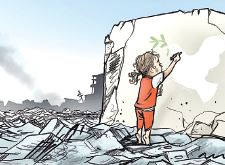
On October 10, 2025, a fragile ceasefire briefly silenced the guns in Gaza. Brokered under an international initiative tied to President Donald Trump’s 20-point peace plan, the truce opened a narrow window for relief and prisoner exchanges after two years of relentless conflict. The pause has already yielded painful and limited gains: Hamas released 20 living hostages and returned 15 bodies of captives, while another 13 bodies remain inaccessible, according to parties involved in the exchange. Yet barely two weeks later the truce is under strain, with renewed strikes that have killed more than 80 people and threatened to undo the limited progress achieved so far.
The ceasefire has produced a paradox. On one hand it allowed partial Israeli withdrawals, the exchange of prisoners, and a constrained flow of humanitarian aid into an enclave where basic services lie in ruins. On the other hand it has exposed deep uncertainties about security, governance, and reconstruction. Gaza today is devastated. Estimates used by relief agencies and quoted by officials place the death toll near 68,000, with more than twice that number wounded and roughly 2.2 million people displaced. The destruction of infrastructure and livelihoods makes rebuilding an immense undertaking that will take years.
At the heart of the impasse are three political questions. Will Hamas disarm? Who will govern Gaza during reconstruction? Can Israel’s security be secured without denying Palestinians meaningful self-rule? The peace blueprint proposes an interim administration of technocrats to oversee reconstruction, backed by international monitors. A so-called board of peace, reportedly to be chaired by President Trump with figures such as former British prime minister Tony Blair among its members, has been suggested to coordinate donors and political oversight. For many Palestinians the idea of outsiders managing daily life risks further alienation. Legitimacy matters more than efficiency. Lasting peace will require local buy-in as much as external funding.
Security concerns complicate reconstruction. Israel has imposed tight controls on materials entering Gaza, citing the need to prevent weapons smuggling. These restrictions slow rebuilding and amplify civilian suffering. International planners say strict monitoring and clear, enforceable protocols will be essential if construction materials are to be allowed in without creating new security risks.
The question of disarmament is equally fraught. Israeli demands that Hamas be disarmed face categorical resistance. Hamas seeks political recognition and guarantees for its people. Negotiated disarmament would require transparency, phased verification, and credible guarantees for both Palestinian safety and Israeli security. Without such safeguards the “de-Hamasification” many international actors call for could become a pretext for repression or further fragmentation.
Regional actors remain central. Egypt, Qatar, Turkey, Gulf states and the United States all have stakes in Gaza’s future. Egypt has continued shuttle diplomacy, hosting follow-up talks, while two of Trump’s envoys, including Jared Kushner, visited the region to shore up commitments. The Sharm el Sheikh backing for the ceasefire highlights how regional consensus can enable pauses in violence. But history shows that external guarantees alone cannot substitute for political solutions that address grievances on the ground.
Reconstruction must therefore go beyond bricks and roads. It must rebuild institutions, restore services and deliver accountability for wartime abuses. Calls for credible mechanisms to investigate alleged war crimes and to address displacement are growing louder. Aid without justice risks cementing grievance.
For now the ceasefire’s durability remains an open question. Recent confrontations along the so called Yellow Line and subsequent strikes show how quickly a pause can unravel. Whether this moment becomes a turning point or merely another interlude in a long cycle of violence depends on whether international actors can marry security assurances with a legitimate political process that includes Gazans themselves.
The road from truce to peace will be long, complex and contested. Reconstruction without representation will not heal the social wounds. Lasting stability will require patient diplomacy, accountable institutions and, above all, a plan that gives Gaza’s people a real stake in their future.
Washington: US President Donald Trump has acknowledged that the war with Iran has driven up oil prices and...
Washington: US President Donald Trump has announced a new labelling initiative to identify American-produced seafood, seeking to give...
Kinshasa: A major clinical trial to evaluate vaccines against the Bundibugyo Ebola virus began Friday in the eastern...
Washington: US President Donald Trump has warned that American forces could launch another round of military strikes against...
The Indian Army on Friday rejected claims on social media that the Army had taken action against the...
Abdul Majid Hakim Elahi, Iran's Supreme Leader's representative and senior diplomat, said on Friday that the US has...
Aries: The day will be auspicious...