Last Updated: October 12, 2026
Last Updated: October 12, 2026





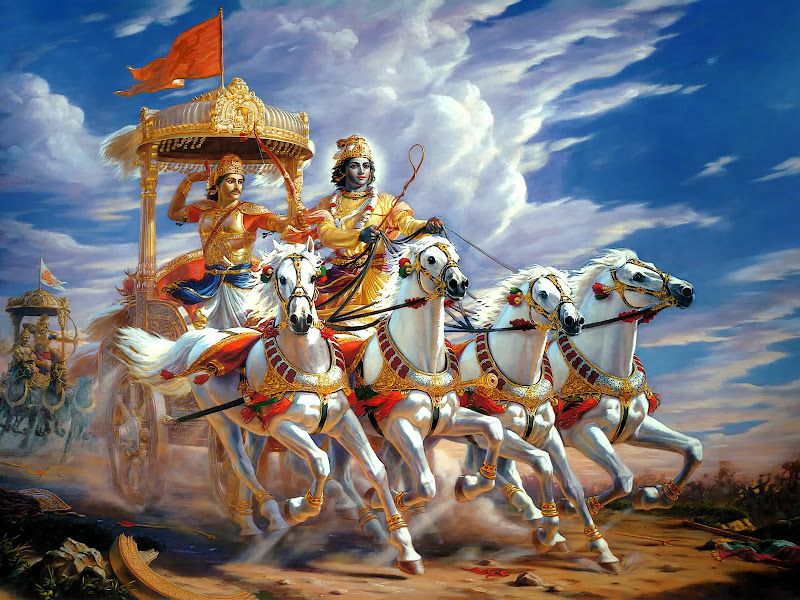
The Shrimad Bhagavad Gita levels, and to understand it, we need to be aware of this distinction. At times, Sri Krishna interacts with Arjuna as a friend or guide, addressing the daily problems faced by human beings. At other times, He appears as the Supreme Being; in that state, He declares that He imparted this imperishable Yoga to Vivasvat—a knowledge passed down through succession to the “Raja-Rishis” (royal sages) (4.1)—but over time, this Yoga was lost (4.2). Vivasvat is interpreted as the Sun God, a metaphor for light. It is acknowledged that the universe began with light, followed by the formation of matter. Yet, Sri Krishna indicates that He existed even before the light.
Sri Krishna refers to the “Raja-Rishis”, who were simply enlightened beings from various points in time. This knowledge was lost because, over the ages, it shifted from an experiential level to one of rituals and ceremonies. It became less about practice and more about preaching, eventually taking the form of organized religions and sects. Arjuna questions how Sri Krishna could have taught this to the Sun, given that His birth occurred only recently (4.4). Sri Krishna replies that both He and Arjuna have undergone many births; while Arjuna is unaware of them, He remembers them all (4.5). Arjuna’s question is entirely natural and logical from a human perspective. At this level, we are bound by time, experiencing birth and death. We have no knowledge of what existed before birth or what will follow death.
Sri Krishna’s response comes from the perspective of the Supreme Being, who exists beyond time. Earlier, He had explained the nature of the soul—eternal and capable of changing physical bodies just as we discard old clothes. Whoever attains that eternal state transcends time. For instance, a flower is unaware of its power to bloom, even though this power existed beforehand and will persist even after the flower’s life.
One of the most common questions people ask these days is how to lose belly fat. Belly fat...

Turtle doves picking fallen grain from Paddy fields, Cicada chirping on willow trees and the cackle of migratory...

Andre Agassi became one of the greatest tennis players in the world. Agassi’s father, Mike, a former Olympic...

Have you ever wondered how the words you speak can influence your thoughts, emotions, behavior, relationships and even...

Ac There’s no doubt that smoking can cause serious health related problems and also up the risk of...

Are you one of those who exercise daily but are still unable to lose weight? We might have...

Aries: The day will be auspicious...