Last Updated: October 18, 2026
Last Updated: October 18, 2026





Abhishek Vij
The student protest against paper leaks, held at Delhi’s Jantar Mantar under the banner of the ‘Cockroach Janata Party,’ gained significant attention following a ‘Parliament March’ by the youth on July 20 and the ensuing intense clashes with the police and administration. The central government handled the situation prudently, and the then Education Minister, Dharmendra Pradhan, resigned. Subsequently, as activities from the protest were repeatedly reviewed on social media, the derogatory language used by a few young people against Prime Minister Narendra Modi and the government drew notice. MP and actress Kangana Ranaut even went so far as to label this youth cohort “Generation Gutter.” Undoubtedly, the abusive language employed by some of the protesting youths faced condemnation at all levels.
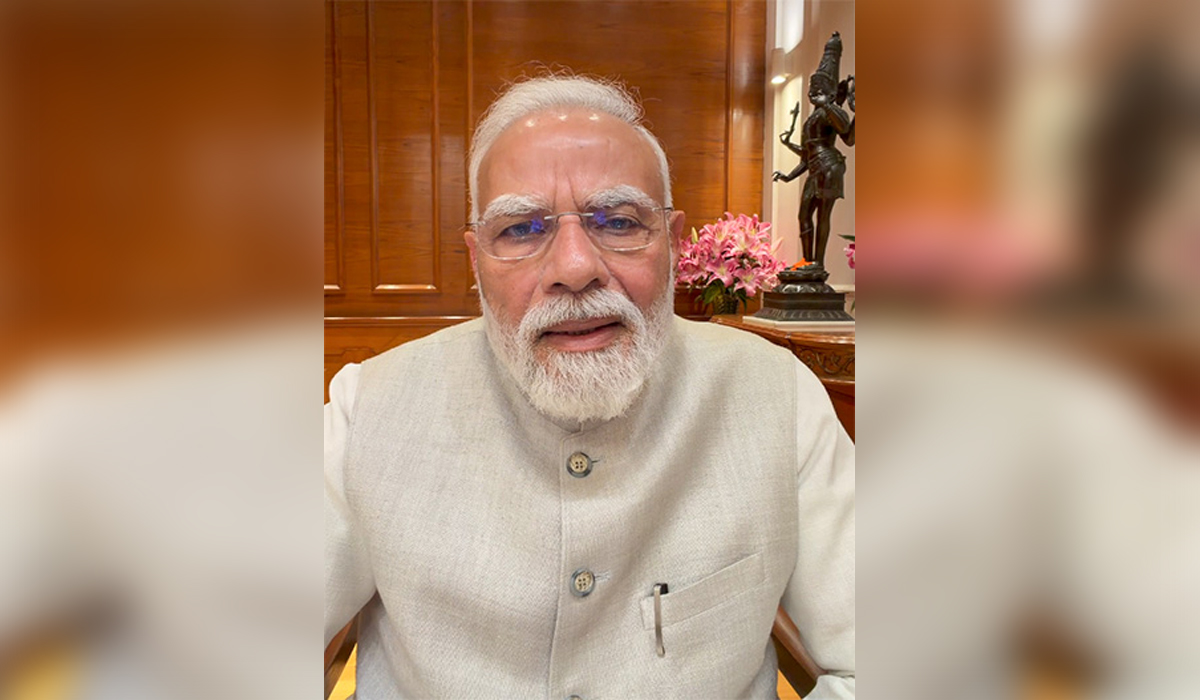
It appeared likely that strict action would be taken against these individuals. However, on the night of July 31, Prime Minister Narendra Modi issued a social media message offering counsel; referring to these misguided youths as “my children,” he spoke of forgiving them. He stated that despite open abuse directed at him and his late mother, he forgave these young people so they would not lose the opportunity to move forward in life. The Prime Minister’s stance has drawn widespread praise. Yet, a question worth considering remains: what kind of language does today’s generation use to express affection or anger? Society desires that the younger generation be educated in the use of civil language.
Analysts have also urged an examination of why a few youths resorted to such crude language to express dissent. It is evident that today’s youth have failed to connect with their teachers or with the language and literature found in books. The lack of connection with teachers stems from the “tuition culture,” while the disconnect from books and the refined language of education is attributed to the proliferation of social media. The young generation, which constantly gathers information via social media platforms like Facebook, Instagram, and X, has likely picked up the art of satire—as well as profanity and abusive language—from these sources and from popular OTT programs.
Much of the content served on OTT platforms features the open use of expletives. In a country where the importance of books is declining while the significance of being online rises, how can we proudly claim that nearly the entire Indian population owns a mobile phone? Social media platforms are unlikely to foster literary language; instead, they promote colloquial and casual speech. When protesting, young people often resort to the very abusive language they have picked up from these sources. We acknowledge that Gen Z feels shortchanged by the current education system; the New Education Policy, marketed as a pathway to employment-oriented learning, has failed to actually provide jobs. Results of competitive examinations are often hijacked by paper-leak mafias. Students are left seething with anger and outrage when forced to retake exams. Because this has happened repeatedly, the anger among young people during student protests reached a boiling point. Since the paper-leak issue was nationwide, youth protests erupted not just in Delhi but in cities across the country. We clearly understand that the resignation of a minister alone will not suffice; the entire system needs an overhaul. Interest in the academic environment must be rekindled among students, and they need to be re-engaged with the value of books and linguistic proficiency
Victories in universities and colleges underline the organisation’s campus presence, with similar gains reported in Delhi, Punjab and...
A three year old Swarnlata Mishra was travelling with her father through Katni in Madhya Pradesh. As their...

In the past few years, incidents of religious conversion have been increasing in the country. Discussions about Christian...
India’s space sector is undergoing a rapid commercial transformation following policy reforms that have opened the industry to...

Can former Kerala Chief Minister Pinarayi Vijayan emerge from a barrage of investigations with his political reputation intact,...

The rhetoric of regime change and the romanticisation of Bangladesh’s uprising risk undermining the very democratic institutions that...
Aries: The day will be auspicious...