Last Updated: October 22, 2026
Last Updated: October 22, 2026





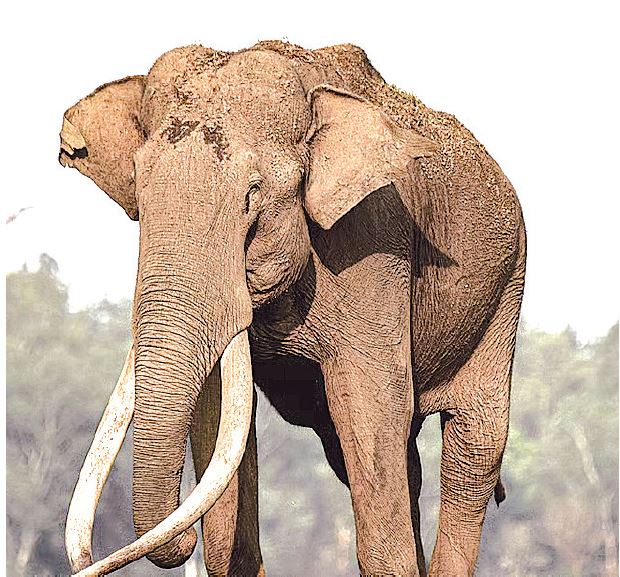
DNA-based Synchronous All-India Population Estimation of Elephants, divides the population into four main regions: the Western Ghats, North Eastern Hills and Brahmaputra Flood Plains, Shivalik Hills and Gangetic Plains, and Central India and Eastern Ghats. Each region faces unique conservation challenges, with human encroachment and habitat fragmentation emerging as recurring threats. (c)
India is home to 22,446 elephants, according to the latest census results released on October 15, 2025. The nationwide population estimate marks a significant shift in methodology, as it is the first in India to employ DNA-based mark–recapture techniques. This approach provides a more precise understanding of elephant numbers and distribution, establishing a new baseline for monitoring, conservation, and policy planning. Experts caution that the figures should not be directly compared with previous censuses due to the methodological changes.
The report, titled Status of Elephants in India: DNA-based Synchronous All-India Population Estimation of Elephants, divides the population into four main regions: the Western Ghats, North Eastern Hills and Brahmaputra Flood Plains, Shivalik Hills and Gangetic Plains, and Central India and Eastern Ghats. Each region faces unique conservation challenges, with human encroachment and habitat fragmentation emerging as recurring threats.
The Western Ghats, which stretch across Karnataka, Tamil Nadu, and Kerala, host India’s largest elephant population of 11,934. Karnataka alone accounts for 6,013 elephants, followed by Tamil Nadu with 3,136, and Kerala with 2,785. Despite the sizeable population, the report warns that these elephants face increasing habitat fragmentation. Expanding commercial plantations, farmland fencing, invasive plant species, urbanization, and large-scale developmental projects are disconnecting once-contiguous populations. Protecting connectivity corridors in this region is crucial to allow elephants to move freely without escalating conflicts with humans.
The North Eastern Hills and Brahmaputra Flood Plains hold the second-largest population, with 6,559 elephants spread across Arunachal Pradesh (617), Assam (4,159), Manipur (9), Meghalaya (677), Mizoram (16), Nagaland (252), Tripura (153), and northern West Bengal (676). Historical exploitation of natural resources, ongoing infrastructure development, and dense human settlements have fragmented habitats, placing elephants in small, isolated pockets. The report emphasizes the need for enhanced corridor management and law enforcement strategies to ensure long-term survival in this landscape. Fatalities from electrocution and railway collisions remain significant, while mining and highway construction further disrupt habitats.
The Shivalik Hills and Gangetic Plains support 2,062 elephants, with Uttarakhand hosting 1,792 individuals, Uttar Pradesh 257, and Bihar 13. In Central India and Eastern Ghats, 1,891 elephants were recorded, including populations in Jharkhand (217), Odisha (912), Madhya Pradesh (97), Chhattisgarh (451), Maharashtra’s Western Ghats and Gadchiroli (63), southern West Bengal (31), and Andhra Pradesh (120). Here, habitat degradation from mining, linear infrastructure development, and invasive plant species is forcing elephants to range outside their historical territories, often bringing them into conflict with human settlements.
The assessment underscores that elephant conservation is closely linked to local community support. Human-elephant interactions are intensifying as habitats shrink, making conflict mitigation and compensation strategies essential. Policymakers are urged to implement uniform compensation mechanisms across regions with elephant populations, prioritizing community well-being alongside wildlife protection.
The report highlights the urgent need to strengthen ecological corridors and restore degraded habitats. By improving connectivity between fragmented patches, elephants can access larger territories for foraging, migration, and breeding. In addition, stricter monitoring of developmental projects and enhanced protection strategies are necessary to minimize human-elephant conflict. Without these measures, the report warns, elephants may increasingly venture into human-dominated areas, risking both human safety and elephant survival.
Experts note that India’s Asiatic elephants, unlike their African counterparts, are particularly sensitive to habitat disruption. They require extensive, contiguous landscapes to thrive, and any reduction in habitat quality can have cascading effects on their health, breeding success, and population stability. Conservationists emphasize that DNA-based population monitoring, while groundbreaking, is only effective if paired with proactive habitat management and community engagement.
The census also underlines the broader ecological role of elephants as ecosystem engineers. By facilitating seed dispersal, shaping forest structure, and maintaining biodiversity, elephants contribute significantly to the health of the forests and landscapes they inhabit. Protecting them, therefore, is not only an issue of animal welfare but also a critical component of environmental sustainability.
The report concludes with a call to action: prioritizing habitat connectivity, restoring degraded landscapes, enforcing protective regulations, and integrating local communities into conservation strategies are imperative to safeguard India’s elephant population. As pressures from development, agriculture, and climate change mount, the survival of these gentle giants depends on a balanced approach that harmonizes human needs with wildlife conservation.
Good Evening Viewers! Get the latest updates from India and around the world with The Savera Times Evening...

Bharatiya Janata Party (BJP) National General Secretary Smriti Zubin Irani launched a scathing attack on Congress MP and...

New Delhi: Cockroach Janata Party (CJP) leaders Saurav Das and Ashutosh Ranka will be released from judicial custody...

According to police, three suspicious young men are seen in CCTV footage. Efforts are underway to identify them....

A video has surfaced of an alleged attempted assault on Jan Suraj Party's Bihar president Manoj Bharti. The...

Two accused have been convicted and sentenced to 10 years of rigorous imprisonment in a 2017 drug trafficking...

Aries: The day will be auspicious...