Last Updated: October 21, 2026
Last Updated: October 21, 2026





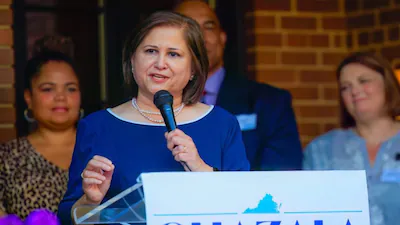
For Barack Obama, the central question shaping his return to public political life is not whether he holds personal ambition but whether the United States can withstand its present political strain. Obama has begun engaging more visibly in campaigns and strategy sessions, driven by his belief that the country’s democratic fabric is under pressure. If that pressure intensifies, his involvement will likely grow stronger. While Obama’s re-engagement suggests a renewed urgency in American politics, another story is unfolding that speaks to broader shifts in identity, belonging, and representation in the United States. The election of Ghazala Hashmi as the Lieutenant Governor of Virginia reflects a changing political landscape in which immigrants and minority communities are stepping into leadership roles once seen as unreachable. Hashmi’s journey begins far from Richmond, where she now occupies high office.
Born in Hyderabad in 1964 to Zia Hashmi and Tanveer Hashmi, she grew up in a family that valued education and public service. Her father, an alumnus of Aligarh Muslim University, completed postgraduate studies and a law degree before pursuing a PhD in international relations. Her mother graduated from Osmania University’s Women’s College. When Hashmi was four, her family moved to the United States, settling in small-town Georgia at a time when public schools were undergoing desegregation.
The family was one of the very few South Asian families in the area, and these formative experiences shaped her understanding of race, community, and belonging. In campaign materials, Hashmi reflects on her early awareness of cultural divides and the efforts required to bridge them. She excelled academically, graduating as valedictorian in high school, and went on to earn a bachelor’s degree from Georgia Southern University and a PhD in American literature from Emory University. The grounding in literature and history would later inform her public voice, where she often speaks about the American story as unfinished and evolving. After marrying Azhar Rafiq, Hashmi moved to the Richmond region. There, she spent nearly three decades working in higher education, first at the University of Richmond and later at Reynolds Community College.
Her professional life focused on teaching, mentoring, and expanding opportunities for young people. For many years, politics was not her focus. Her public role was rooted in education, service, and advocacy within academic institutions. But 2017 marked a turning point. When President Donald Trump announced restrictions on travel from several Muslim-majority countries, Hashmi felt something shift. The policy made her question whether the country she had called home for most of her life still welcomed people like her. She has said in interviews that this moment forced her to consider the meaning of belonging and participation in American democracy. That decision led her to run for public office in 2019, when she challenged Republican incumbent Glen Sturtevant for a seat in the Virginia Senate.
Her campaign message was simple and direct: Ghazala Hashmi is an American name. It spoke to immigrant families, students, professionals, and long-time residents who believed in an inclusive vision of America. Her victory flipped the chamber to Democratic control and marked a milestone: she became the first Muslim woman elected to the Virginia Senate. Her rise did not stop there. In 2024, she was appointed Chair of the Senate Education and Health Committee, giving her influence in shaping policy on public education and reproductive health. In May of that year, she announced her candidacy for Lieutenant Governor, arguing that Virginia needed leadership capable of resisting polarization and institutional breakdown. She anticipated the national political tensions that would continue to shape state-level governance.
Now elected as Lieutenant Governor of Virginia, Hashmi assumes a role that includes presiding over the Senate and stepping into the governorship if the position is vacated. Her priorities are clear. She emphasizes the protection of reproductive rights, the safeguarding of access to contraception, and strong measures to address gun violence. On her official platforms, she states her commitment to reducing firearm deaths through background checks, safe storage laws, strengthened red flag laws, and restrictions on assault-style weapons. She also speaks regularly about resisting bigotry, whether religious, gender-based, or racial. Her identity has not gone unquestioned. During the campaign, she faced comments questioning her heritage and belonging.
In one instance, Virginia G overnor Glenn Youngkin’s remarks about her name drew public criticism. Hashmi responded by asserting her place in Virginia’s civic life. She reminded voters that she had lived in the state for more than thirty years and raised her family there. She stated that she would not be deterred by prejudice. The result of the election offered its own response. Voters signaled that the state was ready to support leadership grounded in inclusiveness and service.
Hashmi’s victory coincided with another milestone: Zohran Mamdani’s election as the first Indian-origin and Muslim mayor of New York City. Together, these results highlight a growing political presence among communities that have historically been marginalized in American public life. These outcomes reflect what Hashmi has often described as the American promise. The belief that identity is not a barrier but a contribution. The belief that belonging is not inherited; it is built. And the belief that public service can be both personal and universal at once.In this moment, where Obama returns to political engagement out of concern for the nation’s direction, Hashmi’s victory signals that another version of America remains possible. One in which representation is not merely symbolic, but lived and practiced
Protests in Jakarta, Yogyakarta and Bandung brought students onto the streets over rising costs, forest fires and civil...
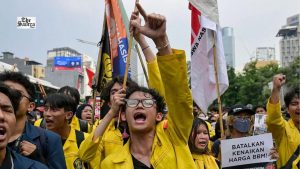
Organisations linked to Neville Roy Singham are under US congressional scrutiny over funding. Their coverage of protests in...

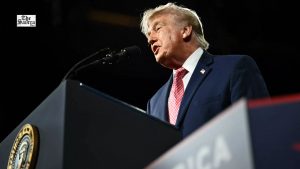
US President Donald Trump says Washington and New Delhi are close to a trade agreement that will differ...
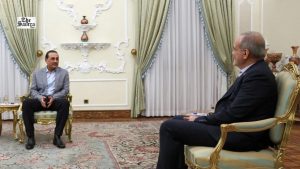
Iran has ruled out transferring its enriched uranium stockpile outside the country, with security official Mohsen Rezaei reiterating...
Donald Trump has urged Volodymyr Zelensky to pursue a peace deal with Russia, warning that Ukraine could face...
Pakistan, battling insurgencies at home and tensions along multiple borders, is too overstretched to offer meaningful military support...
Aries: The day will be auspicious...