Last Updated: October 15, 2026
Last Updated: October 15, 2026





From the Perspective of a Seeker, Give Time a Chance
K SIVA PRASAD
Retired senior IAS officer in
the Punjab Government.
To develop and ripen, a fruit absorbs nutrients from its parent tree. Eventually, it detaches itself from the tree to embark upon its own journey. The process of growing into a mature tree itself involves various stages of activity. Conversely, an unripe fruit must remain attached to the parent tree until it ripens—that is, until it becomes capable of commencing its journey independently.
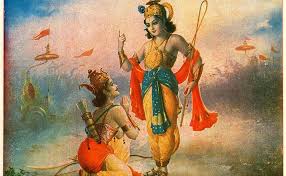
However, a ripe fruit should not tempt an unripe fruit to leave the tree, for the latter is not yet ready to undertake an independent journey. If it fails to take the time to receive the necessary nourishment from the parent tree, it will perish. Therefore, Sri Krishna states: “A wise person—one who is steadfastly established in the true nature of the Supreme Self—should not unsettle the minds of the ignorant who remain attached to scripturally ordained duties by creating confusion or instilling a lack of faith in their actions.
Rather, by diligently performing all scripturally ordained duties himself, he should inspire them to do the same” (3.26).
Earlier, Sri Krishna had stated: “The deluded individual who forcibly restrains his external senses but continues to dwell upon sense objects in his mind is deemed a hypocrite or a pretender” (3.6). Such individuals are merely deluding themselves; their condition is no different from that of the ignorant persons whose actions were forcibly halted by a wise individual—a scenario described in the aforementioned verse (3.26).
In a classroom of one hundred students, each student grasps the same lesson in a unique manner, based on their individual understanding and state of mind. Similarly, a “Sannyasi” (renunciate)—who has realized the futility of action-driven pursuits in life—should not encourage a “Brahmachari” (householder) to withdraw from family life. The “Brahmachari” is better positioned to learn the lesson regarding the futility of action-driven pursuits precisely through the experiences of his own family life. There is no other way.
Shri Krishna waited to awaken in Arjuna the hunger to learn the Gita. Until then, Shri Krishna allowed him to engage in worldly duties and to experience the joys and sorrows of life. The teachings of the Gita were imparted only when the opportune moment arrived. Thus, learning occurs when there is an inner hunger for it—a state in which everything we observe, and every situation in life that we encounter, can become a teacher. (To be continued)
Singapore: Two Singapore-registered container vessels were reportedly struck by unknown projectiles while transiting the Strait of Hormuz on...

Shimla: The Himachal Pradesh government has constituted a four-member commission to examine the reorganisation of administrative units in...

New Delhi: The Supreme Court on Wednesday listed for November 17 the appeal filed by self-styled godman Asaram...

Ranchi: Doctors in Jharkhand launched a protest on Wednesday over a slew of demands concerning their safety and...

Greater Noida: Police and Anti-Narcotics Team in Uttar Pradesh’s Greater Noida have seized ‘ganja’ worth Rs 1 crore...

New Delhi: The Enforcement Directorate (ED) has attached assets worth Rs 2,032.81 crore belonging to Reliance Power Ltd...
