Last Updated: October 12, 2026
Last Updated: October 12, 2026





-Himanshu Nitnaware
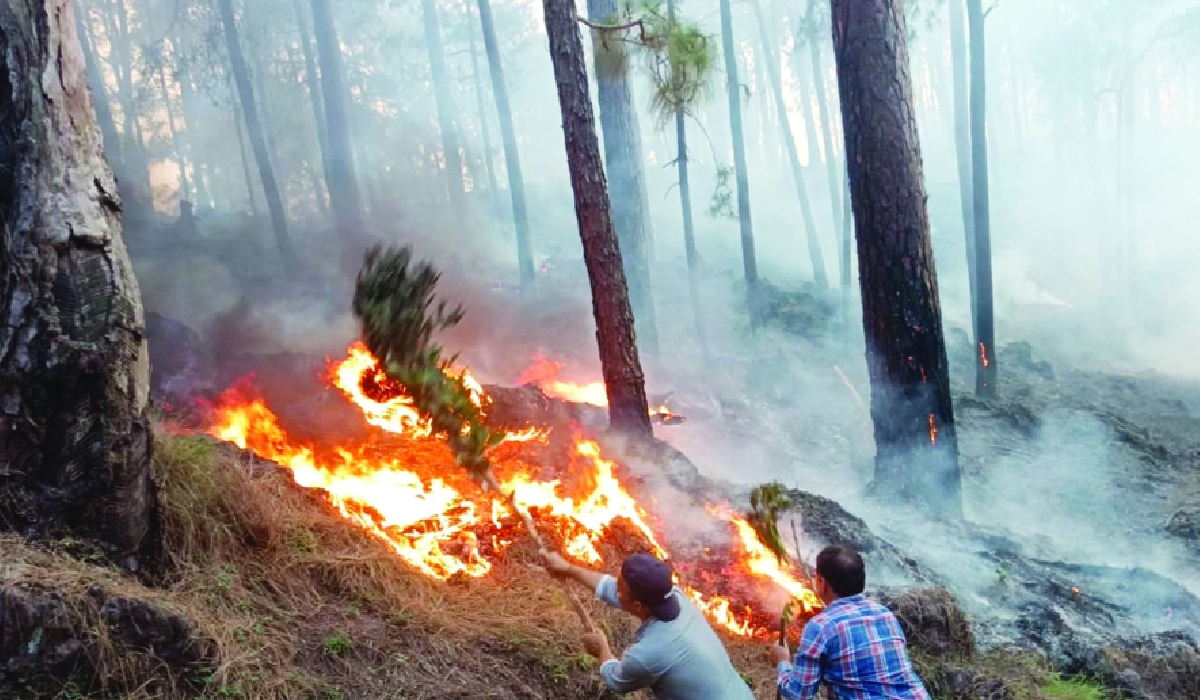
Wild fire in Jammu& Kashmir and Uttarakhand have again hit media headlines. Even after considerable efforts, the menace has yet to die down. According to a new review of global wildfire activity, wildfires in 2025 were the costliest on record, even though the total area burned globally was among the lowest recorded since 2002. Insured wildfire losses accounted for 38 per cent of all insured natural hazard losses globally in 2025, making the year one of the most destructive for fire-related disasters.
An international team of scientists led by researchers at the University of East Anglia summarised the wildfire events of 2025 in a review article published in the journal Nature Reviews Earth & Environment. The assessment found that 335 million hectares burned worldwide in 2025, 16 per cent below the long-term average. Total fire-related carbon emissions fell to 11 billion tonnes of carbon dioxide (CO2), the third-lowest level since 2002. But the researchers said the figures masked an important global shift: savannah fires declined, while extreme and destructive wildfires increasingly emerged in temperate and high-latitude regions. Population growth along the wildland-urban boundary also increased exposure, while firefighting resources came under pressure as multiple regions faced simultaneous emergencies. Devastating wildfires in Canada, the United States, Europe and South Korea led to more than 300,000 evacuations and more than 90 deaths. Although global fire emissions declined, Canada’s boreal forests recorded extreme fire activity for the third consecutive year. According to a statement, between 2023 and 2025, Canadian wildfires released more CO2 than during the entire preceding 15-year period, driven by persistent burning in carbon-rich forest ecosystems, according to a statement from the University of East Anglia. In 2025, unusually high emissions were centred on Saskatchewan, Manitoba and Ontario. The researchers said these ecosystems were historically known for infrequent fires but are now recording unprecedented fire activity.
That has raised concerns about ecosystem degradation, weak forest recovery and long-term carbon loss. “Deadly human-caused wildfires in California, Europe, and South Korea in the same year as the extensive consumption of carbon stocks in Canada from lightning-caused fires highlights how rapidly climate change is producing conditions for extreme wildfires to thrive across a range of biomes and seasons,” said Crystal Kolden of University of California, Merced. Kolden warned that multiple devastating fires occurring at the same time could make it harder for countries to share firefighting resources and put more civilians at risk. “Unfortunately, future fire projections show these types of outbreaks will only increase,” she said. In January 2025, the Palisades and Eaton fires became the most destructive wildfire event in US history, the scientists said. Fuelled by critically dry vegetation and extreme winds, the fires killed 31 people, destroyed nearly 12,000 homes and forced more than 150,000 evacuations, according to the review. They also produced hazardous air pollution affecting 10 million residents. The Los Angeles fires alone were the fifth-costliest natural disaster in history in terms of insured losses, causing $40 billion in insured losses and $140 billion in total losses, the University of East Anglia said.
The researchers said the 2025 fire season showed how fuel-rich forests can burn with unprecedented intensity when climate-driven drought and heatwaves amplify fire weather. Severe drought and repeated heat extremes drove major wildfire outbreaks across the Mediterranean, causing 28 confirmed deaths and more than 120,000 evacuations. Six European nations made simultaneous emergency resource requests, the authors noted. Spain recorded its largest burned area since 2002, with wildfires burning 350,000 hectares, according to the review. In Portugal, thousands of firefighters were stretched battling large, fast-moving fires, including the largest wildfire in the country’s history, the authors said. Prolonged heatwaves enabled destructive fires across Greece, Türkiye and Cyprus, displacing tens of thousands of people, the review said.
France experienced its largest fire since 1949, while the UK recorded its highest burned area on record, including its first documented “megafire” in Scotland, which exceeded 10,000 hectares. Studies clearly show that the hot-dry-windy weather conditions which drove devastating wildfires across Southern Europe have been made much more likely due to human-caused climate change. “Whilst identifying trends in wildfires on the continent are complicated by shifts in landuse, it’s clear that fast-spreading, intense wildfire events are becoming more likely as weather extremes increase. South Korea experienced its deadliest and largest wildfire outbreak, with 32 deaths, more than 37,000 displaced residents and more than 100,000 hectares burned, the authors said. Extreme winds and unusually high temperatures helped fires spread rapidly through mountainous wildland-urban boundary areas, causing significant loss of life and infrastructure damage. (Courtesy: DTE
A Pakistani Army training aircraft crashed near Quetta, the capital of Pakistan's Balochistan province, on Monday.
The Royal Swedish Academy of Sciences on Monday announced the 2026 Nobel Prize in Economics to American economists...

A Sudanese rights group says at least 72 gold miners were killed in an air strike near the...

US President Donald Trump is scheduled to attend the ASEAN summit in Manila on November 16 before travelling...

An Indian national injured in the October 10 attack on Riyadh’s King Khalid International Airport has died, taking...

Ukrainian President Volodymyr Zelenskyy says he was unaware of Donald Trump’s announcement of an immediate energy ceasefire between...

Aries: The day will be auspicious...