Last Updated: October 15, 2026
Last Updated: October 15, 2026





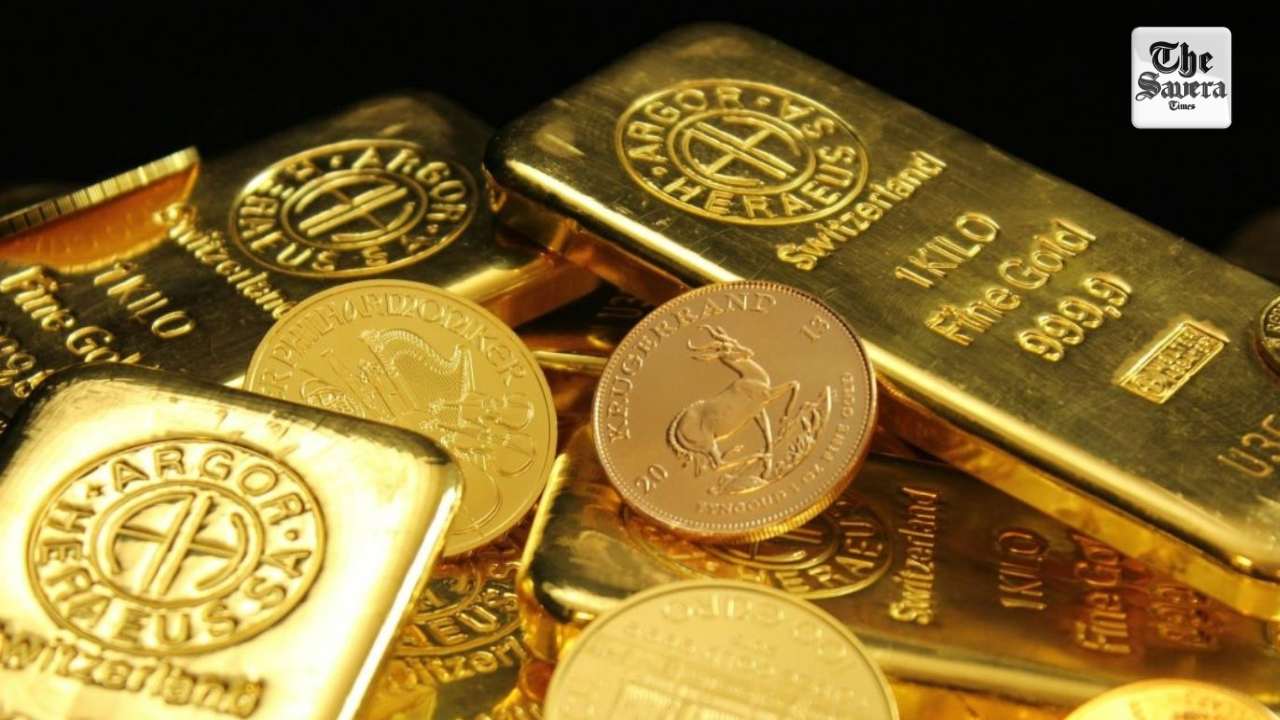
In recent times, the Russia-Ukraine war and the Israel-Hamas war have created global instability. Furthermore, the tariff war initiated by US President Donald Trump and the resulting changes have fueled economic instability. Although this did not significantly impact India’s GDP, and due to its vast market, the country did not experience a recession, the US insistence on using only the dollar as the medium of exchange has forced the world to look for a more stable alternative. It is worth remembering that before 1933, the world had a gold standard system, meaning the value of the dollar was determined by the price of gold.
In 1974, the US delinked gold from the dollar. The desire for gold among buyers has not diminished; in India too, the craze for gold has been prevalent for centuries. However, a new economic imperative has now arisen: that the country’s governments should maintain the largest possible gold reserves and, based on that economic strength, counter the dominance of the dollar.
China was the first to act, rapidly increasing its gold reserves after 2000, moving away from the dollar. In just five years, from 2004 to 2009, China doubled its official gold reserves, reaching 500 tons. China is still buying gold aggressively. Currently, it has accumulated a reserve of 2300 tons of gold. By buying gold, China has created a new economic system and is further fueling this trend. China is also developing a gold trading system.
The goal is to create an alternative to the US dollar based on gold and thereby weaken it. India has also woken up, albeit a little late. In November 2009, India increased its gold reserves by purchasing $6.7 billion worth of gold from the International Monetary Fund (IMF). Whether it’s called asset diversification and risk management policy, India didn’t stop there. Today, India has a reserve of 880 tons of gold. But the problem is that in import-dependent economies like India, where there is a constant threat of currency devaluation, deals are often settled in gold. The government hasn’t stopped buying gold, and the craze for gold among the Indian people is undeniable.
Ordinary people believe that they too should possess gold for their economic security and future. Now, with demand from all sides, the price of gold is bound to rise, which is why this year we saw gold touch the mark of Rs. 125,000 per ten grams, whereas a few years ago it was selling for Rs. 45,000 to 50,000 per ten grams. Seeing the price of gold rise like this, those who had bought it earlier made a fortune, but buying new gold became difficult. In India, gold is mainly imported from abroad because India does not have sufficient gold mines.
Economic experts suggested that plans should be made for the productive and investment use of the gold lying idle with the people. In 2015, the government formulated three major schemes in this direction: one for Gold Monetization, the second for Sovereign Gold Bonds, and the third for Indian Gold Coins. But where do people leave their gold? Even those who invested their gold in these schemes withdrew it when the prices rose. Thus, the government’s schemes incurred losses.
The government suffered a loss of Rs. 92,284 crore in the Gold Bond scheme alone. The country stands at a crossroads of contemplation. Gold must be utilized, but for this, a new national gold policy will have to be formulated. Despite this, whether people will be willing to part with their gold remains a crucial question. For now, developing countries, and especially India, need to increase their gold reserves by following the example of China.
Singapore: Two Singapore-registered container vessels were reportedly struck by unknown projectiles while transiting the Strait of Hormuz on...

Shimla: The Himachal Pradesh government has constituted a four-member commission to examine the reorganisation of administrative units in...
New Delhi: The Supreme Court on Wednesday listed for November 17 the appeal filed by self-styled godman Asaram...
Ranchi: Doctors in Jharkhand launched a protest on Wednesday over a slew of demands concerning their safety and...

Greater Noida: Police and Anti-Narcotics Team in Uttar Pradesh’s Greater Noida have seized ‘ganja’ worth Rs 1 crore...

New Delhi: The Enforcement Directorate (ED) has attached assets worth Rs 2,032.81 crore belonging to Reliance Power Ltd...