Last Updated: October 21, 2026
Last Updated: October 21, 2026





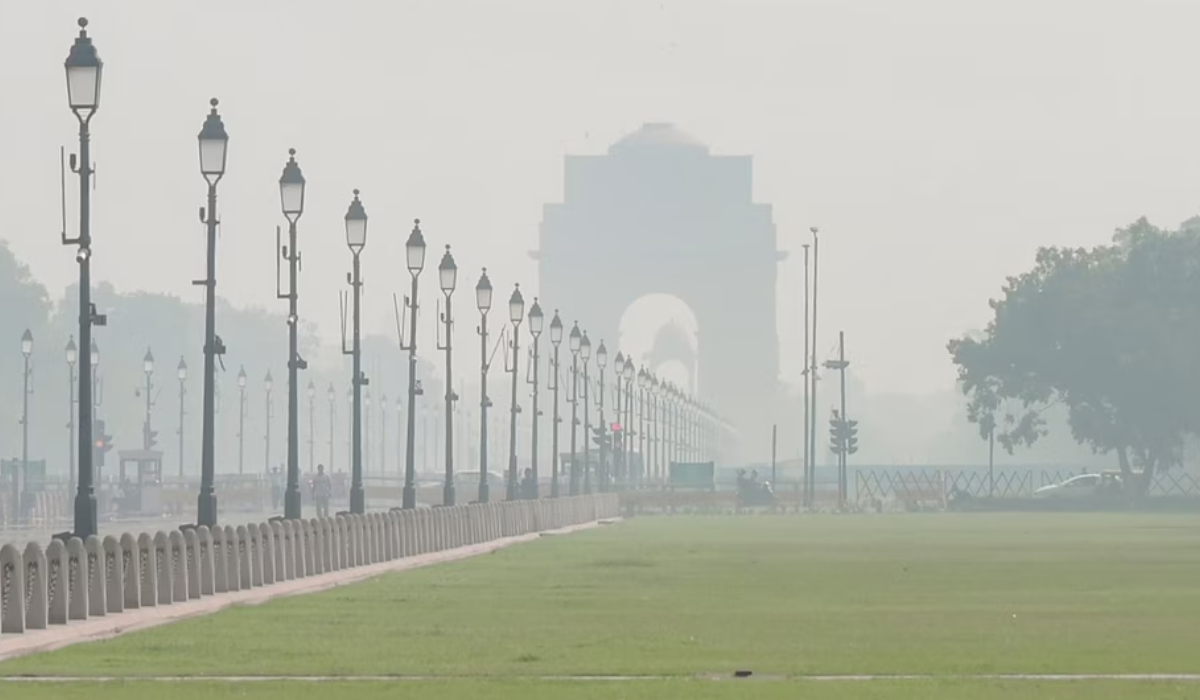
New Delhi: Following the deterioration of air quality in Delhi-NCR, the Commission for Air Quality Management (CAQM) on Wednesday implemented the first phase of the Graded Response Action Plan (GRAP), GRAP-1, with immediate effect. The Commission took this decision after reviewing the air pollution situation in the region.
According to the Commission’s order, Delhi’s Air Quality Index (AQI) was 179 on October 20, which falls in the moderate category. However, by 2 pm on October 21, it increased to 244, reaching the poor category. Forecasts from the India Meteorological Department (IMD) and the Indian Institute of Tropical Meteorology (IITM) also predict that the AQI will remain in the poor category in the coming days.
GRAP-1 measures implemented across the NCR
After reviewing the situation, the CAQM’s GRAP sub-committee decided to implement all measures prescribed under the first phase of GRAP across the entire National Capital Region (NCR).
The order states that the concerned agencies will be responsible for implementing, monitoring, and reviewing these measures. The aim is to prevent further deterioration of air quality.
The Commission has directed all implementing agencies to remain vigilant and strictly implement the measures prescribed under GRAP-1. Citizens have also been urged to follow the guidelines and Citizen Charter issued under GRAP-1.
The Commission will continuously monitor the air pollution situation
The CAQM sub-committee will continuously monitor the air quality situation in Delhi and surrounding areas. According to the order, the situation will be reviewed periodically based on forecasts from the IMD and IITM and changes in the AQI.
If necessary, appropriate decisions can be taken to control pollution.
Environment Minister Manjinder Singh Sirsa targets the previous government
Delhi Environment Minister Manjinder Singh Sirsa expressed concern over the deteriorating air quality in the capital over the past 10 to 12 years during a press conference. He accused the previous government of failing to take concrete steps to address the pollution problem.
Sirsa said that the previous government blamed Punjab, Uttar Pradesh, Haryana, and Rajasthan for the pollution, but according to him, no concrete action was taken to address the problem in the past 12 years.
He claimed that this year, Delhi recorded 214 days when air quality remained in the good or moderate category. According to him, this is the highest number in the past 12 years, excluding the year affected by COVID-19.
The minister attributed this to the government’s efforts and the active participation of the people of Delhi. He said that the government has implemented both long-term and short-term measures to combat pollution.
Plan to reduce road dust and promote electric vehicles
According to Sirsa, the government’s long-term plan includes reducing dust on Delhi’s roads and ensuring end-to-end paving on every road.
In addition, a plan is being worked on to gradually transition from internal combustion engine (ICE) vehicles like petrol and diesel to electric vehicles. The minister said these measures are aimed at reducing pollution and improving air quality in the capital.
Good Evening Viewers! Get the latest updates from India and around the world with The Savera Times Evening...

Bharatiya Janata Party (BJP) National General Secretary Smriti Zubin Irani launched a scathing attack on Congress MP and...
New Delhi: Cockroach Janata Party (CJP) leaders Saurav Das and Ashutosh Ranka will be released from judicial custody...

According to police, three suspicious young men are seen in CCTV footage. Efforts are underway to identify them....
A video has surfaced of an alleged attempted assault on Jan Suraj Party's Bihar president Manoj Bharti. The...
Two accused have been convicted and sentenced to 10 years of rigorous imprisonment in a 2017 drug trafficking...
Aries: The day will be auspicious...