Last Updated: October 21, 2026
Last Updated: October 21, 2026





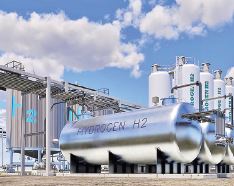
Green fuels and feedstocks such as hydrogen, ammonia, sustainable fuels and carbon capture will account for over 25 percent of emissions reductions in the Asia-Pacific region by 2050, according to a new report by DNV.
While most of the region’s net-zero transition will depend on electrification and renewable energy, the report finds that new energy commodities (NECs) will be critical for decarbonising six key industries: aviation, maritime, steel, power, industrial chemicals and cement. These sectors, considered hard to decarbonise, will rely on clean fuels to reduce emissions while maintaining growth.
The study, titled The Role of New Energy Commodities in Decarbonizing Asia Pacific, was launched during the Asia Clean Energy Summit 2025 in Singapore. It builds on DNV’s Energy Transition Outlook and highlights the need for industry collaboration and harmonised standards to unlock investment and trade in new fuels.
Brice Le Gallo, vice-president and regional director for Asia Pacific, Energy Systems at DNV, said NECs are indispensable to achieving net zero in a geographically diverse region like Asia-Pacific. “Hydrogen, ammonia, sustainable fuels and carbon capture are essential for industries that are hard to decarbonise. Without expanding NECs, these sectors risk falling behind,” he said, adding that scaling these technologies will require significant investment, partnerships and innovation.
According to DNV, about 81 percent of NECs will be traded internationally, making cross-border cooperation and interoperability vital for scaling production and distribution. Countries such as Japan, South Korea and Singapore are expected to become the largest consumers of NECs by 2050, but their limited domestic production will make them dependent on imports. Australia is positioned to be a leading regional supplier, though competition is expected to grow from emerging producers.
Thomas Koller, regional lead for hydrogen, ammonia and sustainable fuels at DNV, said each sector already has a defined pathway toward decarbonisation. “From sustainable aviation fuel in the skies to ammonia and methanol powering ships in Singapore, and hydrogen driving green steel, every industry has a role,” he said. He added that carbon capture and storage will be crucial for cement and steel, where direct electrification remains impractical.
Meeting the region’s clean energy goals will require massive infrastructure expansion — including about 12 billion solar panels, 2.7 million wind turbines, 189 new ports and more than 1,200 carriers to transport new energy commodities.
DNV’s report outlines three strategic priorities to speed up NEC adoption: building resilient supply chains through regional infrastructure and shared standards, managing biomass resources for aviation and shipping, and enabling CCS through stronger carbon pricing, mandates and certification systems.
Le Gallo said the region’s emissions are expected to peak this year, marking a turning point in the energy transition. “To meet climate goals, we must rethink how energy is produced and traded. Strong policies and regional cooperation will be key to overcoming high costs, lack of infrastructure and inconsistent standards,” he said.
Protests in Jakarta, Yogyakarta and Bandung brought students onto the streets over rising costs, forest fires and civil...
Organisations linked to Neville Roy Singham are under US congressional scrutiny over funding. Their coverage of protests in...

US President Donald Trump says Washington and New Delhi are close to a trade agreement that will differ...

Iran has ruled out transferring its enriched uranium stockpile outside the country, with security official Mohsen Rezaei reiterating...

Donald Trump has urged Volodymyr Zelensky to pursue a peace deal with Russia, warning that Ukraine could face...

Pakistan, battling insurgencies at home and tensions along multiple borders, is too overstretched to offer meaningful military support...
Aries: The day will be auspicious...