Last Updated: October 22, 2026
Last Updated: October 22, 2026





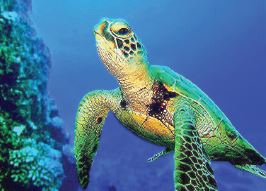
The green sea turtle (Chelonia mydas), long regarded as an emblem of marine conservation, has made a remarkable comeback. The International Union for Conservation of Nature (IUCN) has revised its Red List status from Endangered to Least Concern, citing sustained global conservation efforts that have helped the species recover across much of its range. The announcement was made during the ongoing IUCN Congress in Abu Dhabi.
According to the IUCN, the green turtle’s global population has increased by nearly 28 percent since the 1970s. This growth comes despite continuing threats to some regional subpopulations. The species, which inhabits tropical and subtropical waters worldwide, plays a critical ecological role as a keystone species in coral reef and seagrass ecosystems. Green turtles help maintain the health and productivity of these habitats, which in turn support diverse marine life.
Beyond their ecological value, green turtles hold deep cultural, culinary, and spiritual significance for many coastal communities. They have long featured in local traditions, folklore, and diets. For some island and coastal societies, turtles are symbols of longevity and endurance, deeply woven into community identity.
The IUCN attributed the species’ recovery to decades of targeted conservation initiatives. These include protecting nesting females and their eggs on beaches, expanding community-based efforts to reduce the unsustainable harvest of turtles and eggs for human consumption, curbing illegal trade, and developing measures to reduce accidental capture in fishing operations. The introduction of Turtle Excluder Devices (TEDs) in trawl fisheries has been particularly effective in allowing trapped turtles to escape from nets without harming fishing yields.
Several regions stand out for their conservation success. Efforts in Ascension Island, Brazil, Mexico, and Hawai‘i have led to significant rebounds in local turtle populations, with some nearing pre-commercial exploitation levels. These achievements, IUCN experts noted, demonstrate the long-term impact of consistent protection, community engagement, and international cooperation.
However, the global improvement masks regional disparities. Some subpopulations continue to struggle due to ongoing threats. The IUCN cautioned that green turtles remain significantly depleted compared to numbers before large-scale exploitation began during European colonial expansion. Centuries of unsustainable hunting for meat, oil, and shells caused drastic declines that many populations are still recovering from.
Today, the species continues to face substantial risks. Direct harvesting of turtles and their eggs for commercial and non-subsistence purposes remains a major problem in certain regions. Incidental capture in fishing gear—known as bycatch—still accounts for many turtle deaths each year. Meanwhile, unregulated coastal and marine development has destroyed or fragmented key nesting and feeding habitats.
Climate change poses another emerging threat. Rising temperatures, sea-level rise, and stronger storms are altering nesting beaches and seagrass meadows. The IUCN highlighted the case of the Southwest Pacific subpopulation, particularly around Raine Island in Australia—the world’s largest green turtle nesting rookery. In recent years, this area has witnessed declining hatchling production, likely linked to changing climate conditions and habitat degradation.
Roderic Mast, Co-Chair of the IUCN Species Survival Commission’s Marine Turtle Specialist Group, described the recovery as “a powerful example of what coordinated, long-term conservation can achieve.” He emphasized that the green turtle’s resurgence underscores the value of international collaboration and sustained effort across decades.
Mast also cautioned that conservation must extend beyond the species itself to include the preservation of the ecosystems on which turtles depend. “Such approaches must focus not only on the turtles, but on keeping their habitats healthy, and their ecological functions intact,” he said. “Sea turtles cannot survive without healthy oceans and coasts, and humans can’t either. Sustained conservation efforts are key to assuring that this recovery lasts.”
The IUCN’s reassessment of the green turtle offers a rare piece of good news for global marine biodiversity. Yet, the organisation and its experts stressed that continued vigilance is essential. Protecting sea turtles means ensuring the survival of the coral reefs, seagrass beds, and coastal ecosystems that sustain them—habitats that also provide food security and livelihoods for millions of people.
The improved status of the green turtle is both a conservation success story and a reminder of the work that remains. Decades of global cooperation have proven that recovery is possible, but maintaining this progress will depend on the world’s collective resolve to safeguard the oceans that both turtles and humans rely upon.
Pakistan's Defense Minister Khawaja Asif has questioned alleged plans by senior government officials to permanently settle abroad. He...

The Baloch Liberation Army (BLA) has claimed responsibility for carrying out 34 operations between October 9 and 20...

Russian President Vladimir Putin said on Wednesday that Russia's first tanker carrying 40,000 tons of diesel fuel will...

Ten people were killed and 44 others injured in a horrific road accident in Pakistan's Punjab province. The...

North Korean leader Kim Jong-un's influential sister, Kim Yo-jong, and a military marshal inspected fortification work along the...

New Delhi: US Secretary of State Marco Rubio has assured India that America’s relations with any country in...

Aries: The day will be auspicious...