Last Updated: October 13, 2026
Last Updated: October 13, 2026





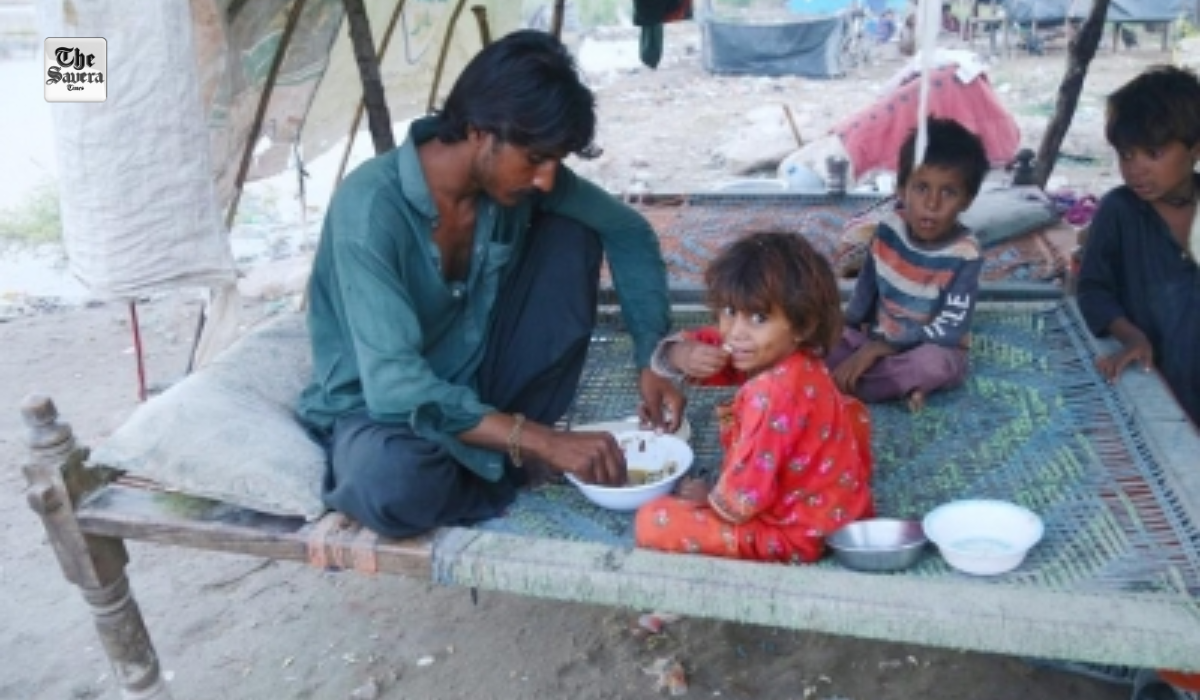
New Delhi: Pakistan’s Household Integrated Economic Survey (HIES 2024-25) has raised concerns about the rapidly increasing food insecurity in the country. According to the report released on January 2, approximately one in four people will face moderate to severe food insecurity in 2024-25, compared to approximately one in six in 2018-19.
Sharp Rise in Food Insecurity in Six Years
According to the survey, moderate to severe food insecurity has increased from 15.92 percent in 2018-19 to 24.35 percent in 2024-25. This represents a 53 percent relative increase in just six years. Meanwhile, the level of severe food insecurity has increased from 2.37 percent to 5.04 percent, pointing to a deepening hunger crisis.
Situation in cities worse than in villages
Contrary to conventional belief, the report shows that the increase in food insecurity has been faster in urban areas than in rural areas. Moderate to severe food insecurity in cities reached 20.58 percent, while in rural areas it increased by 39 percent. Severe food insecurity is now higher in urban areas (5.12 percent) than in rural areas (4.99 percent). According to experts, this is primarily due to high inflation and declining purchasing power.
Provincial Situation: Balochistan Most Affected
Among the provinces, food insecurity is highest in Balochistan, followed by Sindh. Surprisingly, despite the government’s popular 14 Rupees per Roti Scheme, Punjab ranks third, surpassing even Khyber Pakhtunkhwa.
Income Gap: Even the Wealthy Are Not Safe
According to the data, 45.97 percent of households in the bottom 20 percent of income groups are facing moderate or severe food insecurity. But what is most alarming is that even 8.95 percent of those in the top 20 percent of income groups are affected by food shortages. Experts say this indicates that it is becoming increasingly difficult not only for the poor but also for the middle class to afford two meals a day.
Pandemic, Floods, and Inflation Add to Difficulties
The report cites the COVID-19 pandemic, the devastating floods of 2022, and persistently high inflation as the main causes of this crisis. Although inflation has declined somewhat in recent months, the cost of living remains beyond the reach of ordinary people. Furthermore, frequent monsoon floods are weakening the agricultural system.
Growing Pressure on a Weak Food System
The report warns that Pakistan’s “weak food supply system” appears incapable of withstanding any future global pandemic or crisis. Furthermore, if agricultural taxes increase and government support decreases under pressure from the International Monetary Fund (IMF), the situation could worsen. Analysts say that if economic “stability” means increasing hunger for ordinary people, this stability will not last long.
A major train accident occurred on Tuesday in the Multan district of Pakistan's Punjab province. At least four...

Canadian Foreign Minister Anita Anand will arrive in New Delhi on an official visit on Tuesday. During her...

International human rights organization Amnesty International has expressed serious concern over the alleged arbitrary arrests of prominent leaders...

US President Donald Trump says Vladimir Putin may be more willing than Volodymyr Zelenskyy to reach a peace...

A magnitude 6.1 earthquake struck Panama early Tuesday at a depth of 10 kilometres. The tremor followed a...

US President Donald Trump has indicated the possibility of meeting North Korean leader Kim Jong Un during his...

Aries: The day will be auspicious...