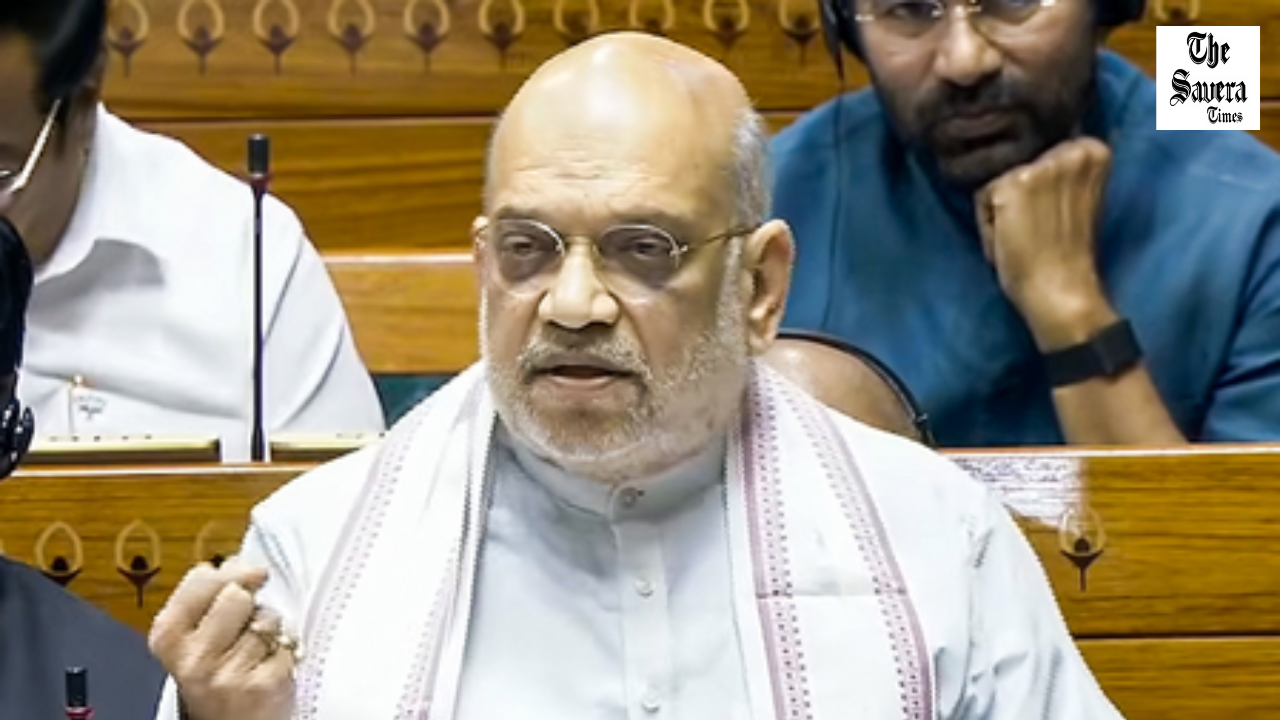
Union Home Minister Amit Shah has welcomed the passage of the Uniform Civil Code (UCC) Bill in Gujarat, calling it a significant step toward ensuring “equal laws for all citizens.” His remarks have reignited the national debate around the implementation of a uniform set of civil laws across India.
The Gujarat government recently cleared the UCC Bill, aiming to standardise personal laws related to marriage, divorce, inheritance, and adoption across communities.
‘Equal laws for all citizens’
Reacting to the development, Amit Shah emphasised that the idea of a Uniform Civil Code aligns with the constitutional vision of equality. He stated that having different personal laws for different communities creates disparities, and a uniform framework would ensure justice and fairness for all.
He reiterated that the move is not targeted at any particular community but is meant to uphold the principle of equality before law, a core feature of the Indian Constitution.
What the UCC Bill proposes
The Uniform Civil Code Bill seeks to replace personal laws based on religious customs with a common set of rules governing civil matters. These include issues such as marriage registration, divorce procedures, maintenance, succession, and adoption.
The Gujarat initiative follows similar developments in other states like Uttarakhand, where steps have already been taken toward implementing a UCC framework. The move indicates a growing push by BJP-ruled states to adopt uniform civil laws at the state level.
Political reactions intensify
The passage of the Bill has triggered mixed reactions across the political spectrum. While BJP leaders have welcomed it as a progressive reform, opposition parties have raised concerns about its timing and potential implications for cultural and religious diversity.
Critics argue that such reforms require wider consultation with stakeholders and communities to ensure inclusivity and avoid social tensions. Supporters, however, maintain that the UCC is long overdue and necessary for legal uniformity.
Constitutional and legal context
The concept of a Uniform Civil Code is mentioned in Article 44 of the Directive Principles of State Policy, which encourages the state to secure a uniform set of civil laws for its citizens. However, it has remained a contentious issue due to India’s diverse social and religious fabric.
Amit Shah has repeatedly stated that the government is committed to implementing the UCC in a manner that respects all communities while ensuring equality and justice.
Part of broader reform agenda
The Gujarat UCC Bill is being viewed as part of the broader reform agenda pursued by the central and state governments under BJP leadership. The party has long advocated for the UCC as a key policy objective.
Shah’s endorsement is expected to further strengthen the narrative around uniform civil laws and may encourage other states to consider similar legislation.
Debate expected to continue
The passage of the UCC Bill in Gujarat is likely to keep the issue in the national spotlight. As discussions intensify, the focus will remain on how such a law can be implemented while balancing constitutional values, individual rights, and cultural diversity.
With strong opinions on both sides, the Uniform Civil Code debate is set to remain a central political and legal issue in the coming months.