Last Updated: October 14, 2026
Last Updated: October 14, 2026





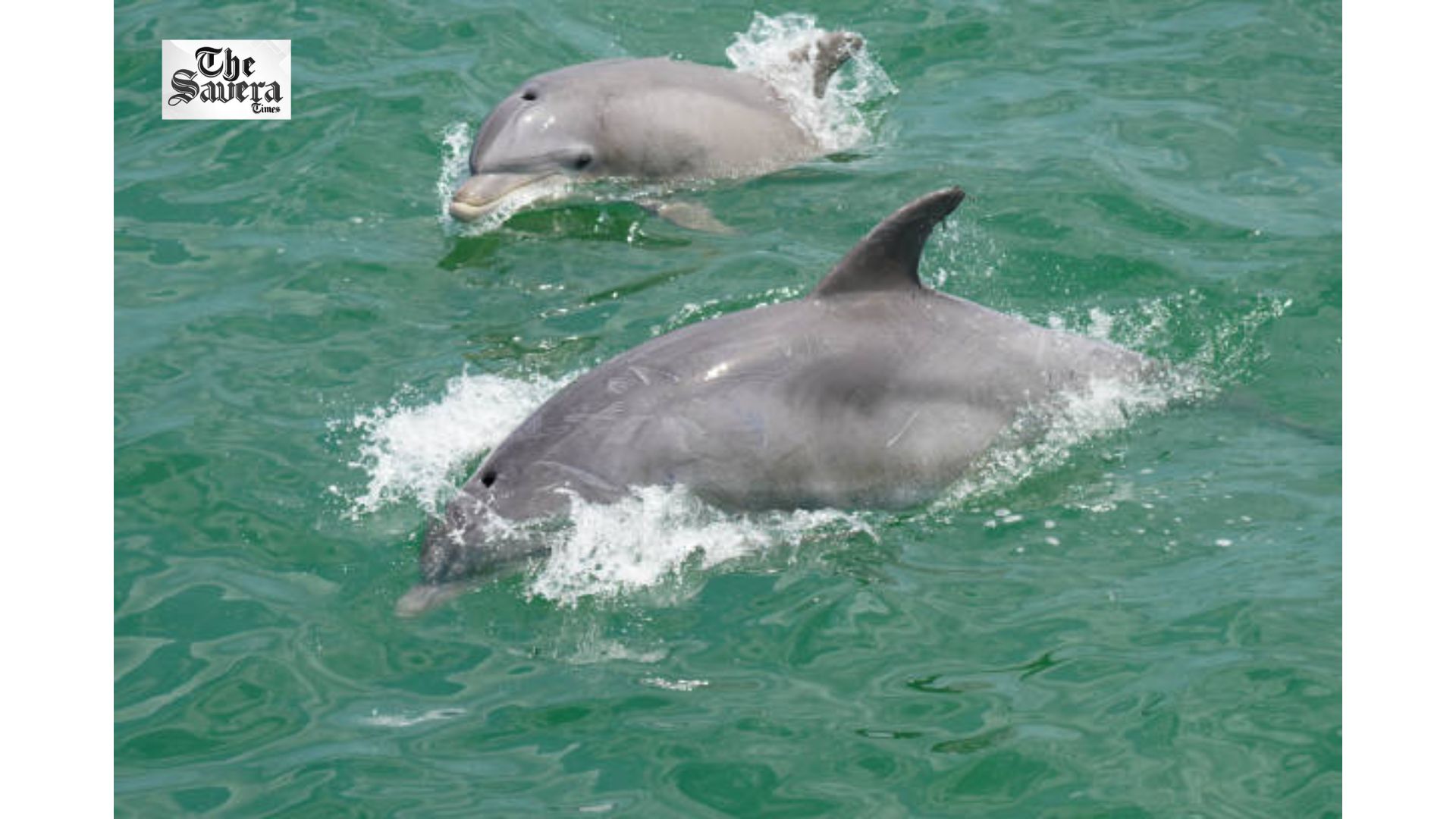
Dolphins were the most frequently sighted marine mammals during a scientific survey of the southern Gulf of Kachchh, with researchers recording 64 sightings involving 193 individuals between October 2023 and February 2025.
The findings, released ahead of ‘National Wildlife Day’ on September 4, identify reef edges, tidal channels, island margins and shallow coastal waters as important areas used by dolphins in the Gulf.
The survey was conducted by scientists of the Gujarat Ecological Education and Research (GEER) Foundation as part of its assessment of dugongs and other marine mammals and seagrass habitats around Narara and adjacent islands.
The study covered areas in and around the Marine National Park and Marine Sanctuary, described in the report as the country’s first marine protected area. The Gulf of Kachchh is also recognised as an important marine mammal area, with the Indian Ocean humpback dolphin (Sousa plumbea) among its qualifying species.
The boat-based surveys recorded 177 verified marine megafauna sightings involving 342 individuals. Dolphins accounted for 36.2% of all sightings, making them the dominant marine mammal group recorded during the assessment.
Under the leadership of Chief Minister Bhupendra Patel, we are committed to protecting our natural heritage, and the latest study conducted by scientists of the GEER Foundation reinforces our resolve to protect marine biodiversity. Under the leadership of Prime Minister Narendra Modi, the country has taken various measures to protect its marine biodiversity.
The distribution of sightings varied across the surveyed locations. Narara Reef recorded the highest number, with 14 sightings involving 39 dolphins. The Dedeka-Mundeka island complex followed with 12 sightings involving 41 individuals, while Pirotan Island recorded 11 sightings involving 32 dolphins.
Dhani Island accounted for nine sightings involving 28 individuals, while eight sightings involving 26 dolphins were recorded in the coastal waters of Sikka. A further 10 sightings, involving 27 dolphins, were recorded at other surveyed locations. The survey provides a detailed picture of where dolphins are using the Gulf. Narara Reef recorded the highest number of sightings at 14, involving 39 dolphins.
The DedekaMundeka island complex followed with 12 sightings involving 41 individuals, while Pirotan Island recorded 11 sightings involving 32 dolphins. Dhani Island accounted for nine sightings involving 28 individuals, and eight sightings involving 26 dolphins were recorded in the coastal waters of Sikka.
Another 10 sightings, involving 27 individuals, were recorded at other surveyed locations. GEER Foundation director B.P. Pati said dolphins were particularly associated with reef margins, island edges, tidal channels and open waters. The strong tidal currents of the Gulf promote nutrient mixing and can concentrate fish, creating favourable feeding conditions for dolphins that prey on schooling fish.
The Dedeka–Mundeka island complex appeared to be particularly important as a movement corridor. Researchers frequently observed dolphins travelling along deeper reef margins and tidal channels between the islands. The report indicates that these channels, influenced by strong tidal currents, may support fish aggregation and consequently attract marine predators.
Pirotan Island also recorded regular dolphin activity, particularly in open tidal channels between reef systems. At Dhani Island, dolphins were consistently observed along the eastern and south-eastern margins, where strong tidal currents interact with deeper channels.
The study found that dolphins were present across all three seasons covered by the survey. Winter recorded the highest number of sightings, at 26, followed by 21 during the post-monsoon period and 17 during summer. One of the notable findings is the year-round occurrence of dolphins.
Sightings were recorded during winter, summer and post-monsoon seasons. Winter produced the highest number, with 26 sightings, followed by 21 during post-monsoon and 17 during summer. The consistent presence across seasons suggests that at least a portion of the dolphin population may be resident or semi-resident in the southern Gulf rather than simply passing through during a particular season.
Gulf of Kachchh dolphins
The researchers also recorded a range of behaviours, including coordinated group swimming, regular surfacing, directional movement along tidal currents and occasional feeding. Group sizes ranged from solitary dolphins to aggregations of up to 16 individuals. The habitat analysis showed that tidal channels and open waters were particularly important for dolphins.
Singapore: Two Singapore-registered container vessels were reportedly struck by unknown projectiles while transiting the Strait of Hormuz on...
Shimla: The Himachal Pradesh government has constituted a four-member commission to examine the reorganisation of administrative units in...

New Delhi: The Supreme Court on Wednesday listed for November 17 the appeal filed by self-styled godman Asaram...

Ranchi: Doctors in Jharkhand launched a protest on Wednesday over a slew of demands concerning their safety and...

Greater Noida: Police and Anti-Narcotics Team in Uttar Pradesh’s Greater Noida have seized ‘ganja’ worth Rs 1 crore...

New Delhi: The Enforcement Directorate (ED) has attached assets worth Rs 2,032.81 crore belonging to Reliance Power Ltd...

Aries: The day will be auspicious...