Last Updated: October 15, 2026
Last Updated: October 15, 2026





Dr Tanu jain
Chief executive officer Bareilly cantonment board Ministry of defence
In every age, the relationship between a Guru and a disciple unfolds like a silent scripture—unwritten, yet eternal. It is not merely the transfer of knowledge, but the transmission of energy, grace, and responsibility. Such was the case in one unforgettable episode that revealed both the power of spiritual awakening and the necessity of patrata—inner preparedness.
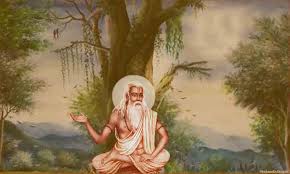
Once, during a serene retreat, many sadhvis and seekers of different age groups gathered to learn dhyan kriyas under a revered Guru. The ashram hummed with sacred expectancy. The air itself seemed to vibrate with mantra and stillness. The Guru’s presence was gentle yet commanding, like a lamp steady in windless air.
Meditation sessions began. Some were young, eager and curious. Others were middle-aged, disciplined and devoted. Among them was a very aged mata—frail in body but intense in aspiration. Her eyes carried longing that transcended years. After observing a few sessions, she approached the Guru with folded hands and said softly, “Maharaj, please teach me dhyan as well.”
The Guru looked at her quietly. His gaze was not of judgment but of deep seeing. “I will teach you,” he replied calmly.
As the days unfolded, the meditation practices intensified. Breath awareness deepened. Mantras resonated in subtle layers of consciousness. The Guru guided them through internal stillness, pranic awareness, and silent witnessing. In the aged woman, something stirred powerfully. During one session, she began to tremble. Her breath changed rhythm. Tears flowed unbidden.
Later she described vivid inner experiences—rising currents of energy along the spine, spontaneous mudras, sensations of light bursting in the forehead. Those present whispered of Shaktipat and Kundalini jagran. The Guru listened with compassion. He neither encouraged exaggeration nor dismissed her experience. Instead, he gently explained the nature of pranic awakening—how dormant energies, when stirred, must be stabilized through grounding, humility, and disciplined living.
In Autobiography of a Yogi, Paramahansa Yogananda recounts how his Guru, Sri Yukteswar, always emphasized balance over phenomena. “Seek not after visions,” Sri Yukteswar would say, “but after realization.” Spiritual energy, when prematurely awakened, can overwhelm an unprepared mind. The ancient texts echo this caution. The Hatha Yoga Pradipika warns that Kundalini is like a serpent—sacred yet potent—and must be awakened under guidance and purity of life. The Kathopanishad reminds us that the path is sharp like a razor’s edge.
For some days, the aged mata radiated unusual enthusiasm. She spoke of lights, sounds, and divine currents. But then, unexpectedly, she disappeared from the ashram.
Ten to twelve days later, she returned. This time her face was not radiant but distressed. She came straight to the Guru, fell at his feet, and wept uncontrollably.
“Maharaj,” she cried, “please take back this vidya. I cannot bear it.”
The hall fell silent.
The Guru raised her gently and seated her nearby. Between sobs she explained that the energies continued even at home—intense sensations, restless nights, waves of emotion. Fear had replaced wonder. She felt unanchored.
The Guru closed his eyes. Those present sensed a shift in atmosphere. He prayed inwardly to the Divine Shakti. Taking a solemn sankalp, he invoked grace—not to grant more power, but to withdraw excess activation and restore equilibrium. His prayer was not dramatic, but deeply intentional.
In yogic understanding, a realized master can modulate the disciple’s energy field through compassion and divine alignment. In Kularnava Tantra, it is written that the Guru is the channel through which Shakti flows, and also the one who safeguards the disciple from imbalance. The Guru does not impose; he harmonizes.
After some time, the aged woman’s breathing calmed. Her trembling ceased. She felt a profound stillness—ordinary, gentle, safe. The overwhelming currents subsided like a tide receding.
Days later, a visiting preacher expressed gratitude to the Guru: “Maharaj, thank you for blessing her—and for taking away the vidya that troubled her.”
The Guru responded with a quiet firmness. He turned to the woman and said, “Do not run after siddhis. Spiritual powers are not ornaments. They require patrata—preparedness of mind, purity of intention, steadiness of life. Without a strong vessel, even nectar can become poison.”
The woman bowed her head in humility. This episode illuminated a timeless truth. Spiritual awakening is not entertainment; it is transformation. The Bhagavad Gita teaches that yoga is moderation in all things—yuktahara viharasya. Energy without grounding breeds disturbance. Experience without integration breeds ego or fear.
Often seekers are fascinated by phenomena—visions, vibrations, psychic flashes. Yet the sages consistently redirect attention toward character, surrender, and service. As Yogananda writes, “The true basis of religion is not belief, but intuitive experience.” But that experience must ripen into wisdom, not excitement. The aged woman was not unworthy; she was unprepared. Her longing was sincere, but her nervous system, habits, and mental stability were not ready to contain heightened pranic force. A vessel must be cleansed, strengthened, expanded gradually. Otherwise, it cracks under pressure.
The Guru’s greatness lay not in bestowing Shakti, but in protecting the disciple from herself. He did not shame her fear. He did not glorify her experience. He restored balance. In spiritual life, grace is abundant—but containment is rare. Patrata is cultivated through discipline, humility, ethical living, and surrender. The Upanishads remind us: “This Self is attained by him whom It chooses.” Yet even divine choice requires human readiness.
The ashram returned to its rhythm. Meditation sessions continued. The aged mata attended quietly now—without expectation, without seeking extraordinary states. She learned the deeper lesson: that the highest awakening is not dramatic, but steady; not explosive, but luminous in silence.
And the Guru, like a mountain—unchanged by storms—continued to guide, aware that the true miracle is not the rising of Kundalini, but the flowering of wisdom. For in the sacred dance of Guru and disciple, power is secondary. Preparedness is primary. And the greatest blessing is not siddhi—but serenity.
Punjab AGTF and Haryana STF arrested Gurlal Singh in connection with Ajmeet Singh’s September 11 murder in Naushera...

Uttar Pradesh Police arrested a 28-year-old alleged criminal after an encounter in Noida’s Sector 63. Police said around...

Indian equity benchmarks opened higher on Thursday, with the Sensex rising 183.91 points and the Nifty gaining 48.60...

Union Home Secretary Govind Mohan has tendered an unconditional apology to the Supreme Court over alleged non-compliance with...

Union ministers and chief ministers paid tribute to former President APJ Abdul Kalam on his birth anniversary, recalling...
Start your day with The Savera Morning Brief, bringing you the latest headlines and important developments from India...

Aries: The day will be auspicious...