Last Updated: October 20, 2026
Last Updated: October 20, 2026





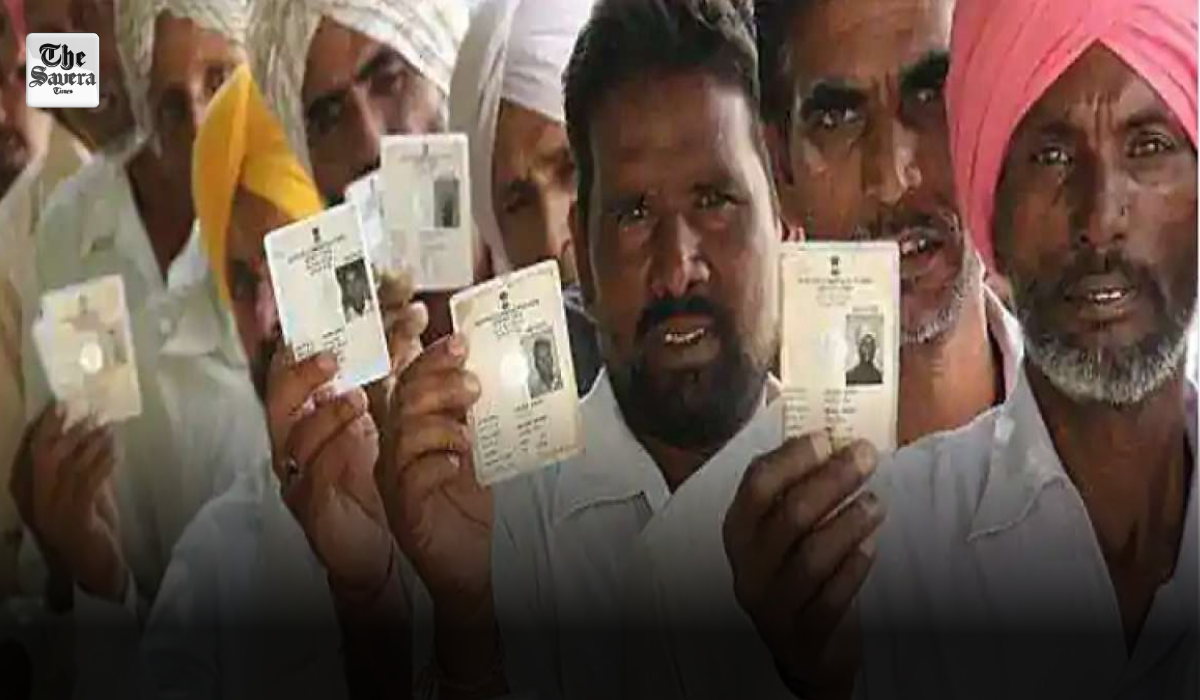
Over the past five decades, India’s state elections have revealed a subtle yet significant transformation in the country’s democratic behaviour. The Indian voter, once known for impatience and a near-automatic rejection of incumbents, has grown markedly more deliberate, informed, and outcome-oriented.
Election Commission data highlights this shift clearly. Between 1975 and 1999, barely 39.5 per cent of incumbent state governments managed to secure re-election. From 2000 onwards, that figure has climbed to nearly 50 per cent, signalling a maturing democracy that increasingly rewards performance over protest. This evolution goes beyond changing political preferences.
It reflects the emergence of a new form of citizenship — one that evaluates governance through tangible results rather than slogans or emotional appeals. Voters are paying closer attention to the everyday impacts of policy: access to water, electricity, health services, environmental protection, and livelihood security.
Governance is no longer judged in abstract terms but through lived experience. In the early decades after Independence, Indian politics was largely shaped by a strong anti-incumbency instinct.
Governments were routinely voted out at the end of their terms, often regardless of whether they had delivered meaningful improvements. This pattern stemmed from persistent governance failures — poor infrastructure, unreliable public services, weak rural outreach, and limited welfare penetration.
Elections became vehicles for protest, allowing citizens to express frustration rather than endorse continuity. The turn of the century marked a decisive shift. Expanded welfare schemes, targeted development missions, and greater administrative transparency began to make governance visible at the grassroots level.
When a new road reduces travel time, a hand pump brings reliable drinking water, or a solar microgrid lights up a village, the link between policy and daily life becomes tangible. As a result, voting behaviour has increasingly reflected an assessment of delivery rather than mere dissatisfaction.
Several states illustrate this transition. Odisha’s investments in climate-resilient infrastructure, Gujarat’s focus on rural electrification, Sikkim’s commitment to organic farming, and Jharkhand’s water conservation initiatives have all translated into electoral stability.
These programmes do more than address immediate needs; they build resilience against environmental and economic shocks. Over time, such governance outcomes have turned environmental and social performance into quiet but powerful electoral assets. India’s regional political landscape, however, remains diverse.
States such as Kerala, Tamil Nadu, Punjab, Himachal Pradesh, and Rajasthan continue to display strong patterns of power rotation. In these regions, frequent political change is viewed as a mechanism of accountability rather than instability. Voters use elections to reset power and maintain competitive pressure on political parties, ensuring responsiveness and reform.
In contrast, states like Odisha, Gujarat, Tripura, and Sikkim have shown sustained proincumbency trends. Here, governments have institutionalised development models that closely link environmental management with livelihoods.
Disaster preparedness systems, afforestationlinked employment, integrated water resource planning, and decentralised renewable energy projects have created visible and lasting benefits. When citizens see continuity delivering stability and security, they are more inclined to reward it at the ballot box.
Even traditionally volatile political spaces such as Delhi and Haryana are exhibiting signs of this broader shift. Administrative reforms, improvements in service delivery, and expanded welfare coverage have begun to outweigh ideological considerations in shaping voter choices.
Performance, rather than rhetoric, is increasingly setting the terms of political competition. Technology has further accelerated this democratic evolution. The spread of smartphones, digital literacy, and hyperlocal news platforms has transformed how voters access information. Citizens no longer depend solely on rallies or party narratives.
Good Evening Viewers! Catch up on the day's biggest stories with The Savera Times Evening Bulletin. Get the...

Congress leaders continued their protest outside the Jaipur Police Commissionerate on Tuesday, demanding the registration of a zero...
On the auspicious occasion of Vijayadashami, Prime Minister Narendra Modi on Tuesday called on the countrymen to unite...
A historic milestone was achieved on Tuesday in the expansion of Chhattisgarh's rail networkA historic milestone was achieved...

Model Shraddha Dubey, one of the main accused in the death of Lucknow businessman Shiv Sharma, has been...

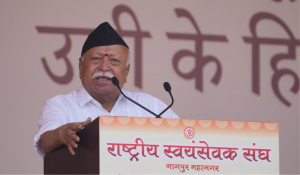
Rashtriya Swayamsevak Sangh (RSS) chief Mohan Bhagwat on Tuesday called for strengthening national unity, social harmony, indigenous practices...
Aries: The day will be auspicious...