Last Updated: October 13, 2026
Last Updated: October 13, 2026





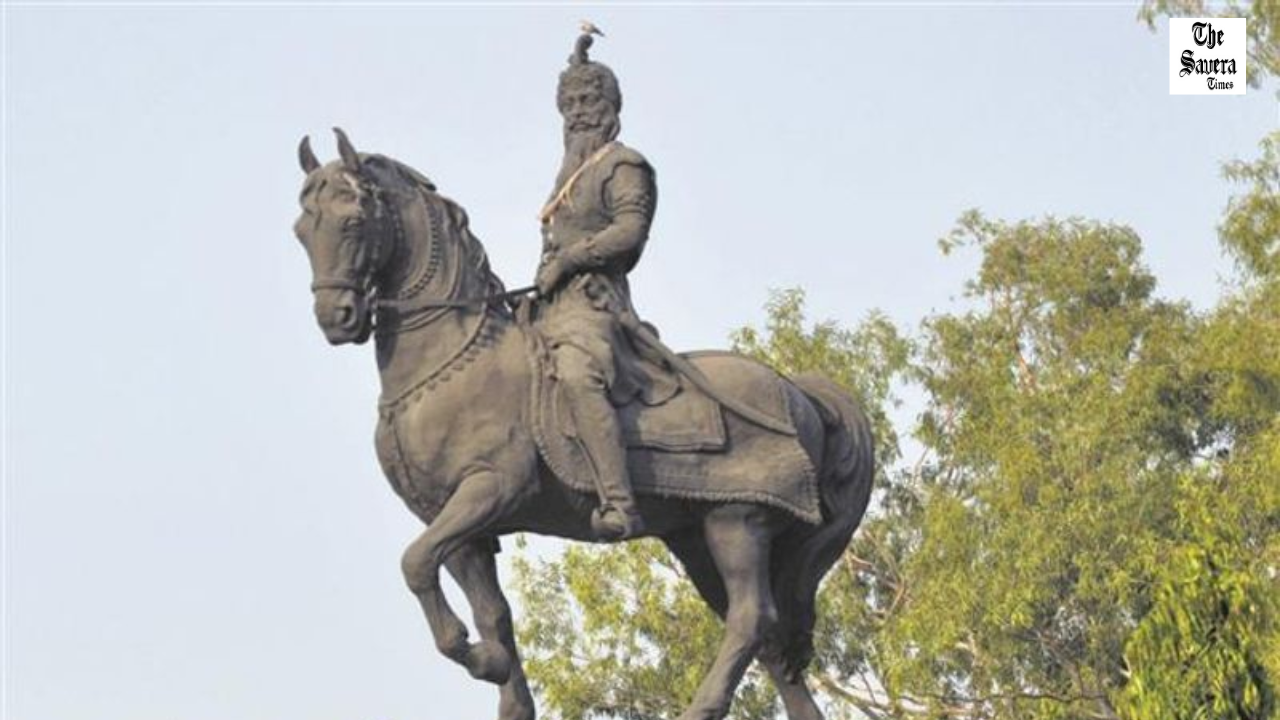
In a noteworthy gesture towards recognising shared heritage, the Government of Pakistan has installed a bust of the legendary Sikh general Sardar Hari Singh Nalwa at the Kartarpur Corridor Art Gallery. The unveiling took place on February 1, 2026, and has been welcomed by Sikh organisations across the world as a positive step towards acknowledging Sikh history and contributions in the region.
The bust of Hari Singh Nalwa, a towering figure in the history of the Sikh Empire, was officially unveiled at the Kartarpur Corridor Art Gallery — a site symbolic of Sikh pilgrimage and cross-border cultural ties. Islamabad’s decision to allow the installation almost three years after the controversial removal of a larger statue marks what many observers are calling a course correction in cultural recognition by Pakistani authorities.
The development was announced by Gurinder Singh Josan, president of Sikhs in America, through a social media post. He described the event as a “historic moment” and hoped it would be a start to greater acknowledgment of Sikh history in areas that once formed part of the Sikh Empire.
Sardar Hari Singh Nalwa (1791–1837) was one of the most formidable generals in the Sikh military under Maharaja Ranjit Singh. He is historically credited with securing the north-western frontiers of the Sikh Empire, successfully extending Sikh rule up to the Khyber Pass — a critical strategic gateway to the Indian subcontinent.
During his career, Nalwa served as governor of key regions including Kashmir, Peshawar and Hazara, and led numerous campaigns that halted repeated invasions from Afghanistan. His leadership and military strategies were instrumental in consolidating the Sikh Empire’s territorial expansion and stability.
The installation of the bust carries added significance against the backdrop of earlier tensions over Nalwa’s legacy in Pakistan. In 2022, authorities in Haripur district of Khyber Pakhtunkhwa removed an 8-foot-tall metal statue of Hari Singh Nalwa from a prominent city location. The statue, part of a city beautification project, was dismantled following objections from some religious groups, leading to widespread criticism and condemnation from Sikh institutions such as the Shiromani Gurdwara Parbandhak Committee (SGPC) and the Chief Khalsa Diwan. Videos of the statue’s removal sparked strong reactions from Sikh communities globally who saw it as an attempt to erase historical recognition.
The decision to reinstall a bust — albeit smaller — at the Kartarpur Corridor is seen by many Sikh bodies as a welcome move towards reconciliation and cultural respect. Global Sikh organisations have praised the effort, highlighting the importance of recognizing historical figures who shaped regional history.
The Kartarpur Corridor — a visa-free route connecting Gurdwara Darbar Sahib in Pakistan to Dera Baba Nanak in India — holds deep religious importance for Sikh pilgrims. The installation of Hari Singh Nalwa’s bust at the corridor adds another layer of cultural and historical relevance to the site. While the corridor has sometimes been the subject of political and logistical challenges, gestures like this underscore the shared histories and heritage that transcend modern political boundaries.
For many in the Sikh diaspora, the move represents not just the honouring of a great military leader but a broader acknowledgement of the community’s historical footprint in regions that were once part of the Sikh Empire.
Punjab BJP President Kewal Singh Dhillon on Monday said a poster promoting a protest being held in Delhi...
The Enforcement Directorate (ED) has arrested Harcharan Singh Bhullar, the then Deputy Inspector General (DIG) of the Ropar...
In accordance with the instructions of the Election Commission of India, the Special Intensive Revision (SIR) of Electoral...

Flight operations were affected near Sri Guru Ram Dass Ji International Airport in Amritsar, Punjab, on Sunday night...

Enforcement Directorate (ED) has arrested Ludhiana Police Commissioner Swapan Sharma and others have been summoned to appear in...
The Punjab Vigilance Bureau (VB), during its ongoing crusade against corruption in the state, has been able to...
Aries: The day will be auspicious...