Last Updated: October 20, 2026
Last Updated: October 20, 2026





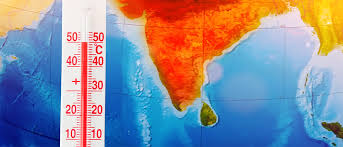
The heatwave currently sweeping through the month of May is so intense that it has sparked deep anxiety regarding what conditions will be like in June. Across the country, the “wet-bulb temperature”—a critical metric indicating the body’s ability to cool itself through sweating—has dropped from 42 degrees Celsius to 35 degrees. This signifies that humans are inching closer to a lethal temperature threshold.
The 35-degree mark represents the point at which the human body can no longer effectively regulate its internal temperature by producing sweat. As this wet-bulb temperature approaches this critical limit, the body’s capacity to withstand heat diminishes; consequently, as this tolerance level drops, the ambient temperature becomes increasingly life-threatening for humans.
Furthermore, the prevailing weather pattern indicates that the number of days experiencing persistently high temperatures is on the rise. A declining wet-bulb temperature essentially translates to a reduced physiological capacity to endure heat. Under these circumstances, the heatwave is poised to become increasingly deadly.
The situation in Punjab mirrors this grim reality. The combination of scorching heat and blistering winds has brought daily life to a crawl. The Meteorological Department forecasts that temperatures will climb even higher in the coming days, with conditions expected to remain unchanged until May 25. On Tuesday, Faridkot emerged as the hottest region in Punjab, with temperatures soaring to 47.3 degrees Celsius. In Bathinda and Ludhiana, temperatures hovered around 45 degrees, while nine other districts recorded temperatures exceeding 43 degrees.
Meanwhile, the wave of “Western Disturbances”—weather systems typically capable of bringing clouds and rainfall—has weakened significantly. States including Punjab, Haryana, Rajasthan, Bihar, Madhya Pradesh, Chhattisgarh, Odisha, Maharashtra, and Gujarat have become parched and sweltering, enduring scorching temperatures. While it is customary for night-time temperatures to drop—regardless of how high the mercury rises during the day— the current reality is that temperatures are failing to subside even after sunset.
Even if there is a slight dip compared to the daytime highs of 45–47 degrees, the temperature at night rarely falls below the 30-degree mark. The most alarming aspect of this situation is that June—traditionally the month of peak heat and intensity—now threatens to be even hotter than the current conditions.
The crisis lies in the fact that during such months, the demand for electricity reaches record levels. Punjab generates a portion of its electricity requirements domestically, while the remainder must be purchased. Even after a certain reserve has been accumulated, electricity cannot be made available instantaneously to match the demand— which, meanwhile, has suddenly surged to a record high.
This crisis persists throughout the entire summer season. Consequently, power cuts become inevitable. We have not met with significant success in harnessing alternative energy sources—such as solar power— despite the extensive promotion they receive. If we wish to avert this crisis, we must place greater emphasis on the utilization of alternative means of energy generation.
Good Evening Viewers! Catch up on the day's biggest stories with The Savera Times Evening Bulletin. Get the...

Congress leaders continued their protest outside the Jaipur Police Commissionerate on Tuesday, demanding the registration of a zero...

On the auspicious occasion of Vijayadashami, Prime Minister Narendra Modi on Tuesday called on the countrymen to unite...

A historic milestone was achieved on Tuesday in the expansion of Chhattisgarh's rail networkA historic milestone was achieved...

Model Shraddha Dubey, one of the main accused in the death of Lucknow businessman Shiv Sharma, has been...

Rashtriya Swayamsevak Sangh (RSS) chief Mohan Bhagwat on Tuesday called for strengthening national unity, social harmony, indigenous practices...
Aries: The day will be auspicious...