Last Updated: October 21, 2026
Last Updated: October 21, 2026





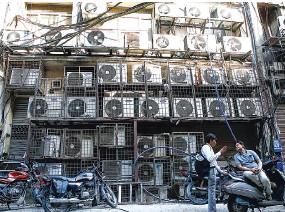
India’s scorching summer of 2024 delivered more than record temperatures. It exposed a dangerous cycle in which extreme heat drives electricity demand, pushes the power system back toward fossil fuels and accelerates the very warming that fuels the next heatwave. A new analysis by Climate Trends and Climate Compatible Futures warns that this heat–power trap is tightening faster than the country’s planning systems can respond.
The year marked India’s hottest on record, with average temperatures 0.65°C above the 1991–2020 baseline. Several regions crossed 50°C, including a staggering 52.9°C in Delhi’s Mungeshpur. Northern and central states logged more than 500 cumulative heatwave days over the past decade, while new hotspots appeared in Uttarakhand and Ladakh, signalling that extreme heat is no longer confined to predictable zones.
As temperatures climbed, electricity demand surged. Cooling needs have reshaped the nation’s power profile, sending peak demand from 154 GW in 2015 to 246 GW in 2024. Some states added 6 to 8 gigawatts of demand in a single year. In several regions, cooling loads now double peak summer consumption, reflecting both rising heat stress and rapid adoption of air conditioning.
India has expanded its renewable capacity at unprecedented speed. Solar generation rose eighteenfold in a decade and wind capacity nearly doubled. But clean energy still struggles to meet sudden demand spikes during heatwaves. The system continues to lean heavily on coal when temperatures soar, leading to sharp emissions surges each summer. During the 2024 heatwaves alone, coal-dependent generation produced 327 million tonnes of CO2. Over the last ten years, additional fossil-based production during hot months added 2.5 billion tonnes of CO2 to the atmosphere.
The report highlights a critical policy gap. Most Heat Action Plans acknowledge health risks but overlook the power sector’s vulnerability during extreme heat. Only a handful of states and cities include renewable backup systems or battery storage solutions in their preparedness strategies. Several plans do not mention electricity at all, despite the clear link between grid stress and heat-related deaths.
Experts say the country can no longer treat heatwaves and power shortages as separate problems. Without coordinated planning, summer after summer will reinforce dependence on fossil fuels and undermine climate gains. The analysis calls for a wide set of reforms to break the cycle. These include large-scale investment in storage technologies such as batteries and pumped hydro, grid modernisation, district-level heat-season demand mapping and flexible load management tools. It recommends solar-powered cooling shelters, rural heat resilience hubs, mandatory cool roofs and passive cooling measures in cities. It also urges the integration of electricity resilience into every state’s heat preparedness plan and budget.
India’s clean energy push has already prevented significant emissions, but the study warns that rising heat could erase those gains unless planning accelerates. The heat–power trap, it says, is not inevitable. With stronger grids, smarter forecasting and deeper investment in storage, the country can protect its climate progress and shield communities from mounting health risks. The coming summers will test how quickly India can act.
The Ayushman Bharat Pradhan Mantri Jan Arogya Yojana (PMJAY) is proving to be a significant relief for poor...

Rescue teams recovered the bodies of four youths from the Kotri canal in Kota on Wednesday morning, after...

A balloon containing a suspected flammable chemical burst during a stage play in Siwan, injuring around 10 spectators....

State Bank of India has confirmed that 3,897 customer records containing personal information were found on the dark...

A fire in a hut in Nonapar village of Deoria district claimed three lives, including those of a...

Amit Shah paid tribute to police personnel who died in the line of duty at the National Police...

Aries: The day will be auspicious...