Last Updated: October 12, 2026
Last Updated: October 12, 2026





Shimla: The Himachal Pradesh government on Thursday strongly opposed the Centre’s decision to rename the Mahatma Gandhi National Rural Employment Guarantee Act (MGNREGA) scheme as ‘VB-G RAM G’ and introduce a new funding and implementation framework, alleging that the changes would impose a substantial financial burden on the state and adversely affect rural workers.
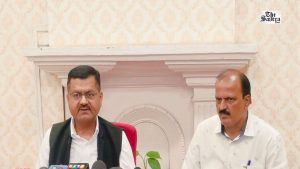
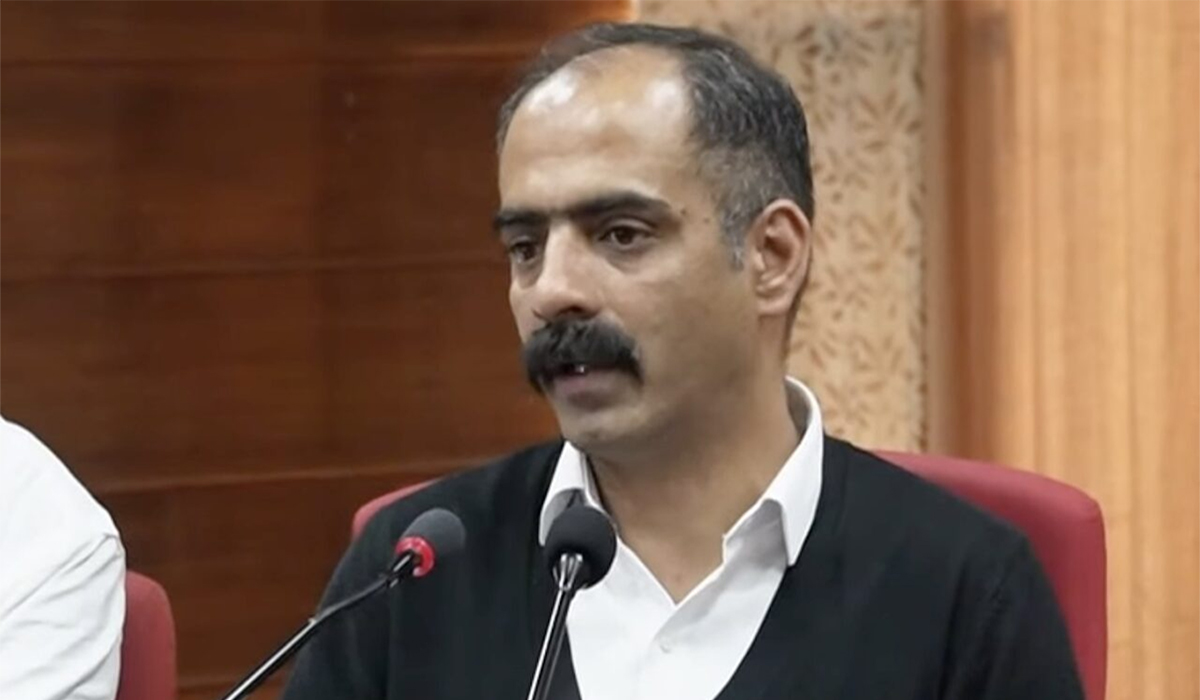
Addressing a press conference in Shimla, Rural Development and Panchayati Raj Minister of Himachal Pradesh, Anirudh Singh, said the Union Government had introduced the changes without consulting states and had shifted a significant portion of the financial responsibility to them.
“The scheme was earlier fully funded by the Centre, but under the new arrangement, the funding pattern for Himachal Pradesh and other special category states has been changed to 90:10, while for other states it will be 60:40. This will place an additional annual burden of about ₹164.63 crore on Himachal Pradesh,” Singh said.
Centre altered demand driven employment programme
He alleged that the Centre had unilaterally altered a demand-driven employment programme that provided guaranteed work to rural households and replaced it with a system based on fixed allocations and software-driven approvals.
According to the minister, the Centre’s proposed allocation formula would provide Himachal Pradesh only around 220-230 lakh person-days of employment, whereas the state generated about 395 lakh person-days during the previous financial year.
“If the state has to meet the actual demand for work beyond the allocated limit, the additional financial liability could rise to between ₹800 crore and ₹1,000 crore annually,” he said
New system to hit non-tribal areas
Singh also criticised the proposed wage structure, claiming that wages in non-tribal areas would effectively fall from ₹320 per day, currently paid by the state through a top-up mechanism, to ₹247 under the new framework.
“For the first time in the country’s history, wages are being reduced instead of increased. Rural workers who were receiving ₹320 per day will now get only ₹247 in non-tribal areas. There is also no clear provision allowing states to continue wage top-ups without seeking approval from the Centre,” he said.
The minister said the move would hit poor rural households that depend heavily on employment under the scheme.
The minister said that under the previous system, development plans were approved by gram panchayats, block development committees and district councils. However, under the new framework, preparation of a “Viksit Gram Panchayat Plan” would become mandatory and would be integrated with the Centre’s PM Gati Shakti platform and the Viksit Bharat national framework.
Projects require approval, reduced autonomy of local bodies
He expressed concern that projects would now require approval through a centralised digital platform, reducing the autonomy of local bodies and creating implementation difficulties in hilly regions where internet connectivity remains weak.
“Himachal is a mountainous state. Many villages have poor network connectivity. GPS-based monitoring, biometric authentication and software-based approvals will create serious operational challenges,” Singh said.
The minister also accused the Centre of delaying payments to MGNREGA functionaries.
He claimed that around ₹20 crore in salaries and administrative expenses for Gram Rozgar Sevaks (GRSs), computer operators, and junior accountants had been pending since February.
“Nearly 1,194 MGNREGA staff members have not received payments because the Centre has not released the pending funds despite repeated requests and meetings,” he said.
Singh said the state government would be compelled to adopt the amended framework because refusal could result in exclusion from the scheme.
President Droupadi Murmu is on a three-day Himachal Pradesh visit from October 6 to 8, including the first...
Shimla Municipal Corporation has launched a 10-day mass anti-rabies vaccination drive across 34 wards, targeting more than 4,000...
A fresh spell of snowfall has transformed the higher reaches of Manali into a picturesque winter landscape, with...
A major landslide occurred in the Chirgaon area of Shimla district, Himachal Pradesh, on Monday morning.
Himachal LoP Jai Ram Thakur accuses CM Sukhvinder Singh Sukhu of misleading legislators over ministerial berths as Congress...
Himachal Pradesh has launched an awareness campaign on the Solid Waste Management Rules 2026, with mandatory source segregation...