Last Updated: September 24, 2026
Last Updated: September 24, 2026





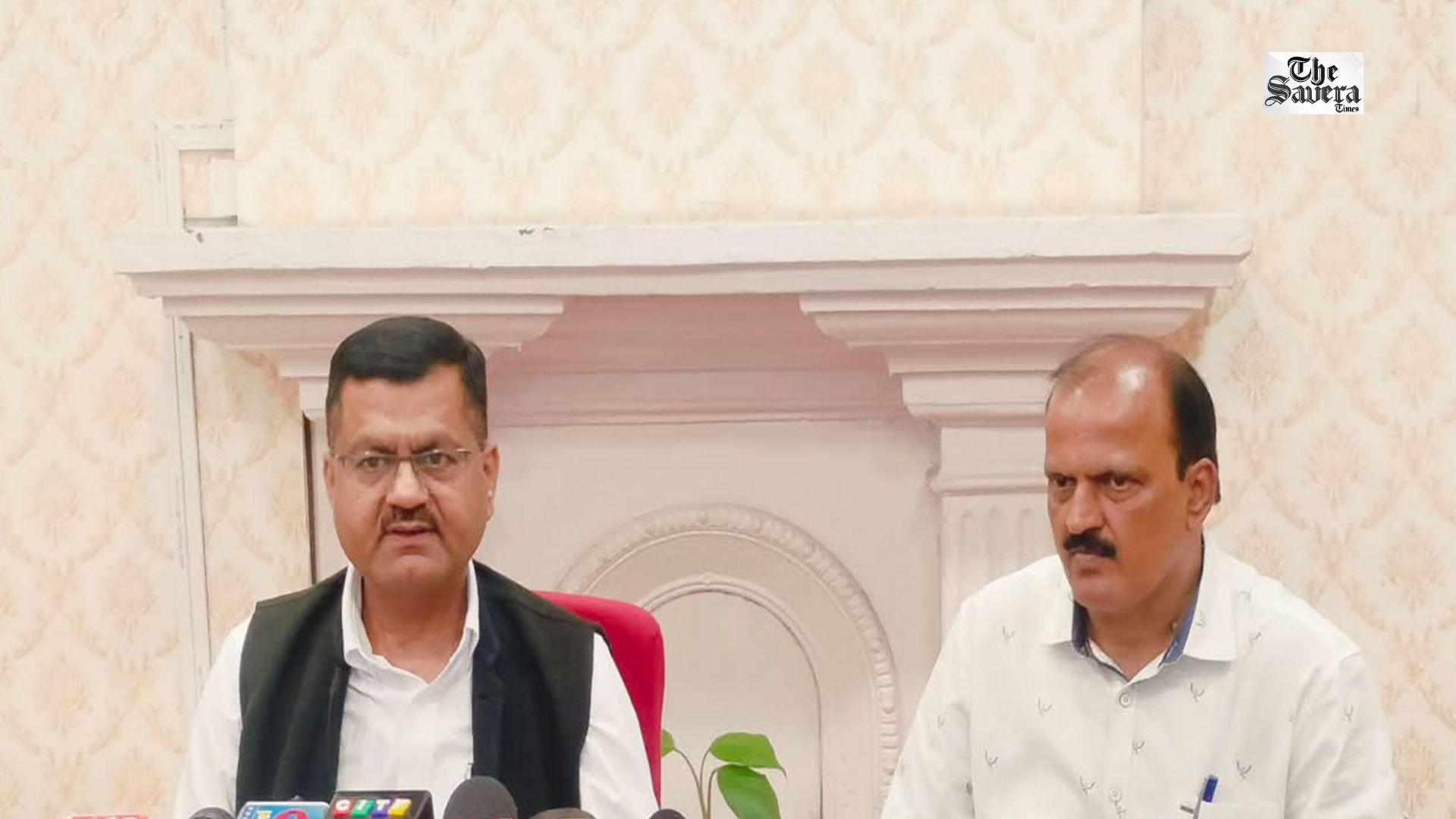
The Himachal Pradesh State Pollution Control Board has launched an awareness campaign on the newly notified Solid Waste Management Rules, 2026, aimed at informing citizens and institutions about the new provisions and ensuring their effective implementation across the state.
The board organised a press conference in Shimla on September 23 under the Nationwide Advocacy Campaign for Dissemination of Solid Waste Management Rules, 2026. The campaign focuses on creating awareness about waste segregation, processing and safe disposal requirements under the new framework.
The Solid Waste Management Rules, 2026 came into force from April 1, 2026, replacing the earlier 2016 framework. The rules cover urban and rural areas as well as commercial, institutional and government establishments.
Waste Segregation Mandatory at Source
Sushil Kumar Singla, Secretary-cum-Member Secretary of the Himachal Pradesh State Pollution Control Board, highlighted the importance of effective solid waste management and outlined the four mandatory waste streams prescribed under the new rules.
These include wet waste, comprising biodegradable kitchen, food and organic waste; dry waste, including recyclable materials such as paper, cardboard, plastics, glass and metals; sanitary waste, including used diapers and sanitary towels and pads that must be securely wrapped before disposal; and special care waste, including CFL bulbs, fluorescent tubes, expired medicines, paint cans, used syringes, broken mercury thermometers and batteries.
Singla appealed to citizens, institutions, commercial establishments, government departments, schools, local bodies and bulk waste generators to cooperate in ensuring source segregation, scientific processing and safe disposal of waste.
The rules prohibit burning, burying, dumping or littering waste in drains, water bodies or open public spaces. Under Rule 4 of the Solid Waste Management Rules, 2026 and Article 51A(g) of the Constitution, individuals and establishments are required to segregate waste at source and hand it over safely for appropriate processing and disposal.
Action Against Non-Compliant Bulk Waste Generators
The implementation measures also include identification of Bulk Waste Generators (BWGs) across the state.
In compliance with Supreme Court directions, Deputy Commissioners, in coordination with local bodies, have been directed to identify BWGs within six weeks. Local bodies will subsequently issue formal written notices to those identified.
BWGs that fail to segregate, process or manage waste in accordance with the Solid Waste Management Rules, 2026 may face temporary disconnection of electricity and water supply through the District Collector’s Special Cell.
The Supreme Court is also monitoring the implementation of the 2026 rules through its August 18, 2026 order in Civil Appeal No. 6174 of 2023.
Focus on Rural Areas and Student Participation
The state has also emphasised implementation of the rules in rural areas. Gram Panchayats and rural local bodies will be responsible for door-to-door waste collection, source segregation, proper handling and scientific processing of waste generated by households, shops, institutions and other establishments.
Rural households have been encouraged to separate wet and dry waste at source and adopt suitable methods for processing biodegradable waste, including home composting where feasible. Authorities will also focus on preventing open dumping and burning of waste in villages, along roadsides, drains, water bodies and other public places.
Students are also being included in the implementation drive. The Department of School and Higher Education is integrating theoretical and practical solid waste management modules into the academic curriculum.
Students will be trained as “Household Supervisors” to encourage families to practise complete waste segregation at home. Periodic audits will also be submitted to the concerned District Collectors.
The state has further planned detailed audits of waste processing facilities covering source segregation, processing, disposal and utilisation of waste. Interstate movement of waste will also be monitored.
The Himachal Pradesh government constituted the State Level Committee and District Level Implementation Committees through a notification dated April 9, 2026. These committees have been tasked with overseeing, enforcing and ensuring implementation of the Solid Waste Management Rules, 2026 across urban, rural and special notified areas of the state.
A tragic road accident occurred in Himachal Pradesh's Kullu district early Tuesday morning. A car lost control and...
Punjab and Haryana are agricultural states in India. They follow the ageold Rabi and Kharif seasons, and the...

Pensioners from Himachal Pradesh and central government organisations protested in Shimla, seeking withdrawal of the 2025 validation law...
ABVP and SFI activists clashed near Himachal Pradesh University in Shimla on Saturday morning, with several students reportedly...

A newlywed couple from Ludhiana reportedly had a dispute at a Khajjiar hotel, following which the husband allegedly...

Himachal Pradesh witnessed its first snowfall of the season, with high-altitude areas of Lahaul-Spiti covered in snow as...

Aries: The day will be auspicious...