Last Updated: November 4, 2026
Last Updated: November 4, 2026





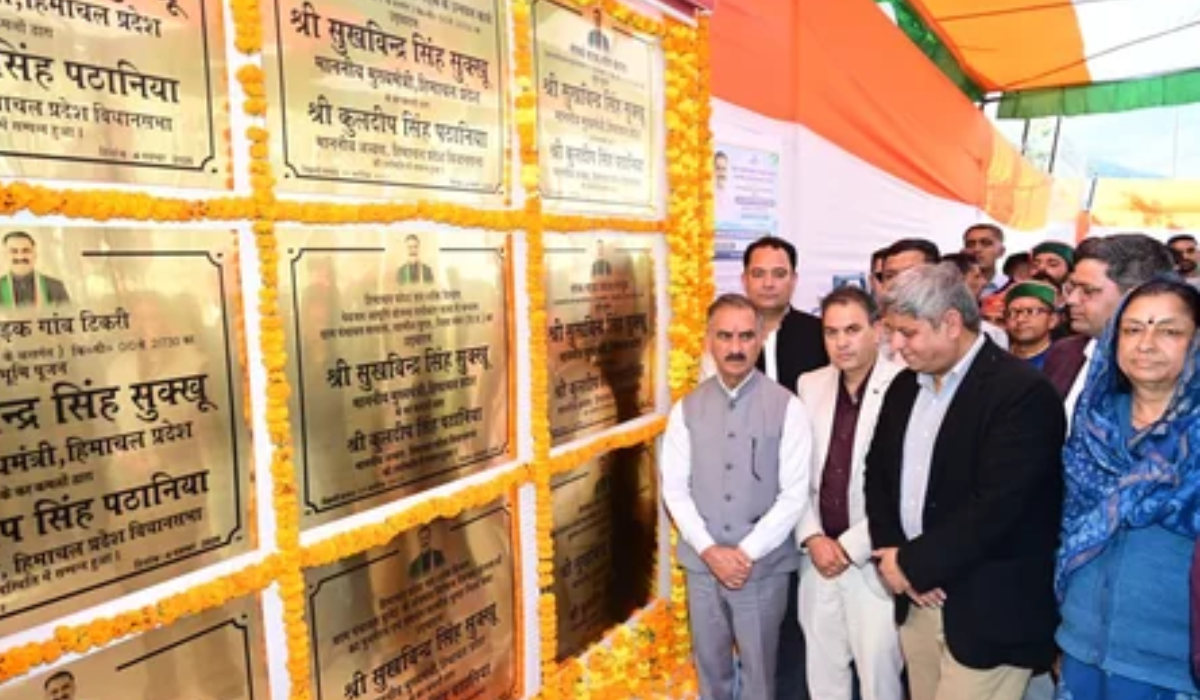
Chamba: Himachal Pradesh Chief Minister Sukhvinder Sukhu on Wednesday said the state has agreed to sell electricity to Rajasthan at the rate of Rs 15.50 per unit, which would generate revenue of Rs 400 crore in four months.
Addressing a public meeting at Banjaraadu Kala Manch in Churah Assembly constituency in Chamba district, the Chief Minister announced the four senior secondary schools in Churah would be affiliated with the CBSE.
He also announced that the government would provide the required funds for the construction of roads in various panchayats of the constituency. CM Sukhu said the government was taking concrete steps to strengthen the state’s economy.
He said the government was firmly committed to making Himachal self-reliant by closing all avenues for corruption.
He added the government had strongly taken up the matter with the Central government to increase Himachal’s free power share in the 180 MW Baira-Siul Hydroelectric Project to 50 per cent, following the completion of 44 years of its operation.
The Chief Minister said the Wildflower Hall case in Shimla had been pending since 2003. The state government pursued the matter effectively through legal channels and secured a favourable outcome, resulting in the state receiving Rs 401 crore.
He added the government would now earn approximately Rs 37 crore in annual revenue through e-auctioning.
For the past 23 years, the state had not received any revenue from this property. The income generated from it would now be spent on public welfare.
CM Sukhu said that, for the first time in the history of Himachal, the government has given special attention to strengthening the rural economy.
“The government has been providing a minimum support price (MSP) of Rs 150 per kg for raw turmeric, Rs 80 per kg for wheat and Rs 50 per kg for maize. The government is also offering a support price of Rs 61 per litre for cow’s milk and Rs 71 per litre for buffalo milk, nearly double the earlier rates.”
The Chief Minister said 100 per cent electrification and access to safe drinking water have been ensured in all permanent and seasonal tribal settlements across the state. Tribal areas have also made significant progress in education over the past few years.
The government is taking several steps, including setting up Rajiv Gandhi Government Model Day-Boarding Schools, CBSE-affiliated schools and centres of excellence, besides ensuring adequate teacher appointments in tribal areas.
Leader of the Opposition in the Lok Sabha and Congress leader Rahul Gandhi will address the party's 'Insaf...
Read The Savera Times Evening Wrap for the top India and world news stories, major developments, political updates...

Air pollution levels have risen sharply in the national capital Delhi ahead of Diwali. At 8 am on...
Belgian Prime Minister Bart De Wever has offered his resignation to King Philippe after failing to secure an...
Stay updated with The Savera Afternoon Bulletin, bringing you the latest news and major developments from India and...

Eight labourers died of electrocution at a road construction site in Chhapoli village, Jhunjhunu, after a gravel-mixing machine...