Last Updated: October 25, 2026
Last Updated: October 25, 2026





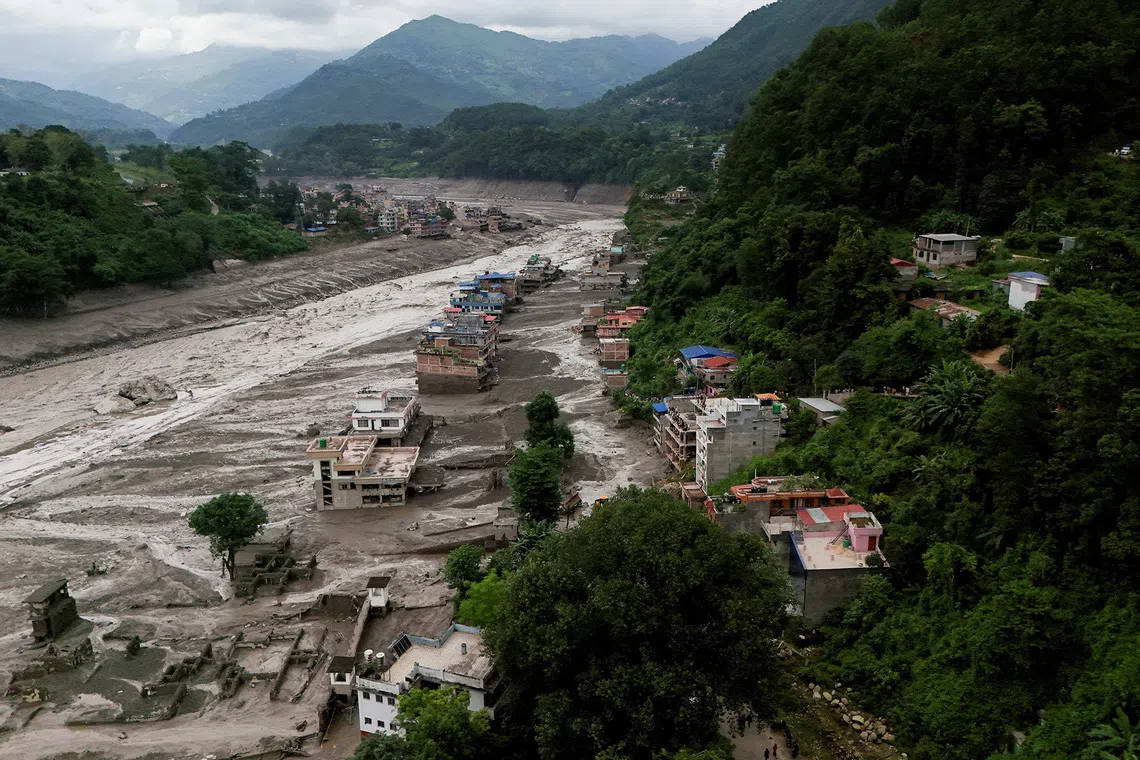
The devastating flood that struck Nepal’s Lhende-Bhotekoshi corridor in Rasuwa District on August 26,, 2026, was not simply another flood in the Himalayan region. Rather, it was a chain reaction of multiple events. The event began with a high-altitude glacier disturbance and rapidly developed into a destructive flood and debris-flow event downstream. The immediate cause of the event is still being investigated, and scientists are examining the roles of an ice-rock avalanche and the subsequent blockage and release of water in the Lhende river system. However, the larger significance of the disaster goes beyond the question of what exactly triggered the flood. The event highlights a broader problem in understanding Himalayan climate risk. A hazard that begins several kilometres upstream can rapidly change the behaviour of a river and affect communities, infrastructure and livelihoods far at the downstream. The disaster therefore needs to be understood as a cascading hazard, where different physical processes can interact and where the consequences of one event can create further risks to the downstream region. This is not a completely new phenomenon in the Himalayan region. The region has experienced several disasters in which one hazard has triggered another. What is changing is the combination of a changing mountain environment with increasing human exposure in mountain valleys. The 2026 Nepal disaster gave another example of why risk assessment in the Himalaya needs to move beyond looking at individual hazards separately and to multihazard assessments. The history of Himalayan disasters has given important lessons in this regard, for example: one of the most wellknown examples is the Dig Tsho glacial lake outburst flood in Nepal in 1985. On August 4, 1985, the moraine-dammed Dig Tsho lake suddenly released a large volume of water, and this water travelled downstream and caused extensive damage, including the destruction of the nearly completed Namche Small Hydroelectric Project. The event became an important example of the potential damage that a glacial lake outburst flood can cause to downstream infrastructure. The August 2, 2014, Jure landslide in Nepal demonstrated a different type of cascading hazard. A large landslide blocked the Sunkoshi River and created a temporary lake behind the landslide dam. This created the possibility of a much larger flood if the blockage failed. The event also affected roads, bridges and other infrastructure along an important transport corridor between Nepal and China. The disaster showed that the risk from a landslide does not end at the location where the slope fails, rather it starts when a landslide blocks a river, the river itself becomes part of the hazard process. The 2021 Melamchi disaster provided another example of how several processes can interact. An assessment by the International Centre for Integrated Mountain Development (ICIMOD) found that the disaster involved several processes operating at different locations, including rainfall, highaltitude processes, landslides, river damming, outburst flooding, erosion and debris deposition. The different processes interacted and increased the impact downstream. ICIMOD highlighted the need for a more integrated approach to multi-hazard risk management rather than assessing individual hazards separately. These events show that cascading hazards are not new in the Himalaya.
New Delhi/Imphal: The Enforcement Directorate (ED) has conducted coordinated searches across Mizoram and Manipur under the Prevention of...
Five people were injured after a mini-bus overturned near Jyotipuram in Reasi district while travelling from Bakal to...

Bhubaneswar: In a major crackdown against corruption, Odisha Vigilance on Sunday arrested another senior clerk of the State...
Bhubaneswar: In a major crackdown against corruption, Odisha Vigilance on Sunday arrested another senior clerk of the State...

Expelled JD(U) MLA Anant Singh has announced plans to form his own party after a six-year expulsion over...

New Delhi: The Cyber Police Station of Delhi’s North-East District has arrested two men for their alleged involvement...