Last Updated: November 15, 2026
Last Updated: November 15, 2026





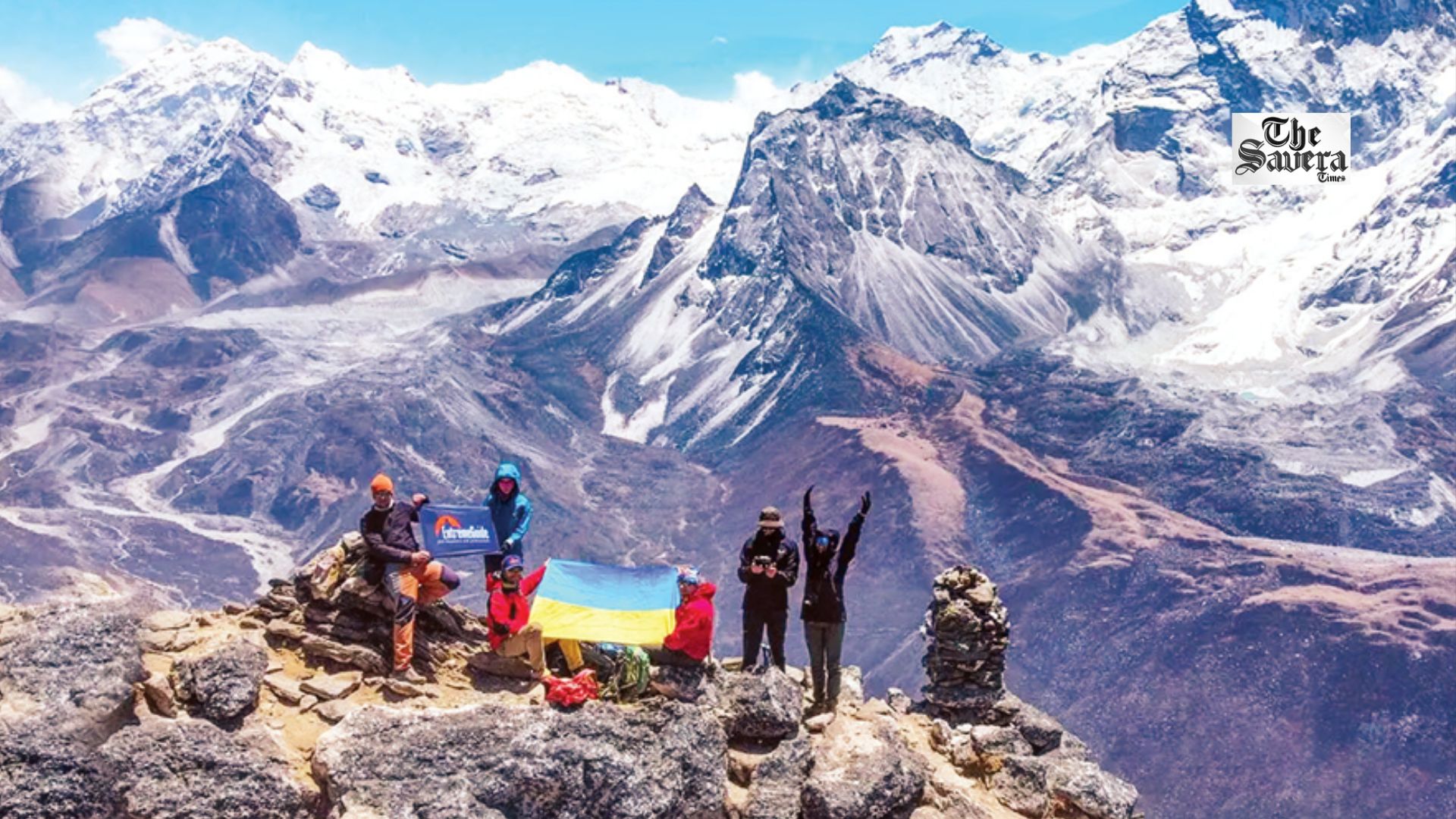
Just two weeks back, an outburst from Sintaphu Tsho, a morainedammed glacial lake in Bhutan’s Laya area, triggered flooding. The resulting glacial lake outburst flood (GLOF) damaged roads, bridges and other public infrastructure in two districts of the tiny Himalayan kingdom. Two weeks earlier, on October 11, a landslide-induced flash flood struck communities in Nepal’s ChumnubriArughat region, along the Budhi Gandaki river, causing widespread destruction.
On August 26, a massive ice-and-rock collapse on the northern slope of Tsangbu Ri, in the Lhende Khola valley in Nepal, triggered a catastrophic flash flood, killing about 2,000 people and destroying roads, bridges and hydropower projects; more than 5,000 are still missing. India’s Himalayan villages have suffered similar disasters, repeatedly. The list includes the Kedarnath disaster of 2013, the Rishi Ganga disaster in Chamoli in 2021 and the Dharali disaster of 2025. These are no longer isolated warnings from a climate-vulnerable region.
Taken together, they provide more than a decade of increasingly compelling evidence of the need for sustained, anticipatory and riskinformed preparedness across the Himalayan countries. Why, then, does preparedness remain so inadequate despite the region’s well-established and exceptional vulnerability?
The question stayed with me as I attended a programme on the International Partnership for Early Warning Systems and Resilience to Climate-Driven Natural Hazards (IP4EWS), led by the Norwegian Geotechnical Institute (NGI).
The programme brought together scientists, policymakers and other stakeholders from India, Canada and Norway to advance scientific, technical and governance approaches to early warning for climate-driven natural hazards. The timing could hardly have been more consequential.
As participants examined Norway’s preparedness systems, the August 26 disaster in Nepal offered a devastating reminder of what happens when hazards outpace preparedness. It also brought into sharp focus the contrast between the complacency of Himalayan countries and Norway’s institutional culture of preparedness — a contrast that deserves much closer scrutiny.
Norway’s approach to forecasting, planning and preparedness is impressive. Its strength lies not in any single technology, but in investments sustained over decades in hazard knowledge, monitoring networks, institutional capacity, public awareness, evacuation planning, infrastructure and repeated exercises. Preparedness has become an institutional habit, perhaps one of the country’s greatest strengths.
Similarly, scientific monitoring and modelling are not confined to research; they inform planning, public communication and operational decisions. Meteorological observations are systematically incorporated into hazard assessments. Weather data from the Norwegian Meteorological Institute (MET) inform the Norwegian Water Resources and Energy Directorate’s (NVE’s) assessments, supported by daily briefings between landslide forecasters, meteorologists and the community workers. The SeNorge website is a particularly useful example of how integrated meteorological, snow and hydrological data can support operational forecasting, hazard monitoring and disaster preparedness. Its Yr-Varsom-Regobs ecosystem is an
integrated, open-data network for weather forecasting, natural hazard warnings, and crowdsourced field observations, supported by the scientific and operational capabilities of NVE, MET and the Norwegian Public Roads Administration (NPRA). It works as a two-way early warning system, where the public is not merely the recipient of warnings; it also becomes a source of real-time ground information that can improve the warning system. Regobs is designed around the needs of someone observing a hazard in the field, rather than those of a scientist entering information into a technical database. Its features include simple reporting, GPSenabled observations, a photo-first approach, options for basic or detailed submissions, support for multiple hazards, offline maps and the ability for several people to report the same event.
Hamas commander Samir Abu Younis was killed in an Israeli airstrike in southern Gaza, Palestinian sources said. Two...
Thousands of flights across the US have been cancelled and delayed after a technical failure in the FAA's...

Bangladesh’s economy is at a critical juncture, with structural weaknesses including rising inequality, a fragile banking sector, high...

The growing number of cases involving foreign nationals detained by Chinese authorities reveals an increasingly alarming pattern of...

India and Nepal are set to give a facelift to the Buddhist-Ramayana Tourism Circuits very soon. Both sides...
The Badr agreement involving Pakistan, Turkey, Qatar and Indonesia could pose a broader strategic challenge to Western interests...

Aries: The day will be auspicious...