Last Updated: October 21, 2026
Last Updated: October 21, 2026





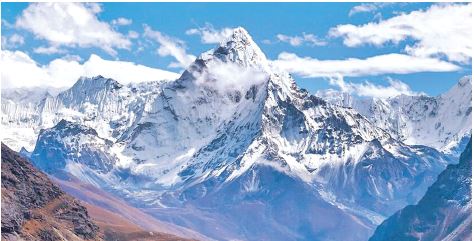
As the youngest mountain range in the world, the Himalayas are naturally prone to landslides. But climate change is accelerating the pace of destruction. Rising temperatures, erratic rainfall, and cloudbursts have intensified floods and debris flows. Human activities, including unplanned construction, deforestation, and road widening, further destabilise the slopes. (c)
The Himalayas are reaching a tipping point where fragile mountains, unstable slopes, and retreating glaciers are combining to trigger frequent and severe disasters. Since the 2013 Kedarnath tragedy, catastrophic events have increased in regularity, yet concrete action plans to mitigate risks remain missing, despite decades of scientific research.
As the youngest mountain range in the world, the Himalayas are naturally prone to landslides. But climate change is accelerating the pace of destruction. Rising temperatures, erratic rainfall, and cloudbursts have intensified floods and debris flows. Human activities, including unplanned construction, deforestation, and road widening, further destabilise the slopes. Meanwhile, rapidly melting glaciers are leaving behind fragile lakes that threaten sudden outburst floods, making the Himalayas one of the most disaster-prone regions globally.
For centuries, the Himalayan glaciers acted as reservoirs, balancing water supply and sustaining downstream communities. Today, their rapid retreat is disturbing this equilibrium. In the Western Himalayas, glaciers that once displayed both retreat and advance have now shown consistent retreat, particularly since the early 2000s. Scientists note that this trend is most pronounced in Sikkim and Arunachal Pradesh. Recent surveys reveal more than 150 glacial lakes in Arunachal alone, raising concerns about their stability.
The growing frequency of Glacial Lake Outburst Floods (GLOFs) underscores the danger. Retreating glaciers often leave behind lakes dammed by weak moraines. Heavy rainfall, avalanches, or even minor landslides can trigger sudden releases of water, flooding downstream areas without warning. At the same time, early signs of permafrost thaw in higher altitudes are beginning to appear. Permafrost, ground that remains frozen for at least two years, plays a crucial role in stabilising slopes. Its thaw weakens rocks, increases landslide risks, and destabilises mountain terrain, echoing patterns already visible in the Arctic.
Scientists studying these changes combine satellite-based remote sensing with ground surveys. Satellite data show that glacier loss since 2000 is nearly four times higher than in the previous century. Field studies confirm these findings, with visible moraine imprints, expanding melt ponds, and uneven debris cover marking the accelerated retreat. Indigenous knowledge also adds vital context. In Badrinath, Uttarakhand, local residents recall seeing a glacier from their homes during childhood, which has now retreated kilometres away. Such lived experiences reinforce scientific evidence of warming and shrinking ice.
The Intergovernmental Panel on Climate Change (IPCC) has warned that if global temperatures rise more than 1.5°C above pre-industrial levels, Himalayan glaciers could face irreversible decline. The impact would extend beyond the mountains, directly or indirectly affecting more than two billion people who rely on Himalayan rivers for water, agriculture, and hydropower.
Despite growing awareness, research in the Himalayas faces immense challenges. Harsh terrain, high altitudes, and severe weather restrict ground studies to only a handful of sites. This makes satellite monitoring essential for regular, region-wide assessment. Scientists stress the need for a comprehensive database of potentially dangerous glaciated zones and better policies to share data across institutions.
While the science is clear, action on the ground lags. Experts argue that glacier retreat cannot be reversed, but its pace can be slowed. Stabilising remaining glacier systems would give ecosystems and communities more time to adapt. This requires urgent steps toward sustainable development. Careful planning of roads, hydropower projects, and tourism infrastructure is critical, as is strengthening disaster preparedness and early warning systems.
Equally important is the protection of forests and restoration of watersheds, which act as natural buffers against landslides and floods. Integrating indigenous knowledge with modern science can help design locally tailored adaptation strategies. Encouraging climate leadership within mountain communities will also be key in building resilience.
The Himalayas stand at a crossroads. Without swift and coordinated action, the future holds greater risks for the millions who call the mountains home and the billions who depend on their rivers. Scientists, policymakers, and communities must work together now to protect this fragile region and reduce the scale of disasters looming on the horizon.
Stay updated with the latest national, international, Punjab, political, business, crime, weather, sports and entertainment news with The...

The family of 5-year-old Fabiana Cabello in New York City, USA, is in deep shock after her death....

The Delhi High Court on Wednesday posed several questions to Cockroach Janata Party (CJP) leaders Sourav Das and...

Cockroach Janata Party (CJP) leaders Sourav Das and Ashutosh Ranka withdrew their petition from the Delhi High Court...

A suspicious explosion occurred on Tuesday at a building under construction on Jermiah Road in the Pulikesi Nagar...

The Ayushman Bharat Pradhan Mantri Jan Arogya Yojana (PMJAY) is proving to be a significant relief for poor...

Aries: The day will be auspicious...