Last Updated: October 12, 2026
Last Updated: October 12, 2026





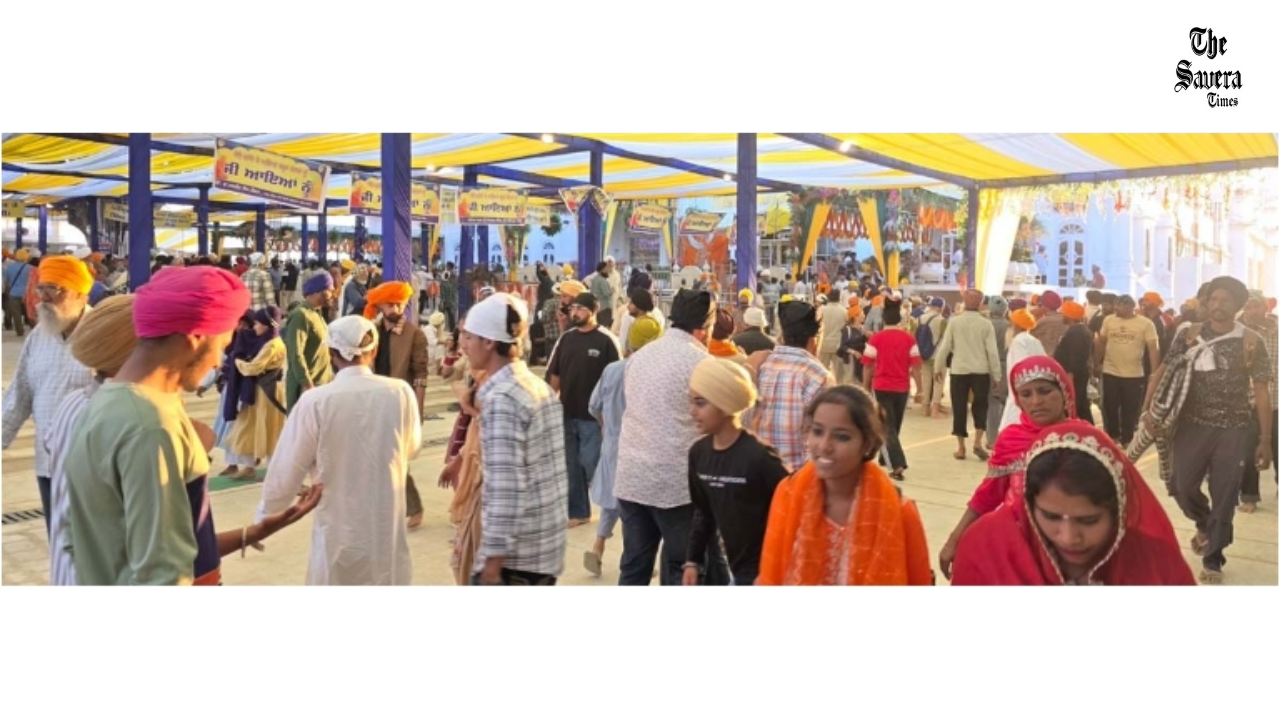
Sri Anandpur Sahib, Punjab: The annual Hola Mohalla festival, a vibrant and traditional Sikh event, began with fervour and devotion at Sri Anandpur Sahib on March 2–3, 2026, drawing thousands of devotees from across the region. The sacred town — known as a central hub of Sikh history and faith buzzed with celebrations, prayer recitals, and ceremonial gatherings as people gathered to pay their respects and participate in the three-day festivities.

Devotees filled the precincts of various Gurdwaras, especially Takht Sri Kesgarh Sahib, one of Sikhism’s five sacred thrones, to offer prayers and witness ritual readings of the Sri Akhand Paath Sahib the continuous recitation of the Sikh holy scripture which began at the start of the festival and is scheduled to conclude on March 4.
Hola Mohalla is not just a festival of colours and celebration; it has deep historical roots in Sikh tradition, dating back more than three centuries to the time of Guru Gobind Singh, the tenth Sikh guru. This event was instituted as a martial gathering and spiritual congregation, emphasizing the community’s readiness to uphold righteousness and unity, often reflecting discipline, courage and devotion.

Unlike Holi commonly associated with splashing colours Hola Mohalla embodies the Sikh martial spirit, historically featuring displays of Gatka (traditional Sikh martial arts), mock battle demonstrations, processions and community prayers.
From early morning, long queues of pilgrims including families, youth and elderly devotees moved through the network of tent cities, Gurdwara complex, and community langar grounds. Many devotees took part in Ardās (prayers), listened to kirtan (devotional hymns) and joined prospective seva (community service) activities, such as assisting in the Guru ka Langar (community kitchen) that serves free meals to all.
Security arrangements were also visibly enhanced to manage the large crowds, with local authorities coordinating traffic, parking, and pilgrim movement along key routes leading to the holy city, ensuring smooth and peaceful observance of the festival.

For 2026, the festival also embraced a “Green Hola Mohalla” initiative, aimed at promoting environmentally sustainable celebrations. The Punjab government introduced arrangements, including a tent city facility and stricter efforts to minimize single-use plastics within the festival zone. Biodegradable alternatives were encouraged at langar halls and community spaces, reflecting the organizers commitment to protect the environment while honouring tradition.
The holy city was lit up with decorative lights, enhancing the spiritual ambience, and pilgrims were seen arriving from far-flung regions, often travelling in groups or on family trips to be part of the three-day celebration.
Hola Mohalla at Sri Anandpur Sahib continues to draw Sikh devotees not only from India but also from across the world. Many international visitors keen to witness the festival’s unique blend of spirituality, history, and martial heritage added to the chatter and devotional energy around the town.
Throughout the festival, rituals, prayers, and displays reinforce the Sikh principles of community service, solidarity, and courage. Community leaders and clergy urged the sangat (devotees) to embrace these values and carry forward the legacy of the Khalsa Panth as celebrated through Hola Mohalla.
Punjab BJP President Kewal Singh Dhillon on Monday said a poster promoting a protest being held in Delhi...

The Enforcement Directorate (ED) has arrested Harcharan Singh Bhullar, the then Deputy Inspector General (DIG) of the Ropar...
In accordance with the instructions of the Election Commission of India, the Special Intensive Revision (SIR) of Electoral...

Flight operations were affected near Sri Guru Ram Dass Ji International Airport in Amritsar, Punjab, on Sunday night...

Enforcement Directorate (ED) has arrested Ludhiana Police Commissioner Swapan Sharma and others have been summoned to appear in...

The Punjab Vigilance Bureau (VB), during its ongoing crusade against corruption in the state, has been able to...

Aries: The day will be auspicious...