Last Updated: October 26, 2026
Last Updated: October 26, 2026





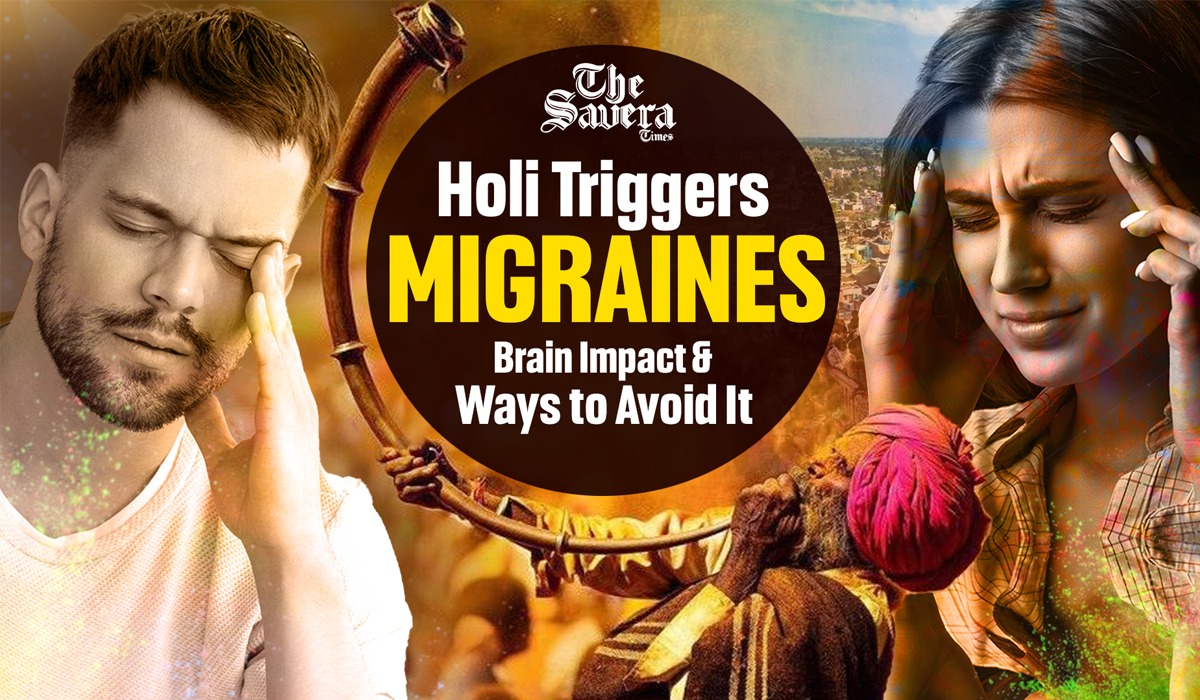
While Holi is synonymous with colours, joy and festive celebrations, for many people it can also trigger migraine attacks a severe type of headache accompanied by throbbing pain, sensitivity to light and nausea. Migraines occur when changes in the brainstem and its nerve interactions activate pain pathways, often lowering the threshold for a migraine attack in susceptible individuals. These attacks may be set off by a combination of environmental and sensory factors common during Holi celebrations.
Migraines are complex neurological conditions that don’t have a single cause; instead, they are often triggered by multiple factors acting together such as bright light, dehydration or stress that can push the brain over its threshold for an attack.
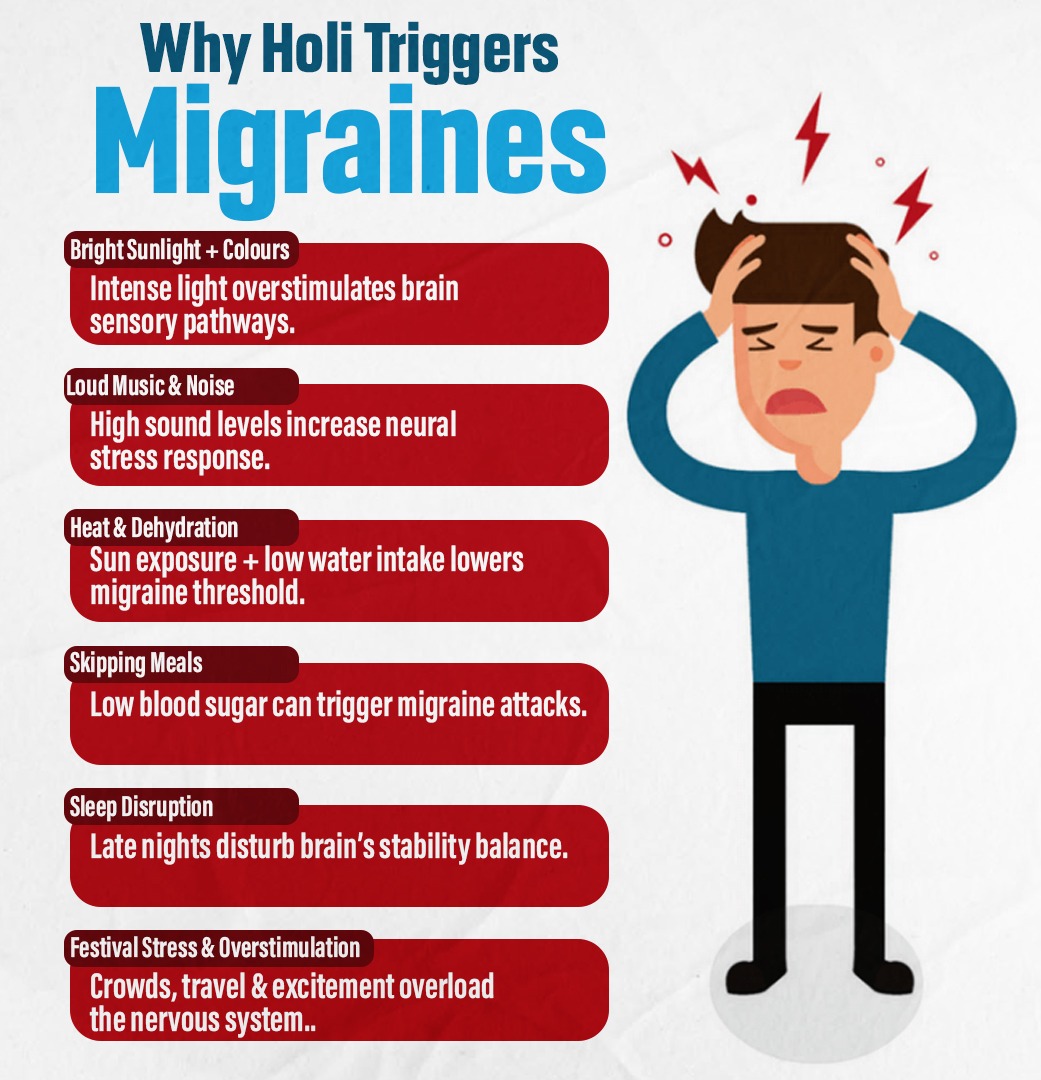
During Holi, several sensory and environmental elements many of which are known migraine triggers converge in what experts describe as a “perfect storm” that can provoke headaches for migraine-prone people.
Bright Colours and Visual Overload
The festival is filled with vibrant gulal and water colours that create intense visual contrasts. Bright lights and vigorously shifting colours can overstimulate the visual processing centres of the brain, triggering pain pathways in people who are sensitive to visual stimuli. Many migraine sufferers report that strong colours and patterns can precipitate headache episodes.
Sunlight and Heat Exposure
Holi is typically celebrated outdoors in the daytime, exposing participants to strong sunlight and heat. Bright sunshine not only increases light sensitivity (photophobia) a hallmark of migraine but can also elevate stress levels in the body, increasing the risk of an attack.
Dehydration and Body Stress
Running around with colours under the hot sun can lead to dehydration. Poor hydration decreases blood flow to the brain and is a well-established migraine trigger. Skipping fluids and meals during festivities similarly reduces glucose levels in the brain, augmenting headache risk.
Sensory Overload and Noise
The festival environment loud music, crowds, cheering, pichkaris spraying water and colours creates multisensory stimulation. Migraine-prone brains are particularly sensitive to noise and sensory overload, which can easily activate pain pathways in the nervous system.
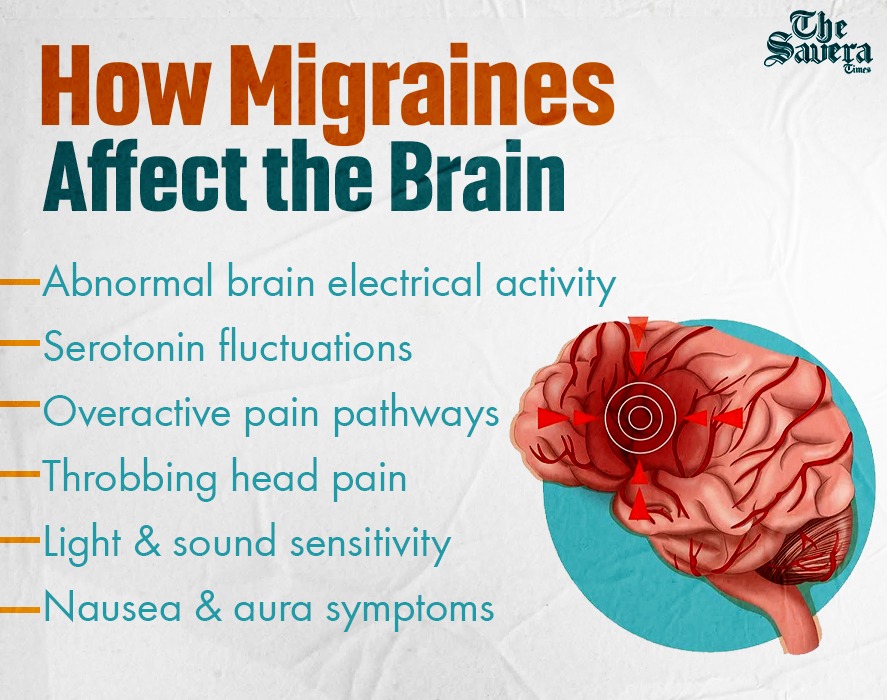
During a migraine, nerve pathways in the brainstem become hyperactive and sensory input processing becomes disrupted, often triggering inflammation and pain. Changes in brain chemicals like serotonin key regulators of pain are believed to play a role in initiating migraine attacks.
People may also experience auras visual disturbances like flashing lights or spotting colours before or during a migraine. These signals reflect transient neurological changes in sensory areas of the brain and can intensify the experience.
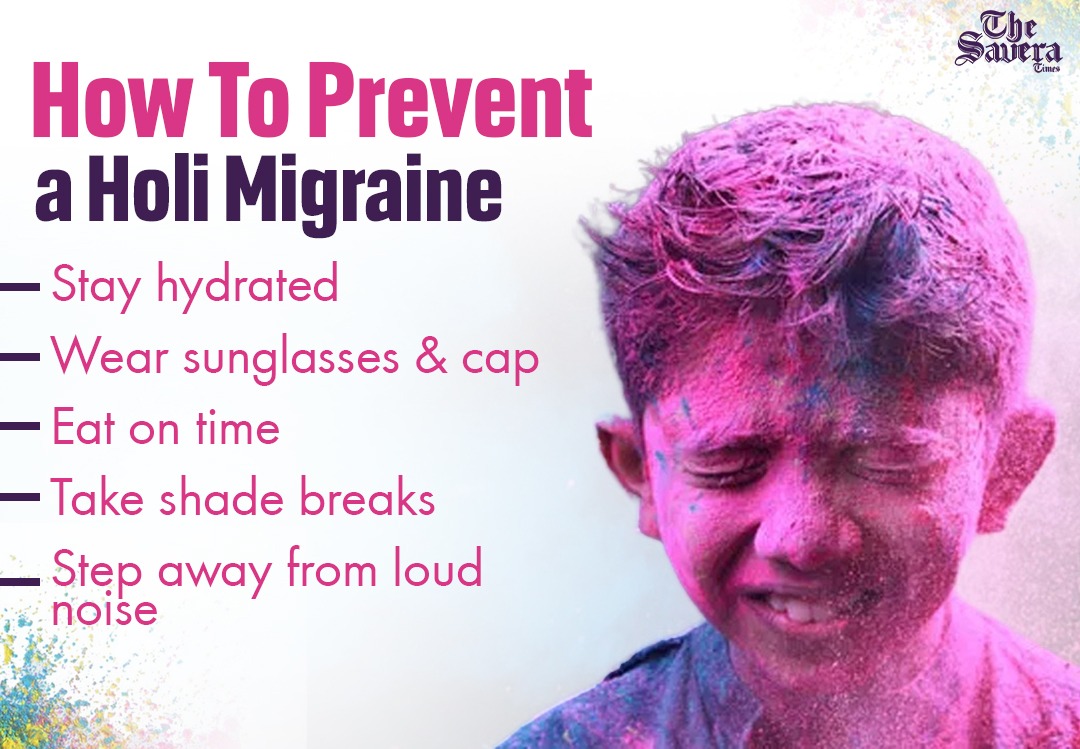
Even though Holi is full of excitement, people who are prone to migraines can take precautions to reduce the risk:
Hydrate well before and during festivities to prevent dehydration.
Eat balanced meals and avoid skipping food, which can provoke migraine attacks.
Wear sunglasses or caps to reduce glare from bright sunlight and colours.
Limit exposure to very bright colours by wearing protective eyewear.
Use organic or safe colours instead of synthetic powders, which may irritate skin and senses.
Take short breaks in cool, shaded, quieter areas if noise and crowds feel overwhelming.
Avoid loudspeakers or long exposure to continuous high noise.
Keep stress low with relaxed pacing, breaks and hydration.
If symptoms are severe such as prolonged pain, vomiting, visual disturbances or numbness medical attention should be sought immediately. Keeping a headache diary after Holi helps identify personal triggers and patterns for future prevention.
A bus travelling from Raipur to Ambikapur crashed into a stationary truck near Darchura village early Monday. Three...
Four people were declared dead at Dhar district hospital after a car caught fire near Sadalpur in Madhya...
A Sultanpur court acquitted Rahul Gandhi in a criminal defamation case filed over his 2018 remarks about Amit...

Several people were injured when five vehicles at the rear of Rahul Gandhi’s convoy collided with an ambulance...

The 17-year-old son of an Additional District Judge has been granted bail in a fatal road accident case...
Jamia Millia Islamia has accepted key demands of protesting students after 14 days of agitation. The university will...
Aries: The day will be auspicious...