Last Updated: October 4, 2026
Last Updated: October 4, 2026





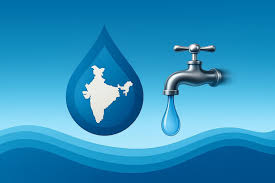
Improving water governance in rural India is becoming increasingly important due to rising demand, uneven distribution, and climate variability. Government programmes including the Atal Bhujal Yojana, the National Water Mission, and state initiatives as in Rajasthan and Maharashtra, highlight the effectiveness of participatory approaches to build water security and climate resilience. Technology further strengthens these efforts by supporting data-driven planning at the local level using tools like the Varuni web application. Integrating water budgeting into planning, backed by community involvement and policy support, promotes sustainable water use. Launched in 2019, the Atal Bhujal Yojana promotes water budgeting as a key tool for decentralised water governance at Gram Panchayat (GP). The programme is implemented on a pilot basis across 229 blocks in seven groundwater-stressed states. During the assessments conducted in 2023-24 and 2024-25, 180 out of 229 blocks have shown measurable improvement in groundwater levels. The scheme promotes revival and strengthening of traditional water conservation systems, including Gokatte, Bawdi, Johad, Tanka, Kalyani, and Diggi, adapted to local contexts. As of March 2026, approximately 81,700 water conservation and recharge structures have been created or restored. The scheme mandates the annual preparation and updating of water budgets, with 8,203 budgets completed across participating Gram Panchayats. The growing stress on limited water resources has resulted in declining groundwater levels, seasonal water shortages, and increasing conflicts over water allocation. All these challenges highlight the need to move away from a supply-driven approach towards demandbased and planned water management systems. In this context, water budgeting has emerged as a significant tool for sustainable development in water-stressed regions where scarcity and uneven distribution threaten economic stability, food security, and climate resilience. Similarly, the National Water Mission recognises water budgeting as a foundational element of Integrated Water Resources Management (IWRM). Water budgeting under the Mission aligns with national priorities of water conservation, sustainability, and long-term water security. Additionally, Nari Shakti se Jal Shakti under NWM emphasises women-led institutions, including SelfHelp Groups (SHGs), Water Users’ Association (WUAs), and community groups in water conservation and management. The Varuni web application, being implemented by the government, employs a scientifically robust yet user-friendly methodology to generate block-level water budgets. It integrates automatically sourced data from authoritative government portals, including rainfall, land use, cropping patterns, population, and water resources. This data is subsequently processed through an in-built computational framework to produce structured water budget assessments. The Varuni web application (https://wasca.in/index) was developed under the IndoGerman bilateral project “Water Security and Climate Adaptation in Rural India (WASCA)”. Water is a fundamental resource essential for life, and groundwater has increasingly become a crucial natural resource meeting the freshwater needs of various sectors in India. Groundwater is the backbone of India’s agriculture and drinking water security, contributing nearly 62% to irrigation, 85% to rural water supply, and 50% to urban water supply. However, the sustainable development and efficient management of this limited resource pose significant challenges. In recent years, several attempts have been made in the country towards sustainable groundwater management by involving the community which demonstrates how demand for groundwater can be reduced if timely information on groundwater availability is provided to communities. Most of these success stories of participatory groundwater management are community driven and self-financed which, at times, become a bottleneck in replicating such initiatives elsewhere.
From Gaganyaan and Chandrayaan-4 to Shukrayaan and the Bharatiya Antariksh Station, India is entering a new phase of...
The INDIA bloc is intensifying its campaign against CEC Gyanesh Kumar, while CJP continues separate protests over SIR...
Over the years, India’s cities have made significant strides in expanding access to public sanitation facilities. From improving...
While some areas face floods after heavy rain, rainfall deficits in Uttar Pradesh and Punjab are raising concerns...
The Uri National Highway in J&K will remain closed on October 4 and 11 for BRO hill-cutting work,...
Gujarat rolls out new GCC Operational Guidelines with a single digital portal for incentives and a two-year window...
Aries: The day will be auspicious...