Last Updated: October 15, 2026
Last Updated: October 15, 2026





Vibha Varshney
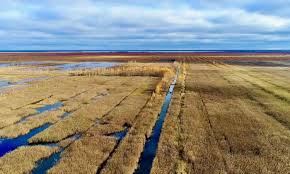
The Chilika red rice grows in the wetlands around the Chilika Lake in Odisha. Locally known as bankia or bankei, the rice is flood-tolerant and helps marginalised local farmers eke a living in all kinds of weather conditions. Among the farmers are Haramohan Samantari and Bheema Swain of Mangalajodi village, who grow the rice on 2 acres and 3 acres of land they own respectively.
They grow the rice organically and use traditional methods to harvest and the yield depends on the weather conditions. The yield on 2 acres is around 13 quintals and Samantari earns around Rs 8,000-Rs 10,000 from selling around 2-3 quintals. The rest of the harvest is used at home. Swain harvests around 24 quintals and earns Rs 20,000 from the 8-10 quintals he sells. Like Samantari, he too uses the remaining at home.Red rice is cultivated on land situated along the water channels that connect the villages on the banks of the Chilika to the open lake. Bankia grows up to a height of 6 feet and provides habitat to native catfishes and snakeheads and native birds like moorhens.
No pesticide or fertiliser is used for its cultivation as they would get washed away with monsoon floods, when the paddy is grown. Because of this feature, they are also climate-resilient as they have the ability to withstand unseasonal heavy rainfall close to the harvest time when most high-yield varieties would rot.Despite these benefits, more farmers are not interested in growing Bankia as there is not much awareness about this rice. Swain and Samantari are two of the four farmers who grow it in the village, informs Arya Narayan Swain, who works as a project officer with the Kolkata-based non-profit Human & Environment Alliance League (HEAL) which is trying to promote Bankia.
One reason for the farmers’ disinterest is the fact that the quality of the wetlands is degrading according to people who live and work in the area. This is despite the fact that Chilika Lake is India’s first Ramsar Site. Though data by the National Wetland Inventory and Assessment shows an increase in number and area under wetlands between 2010 and 2018 (from 78,440 wetlands covering 6.91 lakh ha or 0.691 mha in 2010 to 4.21 lakh wetlands covering 8.36 lakh ha or 0.836 mha in 2018), according to Tiasa Adhya, founder of the Fishing Cat Project, the wetland parts of the Chilika are shrinking drastically due to proliferation of aquaculture farms harvesting freshwater carps and prawns.“We have lost nearly 50 per cent of the seasonally inundated areas of the wetlands due to this,” she says.
More and more farmers lease off their lands to businessmen who convert the wetlands for intensive carp culture, says Adhya. These fish farms release pollutants into the Chilika. Sometimes, invasive species like nylon Tika and hybrid catfish are released into the Chilika during floods, which is highly detrimental for native fishes. “We want to market the red rice in urban centres of the country in the hope to make its farming lucrative and to encourage this age-old wise-use practice
The Supreme Court is set to hear opposition leaders’ petition seeking transparency in the Election Commission’s SIR decisions,...

Congress MP Angomcha Bimol Akoijam has been summoned by Delhi Police for questioning over sexual harassment allegations involving...

President Droupadi Murmu will inaugurate the national-level SARAS Mela at Punnami Ghat in Vijayawada on October 15. The...

Ankita Bhandari’s parents were detained during an overnight protest near India Gate in Delhi and released around 5...

New Delhi: Prime Minister Narendra Modi is scheduled to interact with the Indian contingent that participated in the...

New Delhi: The Central government has defended its decision to suspend mobile internet services in parts of central...

Aries: The day will be auspicious...