Last Updated: October 1, 2026
Last Updated: October 1, 2026






China’s attempt to tighten control over the export of rare earth minerals has backfired, exposing its willingness to use critical materials as a geopolitical weapon and prompting global concern, US Treasury Secretary Scott Bessent said in an interview with the Financial Times published on Saturday.
Bessent described Beijing’s decision to impose restrictions on rare earth exports in October as a “real mistake,” arguing that it alerted the international community to the risks of depending too heavily on China for vital raw materials. “China has alerted everyone to the danger. They’ve made a real mistake,” he said. “It’s one thing to put the gun on the table. It’s another to fire shots in the air.”
Rare earth elements are essential to the production of advanced technologies, including defense equipment, electric vehicles, renewable energy systems, and consumer electronics. China dominates the global supply chain, accounting for around 70 percent of global rare earth production and refining capacity. The country’s decision to tighten export rules immediately triggered alarm among major economies, disrupting supply chains and pushing governments to seek alternative sources and suppliers.
According to Bessent, the export curbs demonstrated Beijing’s readiness to “weaponise” economic influence, a move that, he said, undermined confidence in China as a reliable trading partner. He argued that while the United States and China had maintained a form of economic “equilibrium” in recent years, China’s latest actions showed that it could no longer count on its dominance in critical minerals as an instrument of pressure.
The export restrictions quickly became a new point of contention in the already strained trade relationship between Washington and Beijing. Analysts said the move highlighted the strategic significance of rare earths in modern industries and intensified the global push for supply chain diversification. The United States, Japan, and European nations have already begun developing policies to reduce dependence on Chinese minerals through investment in domestic mining, recycling technologies, and partnerships with resource-rich countries such as Australia and Canada.
The rare earth issue was among the key topics discussed when Chinese President Xi Jinping and US President Donald Trump met on the sidelines of the Asia-Pacific Economic Cooperation (APEC) summit in South Korea this week. The meeting, described as candid but constructive by officials, focused on trade imbalances, technology supply chains, and global economic stability.
Following the talks, Beijing announced that it would suspend some of its newly introduced export restrictions for one year, including those affecting rare earth materials. Chinese officials said the decision was made to “stabilise global markets” and maintain international confidence in the country’s role as a responsible supplier.
Bessent, however, suggested that China’s partial reversal reflected its awareness of the international backlash that followed the export controls. “I think the Chinese leadership were slightly alarmed by the global backlash to their export controls,” he said. He added that Washington had prepared “offsetting measures” in case Beijing reintroduced similar restrictions in the future.
The United States has been working to strengthen its domestic supply of critical minerals through new mining projects, strategic reserves, and partnerships with allied nations. American policymakers view rare earth independence as a matter of national security, given the materials’ importance in defense technologies such as missiles, radar systems, and fighter jets.
Experts say China’s move may accelerate global efforts to build a more resilient and diversified rare earth supply network. Several countries are already investing in refining infrastructure and exploring alternative materials to reduce reliance on Chinese exports.
Bessent noted that China’s action could mark a turning point in global trade dynamics. “It’s made every country aware that they can’t be at the mercy of one supplier,” he said. “The world has taken notice, and that in itself changes the balance.”
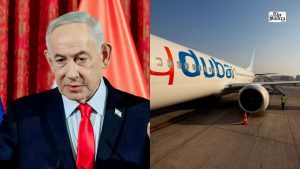
Israel PM Benjamin Netanyahu has claimed that a flydubai pilot wanted to crash the aircraft and praised passengers...
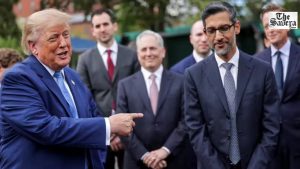
Donald Trump jokingly called Google CEO Sundar Pichai a “monster” during a White House interaction, with Pichai responding...
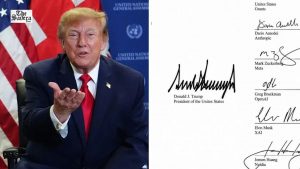
A spelling error on a White House document linked to Donald Trump’s Super Intelligence initiative has gone viral...
An Indian captain reportedly fought back after an alleged cockpit attack on a flydubai flight, helping avert a...

Washington/Baghdad: The United States and its allies have officially ended ‘Operation Inherent Resolve’ against the Islamic State (IS)...

Telangana-origin lawyer Sandhya Reddy has been elected the 73rd Mayor of Sydney’s Strathfield Council after serving as a...

Aries: The day will be auspicious...