Last Updated: October 21, 2026
Last Updated: October 21, 2026





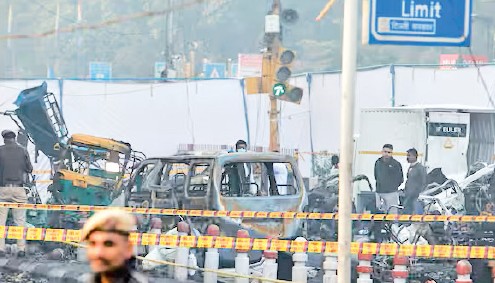
With the blast inside Delhi’s Red Fort, a ‘white collar’ terrorist module ended a 14-year lull and revived memories of the Indian Mujahideen’s urban bombing campaign that shook India through the 2000s. Yet investigators say the Delhi attack was markedly different. Early findings indicate that this was not a sleeper cell or a remnant of old modules but the face of a new generation of terrorists shaped by modern technology, dispersed networks, and foreign handlers operating remotely.
The National Investigation Agency has identified the alleged bomber, Umar un Nabi, as part of a trans-state network stretching from Jammu and Kashmir to Haryana and Uttar Pradesh. The module included doctors, clerics, and highly educated individuals who, according to the Jammu and Kashmir Police, were acting under instructions from Pakistan-based Jaish-e-Mohammed. Just hours before the blast, the J&K Police had revealed the existence of a radicalised network of professionals and students linked to foreign handlers across Pakistan and other countries.
Agencies probing the case say the group used encrypted communication platforms for indoctrination, coordination, and fundraising. Money was reportedly routed through professional and academic circles to avoid detection. For experts, this points to a shift driven by the availability of secure digital tools. Adil Rasheed, who heads the Counterterrorism Centre at the Manohar Parrikar Institute for Strategic Studies and Analyses in Delhi, says technology has ended the long quiet period and enabled foreign masterminds to adopt a new strategy.
He notes that earlier modules like those from Azamgarh or Bhatkal were tied to specific localities and close-knit circles. In contrast, the new network is scattered across states because technology allows handlers to operate across regions and recruit individuals without physical contact. Rasheed says that online radicalisation, training, and planning have replaced cross-border travel and in-person meetings that were once essential.
This transformation reflects a wider trend. In the age of encrypted platforms, high-speed internet, and artificial intelligence, Pakistan’s strategy has shifted from sending explosives or trained operatives across the border to steering plots remotely. AI-driven tools now offer instant access to advanced chemical information and allow recruits to receive guidance without the training camps of earlier decades. Rasheed points out that this digital infrastructure also enhances deniability for handlers as the recruits may never have visited Pakistan.
A similar pattern has been visible in Pakistan’s attempts to rebrand its proxies as homegrown outfits. Groups like Lashkar-e-Taiba have been projected as The Resistance Front or People’s Anti-Fascist Front. No group claimed responsibility for the Delhi attack, reinforcing the suggestion that handlers prefer to remain invisible while presenting all such plots as local initiatives.
The Delhi case also underscores another persistent reality: education does not necessarily deter radicalisation. Many of the world’s notorious terrorist leaders have been highly educated. Osama bin Laden studied business administration, Ayman al-Zawahiri was a doctor, and 9/11 planner Mohamed Atta trained as an architect. India’s own experience, from Indian Mujahideen’s software engineers to left-wing extremist recruits, shows that education can sometimes serve as a pathway rather than a barrier.
The module linked to the Delhi blast fits this pattern. According to J&K Police, these individuals were involved in identifying potential recruits, raising funds, arranging logistics, and procuring components for improvised explosive devices. Their academic and professional expertise appears to have strengthened their ability to execute complex tasks while staying under the radar.
As investigators continue to piece together the network behind the Red Fort blast, it has become clear that Indian agencies now face a more dispersed, technologically empowered, and educated class of operatives. This marks a shift from the structures of the Indian Mujahideen and Students Islamic Movement of India, signalling a new phase in India’s counterterrorism landscape.
Good Evening Viewers! Get the latest updates from India and around the world with The Savera Times Evening...

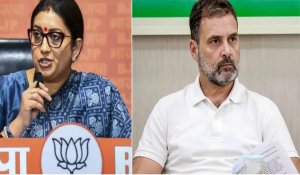
Bharatiya Janata Party (BJP) National General Secretary Smriti Zubin Irani launched a scathing attack on Congress MP and...
New Delhi: Cockroach Janata Party (CJP) leaders Saurav Das and Ashutosh Ranka will be released from judicial custody...
According to police, three suspicious young men are seen in CCTV footage. Efforts are underway to identify them....

A video has surfaced of an alleged attempted assault on Jan Suraj Party's Bihar president Manoj Bharti. The...
Two accused have been convicted and sentenced to 10 years of rigorous imprisonment in a 2017 drug trafficking...

Aries: The day will be auspicious...