Last Updated: October 12, 2026
Last Updated: October 12, 2026





Irfan Amin Malik
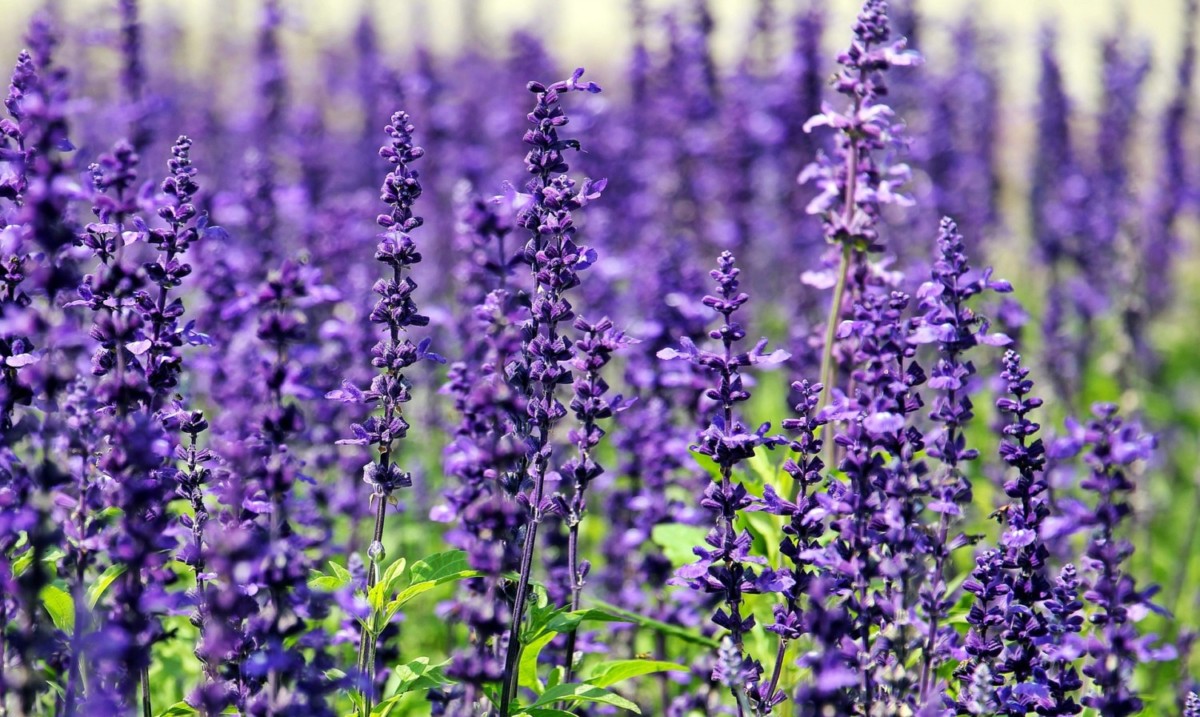
In the July heat, workers move through neat rows of lavender at the Council of Scientific and Industrial Research-Indian Institute of Integrative Medicine’s (CSIRIIIM) field station in Bonera, Pulwama, cutting shoulder-high plants heavy with purple flowers. Within hours, the flowers are taken to a nearby distillation unit, where steam is used to extract the fragrant oil used in perfumes, cosmetics and medicines. “This is a living laboratory,” said Shahid Rasool, scientist-incharge of the Bonera Field Station. The research plots, he said, are where cultivation techniques are tested before they are recommended to farmers across Jammu and Kashmir. Zabeer Ahmed, director of CSIR-IIIM, said the institute never intended lavender to remain confined to research farms. “The idea was always to take science to farmers’ fields,” he said. “The Purple Revolution demonstrates how scientific interventions can help farmers adapt to climate change while creating new livelihood opportunities.” Long before lavender fields began attracting attention in Bhaderwah, Sirhama in Anantnag or Ganderbal, scientists at Bonera were uncertain whether a Mediterranean herb could survive Kashmir’s temperate climate. The experiment began in 1970, when scientist Akhtar Hussain introduced lavender from Bulgaria. At first, it was grown only in research plots at Bonera in Pulwama and Mansbal in Ganderbal. More than five decades later, the experiment has grown into one of Jammu and Kashmir’s major agricultural diversification stories. According to CSIR-IIIM, more than 1,200 hectares are now under aromatic crop cultivation across the Union Territory, supported by an expanding nursery and processing network. Bhaderwah, in Doda district, has emerged as a major centre and is often called India’s lavender capital. The crop’s rise comes as Kashmir’s climate is changing. Farmers who once relied heavily on maize and paddy now face warmer winters, reduced snowfall and thinner streams that feed raindependent farms. About 60 per cent of the region’s farmland still depends entirely on rainfall. Scientific studies have documented a warming trend across Kashmir. A 37-year analysis by researchers at Sher-e-Kashmir University of Agricultural Sciences and Technology found that average annual temperatures rose by 0.8C between 1980 and 2016. Another SKUAST study, published in 2022, found that mean maximum temperatures rose by nearly 2 degrees Celsius between 1980 and 2020. Scientists say lavender is better suited to these changing conditions than many conventional crops. The perennial shrub grows well on sloping land, needs only one or two irrigations during the growing season, is naturally resistant to many pests and can continue flowering for nearly two decades after planting. Farmers and scientists have also begun integrating beekeeping with lavender cultivation. Around 200 farmers have adopted the model by placing bee colonies near lavender fields. “Lavender flowers provide nectar during a period when other floral resources are scarce,” Rasool said. “Farmers are earning from premium lavender honey while managed pollination improves fruit set in nearby orchards.” The approach allows farmers to earn from both essential oil and honey, while also supporting pollination in surrounding orchards
eader of the Opposition in the Lok Sabha, Rahul Gandhi and 10 other INDIA bloc leaders have moved...

Amidst protests in central Delhi, the Delhi Metro Rail Corporation (DMRC) announced the reopening of entry and exit...
The Delhi Police has registered an FIR regarding the alleged disturbance at the Bangla Sahib Gurdwara in...

The Delhi Police on Monday removed Jantar Mantar from the list of officially designated protest sites. The police...
The Supreme Court on Monday clarified that it has not passed any judgment on the Election Commission's (ECI)...

The Kerala Assembly passed a resolution demanding the removal of Chief Election Commissioner (CEC) Gyanesh Kumar from his...
Aries: The day will be auspicious...