Last Updated: October 24, 2026
Last Updated: October 24, 2026





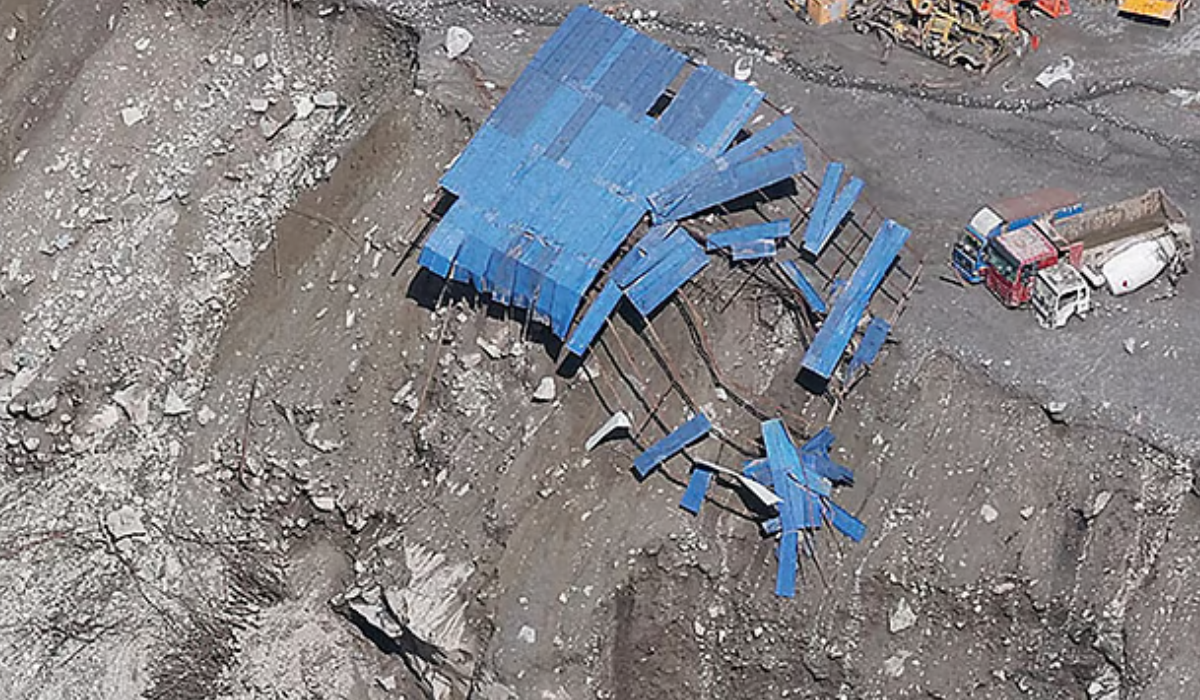
Nepal lost or disabled several critical hydrological monitoring stations during the devastating August 26 Bhote KoshiTrishuli flood, undermining the availability of real-time river data as the extreme flood wave moved rapidly downstream. The Assessment Report II, prepared by the Centre of Hydrology and Water Resources Research (CHWRR) under the Water and Energy Commission Secretariat of the Government of Nepal, said the flood was severe enough to destroy or disable several key hydrological monitoring stations along the Bhote Koshi-Trishuli river corridor. The affected stations included those at Rasuwagadhi, Syaphru Besi, Betrawati and Phurke Khola in Malekhu, all located along the Bhote Koshi and downstream Trishuli river corridors, which were badly affected by the devastating floods, the report said. At Rasuwagadhi (Timure), data transmission ceased at 8:40 a.m., with the final recorded water level at 3.8 metres, after which the station was washed away by the flood in the Bhote Koshi River. At Syaphru Besi, transmission stopped at 8:50 a.m., when the last recorded water level was 1.62 metres, and the station was subsequently swept away by the deadly flood in the Bhote Koshi, a transboundary river between Nepal and China. The Betrawati station on the Trishuli River also stopped transmitting at 9:20 a.m., after recording a water level of 3.55 metres, and was washed away by the flood. The Phurke Khola station at Malekhu in Dhading district was destroyed after the water level exceeded the danger threshold at 11:43 a.m. The flood also washed away the associated bridge. The report said the loss of these stations “highlights the extreme nature of the flood event” and poses challenges for future monitoring in the affected region. Sauharda Joshi, a hydrologist at the Department of Hydrology and Meteorology, said that the hydrological stations were unable to capture the exact flood levels because the massive flood washed them away on August 26. It is because of the massive flood that flowed at too high a velocity. The destruction of the monitoring network was particularly significant because the flood developed with exceptionally rapid propagation and a very short warning lead time. The assessment estimated that the flood wave travelled about 22 km from its source area to the Rasuwagadhi border in approximately seven minutes, at an average speed of about 188 km per hour. Following the loss of the hydrological stations at these sites, Nepal has installed a CCTV camera at Timure, Rasuwagadhi, to visually monitor river conditions. Likewise, the process of installing flood-monitoring systems in the Betrawati and Phurke Khola areas has been initiated. The locations for installing the flood-monitoring systems have been identified at these two locations following field visits. However, there are currently not enough flood-monitoring systems in place following the latest disaster. That’s why the immediate risk is that we are without a flood-warning system in the Bhote Koshi and Trishuli. Discussions are currently underway on whether to install two separate monitoring systems — one along the riverbank and another at a higher location — so that damage to a monitoring system located along the riverbank would not completely disrupt monitoring, as the second station could continue to provide flood data. On the other hand, passenger movement between Nepal and China has shifted to alternative border points after severe flooding in Nepal’s Rasuwa district on August 26 damaged infrastructure at the Rasuwagadhi crossing. Nepal’s Department of Immigration said that the August 26 flood swept through areas around Rasuwagadhi, forcing passengers travelling between Nepal and China, including many Kailash-Manasarovar pilgrims, to use the Tatopani crossing in Sindhupalchok and Hilsa in Humla as alternative routes. The deadly flood damaged key infrastructure, including the immigration office at Rasuwagadhi, and many pilgrims travelling to KailashManasarovar through the route are out of contact since the deadly flood, which has so far killed 1,395 while 5,130 are missing by Monday. Rasuwagadhi is one of the key northern gateways for pilgrims travelling to the holy site of Mount Kailash in Tibet, China. A large majority of pilgrims travelling to Kailash through Nepal are Indian nationals. As many as 3,904 passengers entered Nepal through Tatopani between August 26 and September 14, including 1,733 women. During the same period, 391 passengers departed Nepal for China through Tatopani. Many of those using the alternative routes were pilgrims and visitors returning from Tibet, according to the department. In particular, passengers who had travelled from Nepal to China through Rasuwagadhi and visited Tibet, including those undertaking the Kailash-Manasarovar pilgrimage, have been returning through Tatopani and Hilsa following the disruption at Rasuwagadhi. At Hilsa, 387 passengers entered Nepal between August 26 and September 14, of whom 165 had previously departed Nepal for China through Rasuwagadhi. Meanwhile, 178 passengers departed Nepal for China through Hilsa during the same period, the department said. Among the foreign nationals who have also been using these two alternative crossings, Indian, British and US citizens constituted the largest groups among foreign nationals, according to immigration authorities. The figures indicate that Tatopani and Hilsa have assumed a greater role in facilitating passenger movement between Nepal and China since the Rasuwagadhi crossing was disrupted by the flood.
The Indian Army on Friday rejected claims on social media that the Army had taken action against the...
Abdul Majid Hakim Elahi, Iran's Supreme Leader's representative and senior diplomat, said on Friday that the US has...

New York, USA: The New York City Council has passed a law to ban horse-drawn carriages, naming the...

Washington: US President Donald Trump suggested that further military action against Iran remained possible, while acknowledging that the...

Lhasa: Sixteen people were killed and 32 others injured after a 7.0-magnitude earthquake struck Tibet on Thursday, according...
More than two weeks after the Yemeni government launched a major offensive against the Houthi group, front lines...
Aries: The day will be auspicious...