Last Updated: October 20, 2026
Last Updated: October 20, 2026






India’s democracy is often described as fragile, noisy, and chaotic. Yet, year after year, it endures. Not because it is perfect, but because it is deeply rooted in everyday participation, quiet resilience, and a collective belief that disagreement does not mean disintegration.
The strength of Indian democracy lies not only in institutions but in habits. Millions participate in elections with remarkable regularity, often travelling long distances, waiting patiently in lines, and treating the vote as both a right and a responsibility. This routine commitment to the ballot box reflects faith in the democratic process, even when outcomes disappoint.
Democracy in India also survives because it is decentralised in spirit. Power does not flow from a single source; it is constantly negotiated at local, regional, and national levels. Panchayats, municipal bodies, cooperatives, and associations form a dense web of participation. While these structures may struggle at times, they ensure that governance is not entirely distant from daily life.
Equally important is India’s constitutional culture. Despite political disagreements, the Constitution remains a shared reference point. Its language of justice, liberty, equality, and fraternity continues to frame public debate. Even critics of the system argue within its boundaries, invoking constitutional morality rather than rejecting democracy outright. This shared framework prevents political conflict from turning into systemic collapse.
India’s diversity, often portrayed as a challenge, is in fact a democratic asset. Linguistic, cultural, and regional differences make uniform control difficult, forcing negotiation and compromise. Federalism ensures that multiple political experiments coexist. This diversity acts as a safeguard, preventing any single idea from permanently monopolising power.
Civil society also plays a quiet but crucial role. Across towns and villages, citizens organise to solve everyday problems — from welfare delivery to local disputes — without waiting for grand interventions. These small acts of civic engagement rarely make headlines, but they reinforce democratic values at the grassroots.
Another overlooked strength is democratic memory. Indians remember periods when rights were curtailed and institutions weakened. This collective memory acts as a warning system. When democratic norms appear threatened, resistance emerges not just from political actors but from ordinary citizens who recognise the cost of silence.
Youth participation further strengthens democracy’s future. Young voters increasingly engage with political processes, questioning authority while also seeking inclusion. Their demands may be assertive, but they signal belief in reform rather than rejection. Democracies survive when the young argue within the system instead of abandoning it.
Critically, democracy endures because it adapts. Laws evolve, social norms shift, and political alignments change. This constant churn, though uncomfortable, prevents stagnation. Stability in democracy does not mean immobility; it means the ability to absorb pressure without breaking.India’s democracy is not immune to stress, nor should it be romanticised.
Good Evening Viewers! Catch up on the day's biggest stories with The Savera Times Evening Bulletin. Get the...

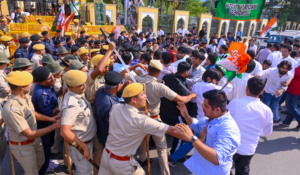
Congress leaders continued their protest outside the Jaipur Police Commissionerate on Tuesday, demanding the registration of a zero...
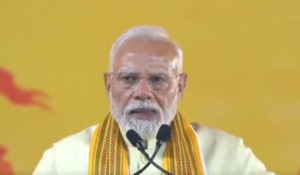
On the auspicious occasion of Vijayadashami, Prime Minister Narendra Modi on Tuesday called on the countrymen to unite...
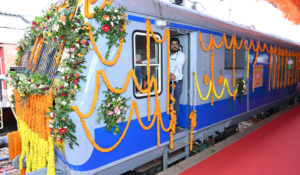
A historic milestone was achieved on Tuesday in the expansion of Chhattisgarh's rail networkA historic milestone was achieved...
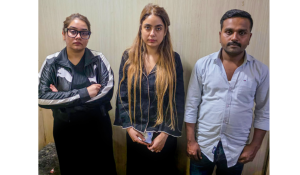
Model Shraddha Dubey, one of the main accused in the death of Lucknow businessman Shiv Sharma, has been...
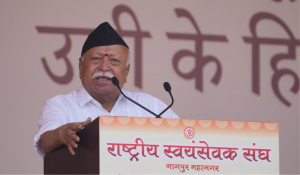
Rashtriya Swayamsevak Sangh (RSS) chief Mohan Bhagwat on Tuesday called for strengthening national unity, social harmony, indigenous practices...
Aries: The day will be auspicious...