Last Updated: October 15, 2026
Last Updated: October 15, 2026





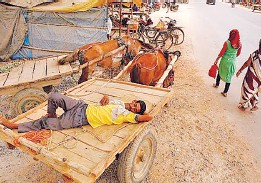
Across large parts of rural India, a quiet transformation is underway. Villages that once echoed with the sounds of farming life, children playing, and evening gatherings are slowly emptying. Houses stand locked for most of the year, schools have shrinking enrolment, and farmlands lie unattended. Rural depopulation, driven by economic stress and changing aspirations, is reshaping the countryside in ways that remain largely invisible to policymakers.
Migration from villages to cities is not new, but its scale and permanence have grown. Earlier, migration was seasonal—men would leave after harvest and return during sowing. Today, entire families are relocating permanently. The village is no longer a place to return to; it is becoming a memory.
Agricultural distress is at the heart of this shift. Small and marginal farmers struggle with rising input costs, unpredictable weather, declining groundwater, and unstable market prices. Farming, once seen as a way of life, has become financially unsustainable for many. Young people, having witnessed their parents’ struggles, are reluctant to inherit the same uncertainty.
Education plays a paradoxical role. While access to schooling has improved, it has also accelerated migration. Educated rural youth aspire to non-farm jobs that are rarely available locally. Degrees and diplomas often become passports out of villages, pushing young people towards towns and cities in search of opportunity.
The impact on village life is profound. With youth gone, the population left behind is increasingly elderly. Traditional support systems weaken as families fragment. Community institutions—cooperatives, local markets, cultural gatherings—lose participation. Even festivals are affected, with celebrations timed around when migrant workers can briefly return home.
Women bear a disproportionate burden. In many villages, men migrate alone, leaving women to manage households, care for elders, and oversee agriculture without land ownership or decision-making power. While some women gain autonomy, others face increased workload and social isolation. The feminisation of rural distress is a growing but under-discussed reality.
Infrastructure gaps further accelerate the exodus. Poor healthcare, unreliable electricity, limited internet access, and lack of higher education facilities make rural life increasingly unattractive. Aspirations shaped by digital exposure clash with the lived reality of villages, deepening the sense of exclusion.Urban centres, meanwhile, struggle to absorb the influx. Migrants often end up in informal settlements, working in low-paid, insecure jobs. The promise of city life frequently falls short, but returning to villages is no longer a viable option.
New Delhi: The Delhi High Court on Thursday recorded the assuarance by Delhi Polices promise that all legal...
New Delhi: The Ministry of Defence on Thursday said it has signed contracts worth Rs 4,106 crore for...

Patna: An Excise Department constable was killed after suspected liquor smugglers and an alleged accomplice opened fire on...

New Delhi: Amid the ongoing protests, investigators have found that certain elements backed by Pakistan launched a multi-layered...
Good Afternoon Viewers! Stay updated with The Savera Times Afternoon Bulletin, bringing you the latest news from Punjab,...

New Delhi: Heavy rain and thunderstorms swept parts of Delhi-NCR on Thursday as dark clouds covered the national...
Aries: The day will be auspicious...