Last Updated: October 22, 2026
Last Updated: October 22, 2026





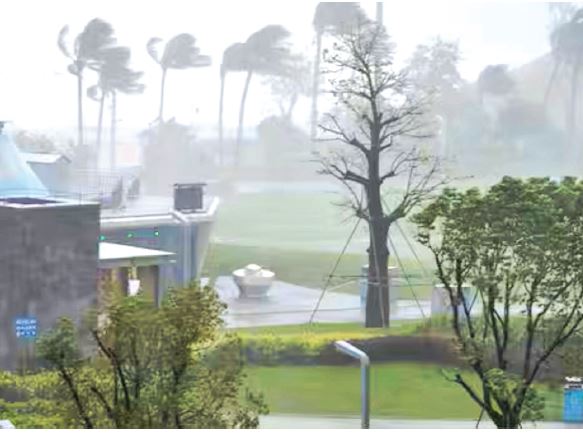
Strong winds, torrential rain and towering seas battered Hong Kong and Taiwan this week as Super Typhoon Ragasa, described by forecasters as the most powerful storm on the planet this year, made landfall in southern China.
Chinese meteorologists have dubbed Ragasa the “King of Storms.” It struck Yangjiang city in Guangdong province, forcing widespread evacuations and disrupting daily life across one of China’s most industrially vital regions. The storm’s destructive sweep extended far beyond China, with Taiwan, Hong Kong, Macau and the northern Philippines all facing its impact.
Hong Kong under siege
In Hong Kong, the storm unleashed some of the most dramatic scenes. Waves taller than lampposts crashed onto promenades, flooding streets and sweeping furniture from restaurants. Winds tore sections off a pedestrian bridge and knocked down hundreds of trees.
Residents shared images of a kitchen ventilation fan ripped away by gusts and of cranes swaying ominously above the skyline. A viral video showed waves pouring through the doors of a waterfront hotel, flooding its lobby. The hotel has not commented, but staff were seen clearing debris and repairing damage.
Hospitals reported treating more than 30 injured people. Authorities raised the city’s highest hurricane warning, forcing schools, businesses and public transport to shut. Rail operator MTR suspended open-air train routes, while the city’s international airport cancelled more than 700 flights, leaving one of the world’s busiest hubs at a standstill.
Across the Pearl River Delta, Macau also endured severe flooding. Streets in the casino hub turned into rivers, prompting the electricity company to cut power to low-lying areas to prevent further damage.
Taiwan’s deadly lake burst
In Taiwan, Ragasa’s torrential rains triggered a catastrophic lake burst in Hualien County. Muddy torrents destroyed a bridge and turned Guangfu township’s streets into raging rivers, sweeping away vehicles and furniture.
Authorities confirmed at least 14 deaths, with more than 150 people missing, mostly in Hualien and surrounding areas. The National Fire Agency said 34 others were injured, and over 7,600 residents had been evacuated.
In Guangfu, a town of about 8,500 people, more than half the population fled to higher ground or upper floors. Rescue teams went door-to-door to locate survivors.
China braces for impact
By the time Ragasa reached Guangdong, China had already moved nearly 1.9 million people to safety. Schools, factories and public transport were suspended in at least a dozen cities. In Shenzhen alone, authorities evacuated 400,000 residents.
Yangjiang, where the storm made landfall, became a ghost town as streets emptied and the train station fell silent. State media reported that more than 38,000 firefighters were on standby across the province.
Philippines hit earlier
Before sweeping north, Ragasa had already carved a destructive path through the Philippines. In northern Luzon, it toppled trees, tore roofs from homes and triggered landslides that killed at least four people, including an elderly man trapped by falling rocks.
Officials said nearly 700,000 people were affected, with about 25,000 forced into emergency shelters.
Why Ragasa stands out
Meteorologists classify Ragasa as a “super typhoon,” equivalent to a Category 5 hurricane, with peak winds reaching 165 miles per hour and gusts even higher. Such storms typically generate storm surges of more than three metres in vulnerable coastal areas.
What makes Ragasa notable is not just its intensity but the speed of its escalation. It strengthened unusually quickly near northern Luzon, leaving communities little time to prepare. Experts warn that such rapid intensification is becoming more common as global sea surface temperatures rise.
The storm’s sheer scale has already inflicted damages expected to run into billions of dollars across Asia’s typhoon belt. Scientists caution that climate change is likely to make future storms even more destructive, with millions of people in coastal Asia at increasing risk.
A regional crisis
From uprooted trees in Hong Kong to flooded townships in Taiwan and mass evacuations in China, Ragasa’s path of destruction has underlined the growing vulnerability of Asia’s densely populated coastal regions.
Authorities in all four affected territories — the Philippines, Taiwan, Hong Kong and China — continue to count casualties and assess the full extent of the damage. What remains clear is that the “King of Storms” has left a trail of disruption that will take weeks, if not months, to repair.
Good Evening Viewers! Get the latest updates from India and around the world with The Savera Times Evening...

Bharatiya Janata Party (BJP) National General Secretary Smriti Zubin Irani launched a scathing attack on Congress MP and...

New Delhi: Cockroach Janata Party (CJP) leaders Saurav Das and Ashutosh Ranka will be released from judicial custody...

According to police, three suspicious young men are seen in CCTV footage. Efforts are underway to identify them....

A video has surfaced of an alleged attempted assault on Jan Suraj Party's Bihar president Manoj Bharti. The...

Two accused have been convicted and sentenced to 10 years of rigorous imprisonment in a 2017 drug trafficking...

Aries: The day will be auspicious...