


Pakistan calls the Kashmir under its occupation as Azad Kashmir. Since India considers this part of Kashmir as illegally occupied by Pakistan, we call it Gulam Kashmir. Ever since the Modi government in India removed Article 370 and 35-A from Indian Kashmir, the fortunes of Kashmir Valley and Jammu division have brightened. The main business of Kashmir is basically tourism. After the removal of Article 370, tourism in Kashmir has once again flourished. A large number of tourists from India and the world have started coming to Kashmir. Srinagar has become lively. Boating is taking place in Dal Lake. Lal Chowk of Srinagar has become populated once again. The condition of ordinary Kashmiris has improved significantly. Now, Pakistan-occupied Kashmir is also a part of Kashmir. Native Kashmiris live in both parts as brothers and sisters. The biggest problem for the people of occupied Kashmir is that Indian Kashmir has progressed so much that the standard of living has improved, while the people of our part of Kashmir are deprived of even food and water. Young people cannot find jobs, and there is no work. They hold the Pakistani rulers and army responsible for the worsening situation. For them, Asif Munir is the biggest villain. Residents of Pakistan-occupied Kashmir had raised their voices to remove the 12 seats reserved for refugees from 1947 in the state assembly. But then the discussion quickly shifted to the real issue: provide jobs to the youth of this region, alleviate their poverty, and remove corrupt rulers from here. The situation deteriorated so much that most of the youth of occupied Kashmir began demanding independence from Pakistan. Exactly as it once was in Bangladesh. Currently, approximately 4.5 million people in Pakistan-occupied Kashmir are suffering economic hardship. These people are demanding improvements in their economic situation. They want new investment, new roads, and development in their region. But everything has remained in the same dilapidated state for so many years. Yes, as you travel from Islamabad to occupied Kashmir, you see the increasing presence of Pakistani troops and checkpoints. Uniformed personnel stand on the roadside. Pakistani Field Marshal Asif Munir has deployed 100,000 troops into occupied Kashmir to suppress the voices of the people, or rather, Pakistan has currently occupied occupied Kashmir with the help of its military. This has been the situation there for two and a half months. People are taking to the streets to protest, openly speaking out against the government and the army. The Pakistani army opens fire on such protests. There are reports of casualties. The protesting committee has put forward 38 demands. Surprisingly, the most important demand is cheap flour. The discussion began on the sham of holding assembly elections in occupied Kashmir. The Indian Foreign Ministry also condemned this charade. The agitation began in occupied Kashmir on June 4th, starting in Rawalkot. The agitation further escalated with a clash between the people and the army in Muzaffarabad on June 9th. So far, more than 100 people have died from military gunfire, but for two months, Shahbaz Sharif’s government has been spreading false statements. The voices of the people are being suppressed by shutting down the internet. The situation is worsening day by day. India is not interfering, but a question arises: will the whole world remain silent spectators to the blatant violation of humanity taking place in Pakistan-occupied Kashmir? The United Nations has already become inactive. The world community is also unwilling to speak out on this issue. Our Defense Minister Rajnath Singh rightly said that one day the situation in PoK will deteriorate so much that the people there will automatically become eager to merge with India.
Human Rights Violations in PoK
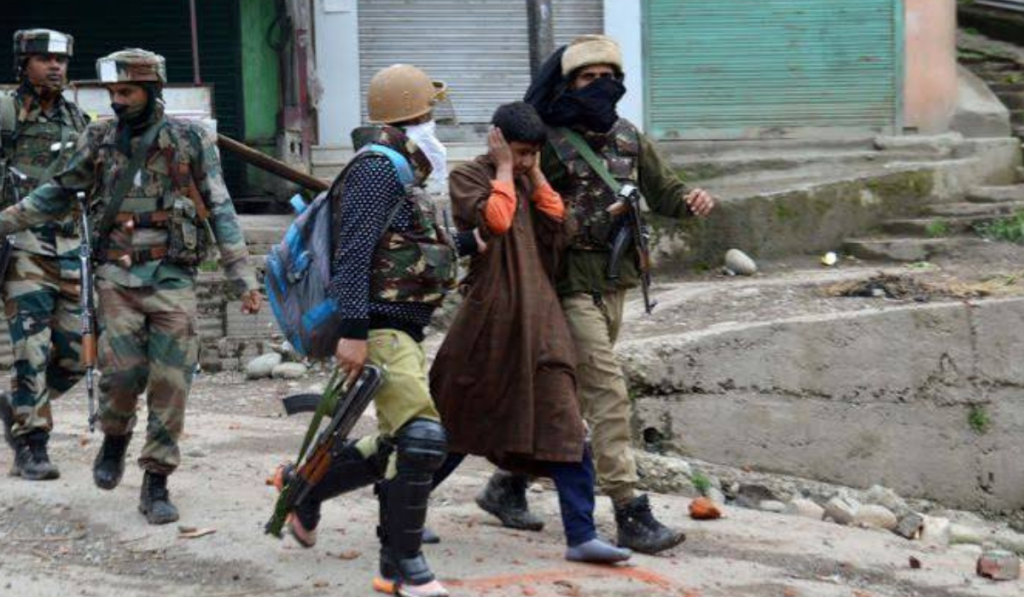
Human Rights Violations in PoK