


Seoul: South Korean automakers Hyundai Motor and Kia’s combined sales in China fell below 10,000 vehicles in September for the first time this year. Weak demand in the market has led to a sharp decline in sales for both companies. This information was revealed in industry data released on Sunday.
According to a report by Hana Securities, based on data from the China Passenger Car Association (CPCA), Hyundai Motor’s sales fell 47 percent compared to September last year to approximately 4,000 vehicles. Kia’s sales fell 31 percent to approximately 5,000 vehicles.
According to a report by Yonhap News Agency, the combined sales of the two companies fell 39 percent to approximately 9,000 vehicles. Their combined share of the Chinese automobile market also declined to only 0.6 percent. Both companies held a market share of over 10 percent in the mid-2010s.
Difficulty in increasing sales despite electric vehicles
Hyundai and Kia are struggling to revive their sales in China. Both companies have introduced electric vehicles (EVs) to suit the Chinese market, but they are still not achieving the desired success.
Hyundai’s China-specific electric SUV, the Elexio, sold only 251 units in the first nine months of this year, compared to 1,216 units sold in the last three months of last year.
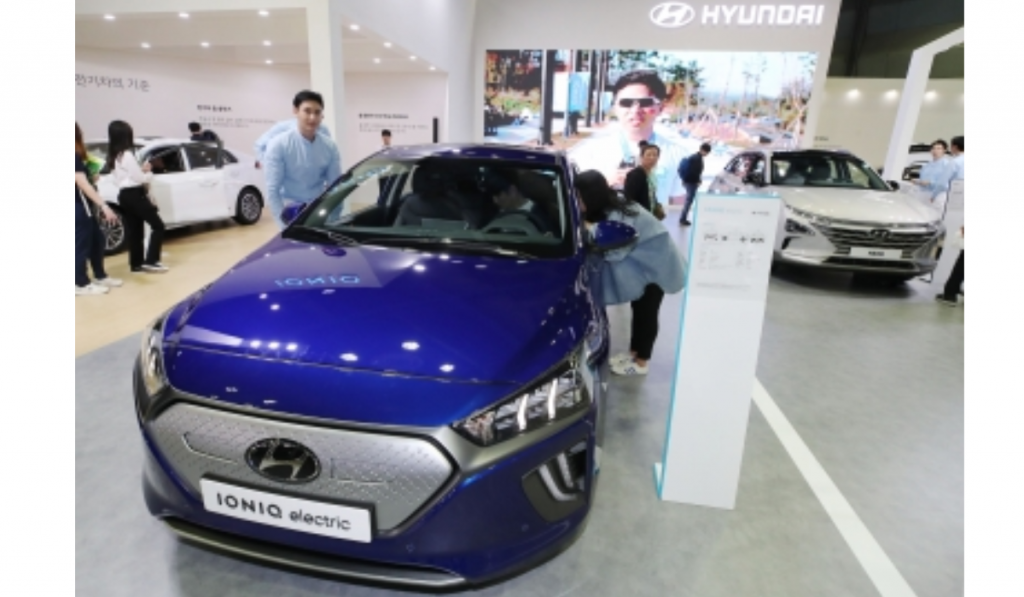
Meanwhile, the Ioniq V, the first Chinese-specific model under Hyundai’s Ioniq brand, sold 558 units in September.
Preparations to Increase Production Capacity by 2030
Meanwhile, Hyundai Motor announced in August that it will increase its total production capacity to 1.27 million vehicles by 2030 to strengthen its presence in the global market. The company also plans to introduce more than 100 new and updated models by the end of the decade.
Hyundai Motor CEO Jose Munoz revealed these plans at the company’s CEO Investor Day event held in Seoul. The company aims to strengthen its competitiveness amid increasing competition, especially from Chinese automakers.
According to Hyundai, the new and updated models will include facelifts, partially redesigned vehicles, and other variants. This plan will include the introduction of 18 all-new models.
New models of the GV80 Hybrid and Tucson will also be launched
Hyundai Motor plans to launch the Genesis GV80 Hybrid in South Korea and the United States by the end of this year. The company will then introduce an extended-range electric vehicle (EREV) in the first half of 2027.
In addition, the company plans to launch its best-selling Tucson SUV and its hybrid variant in the second half of this year.
The company aims to significantly increase global production capacity by 2030 to meet its new models and sales targets. Currently, Hyundai Motor’s global production capacity is approximately 5 million vehicles.